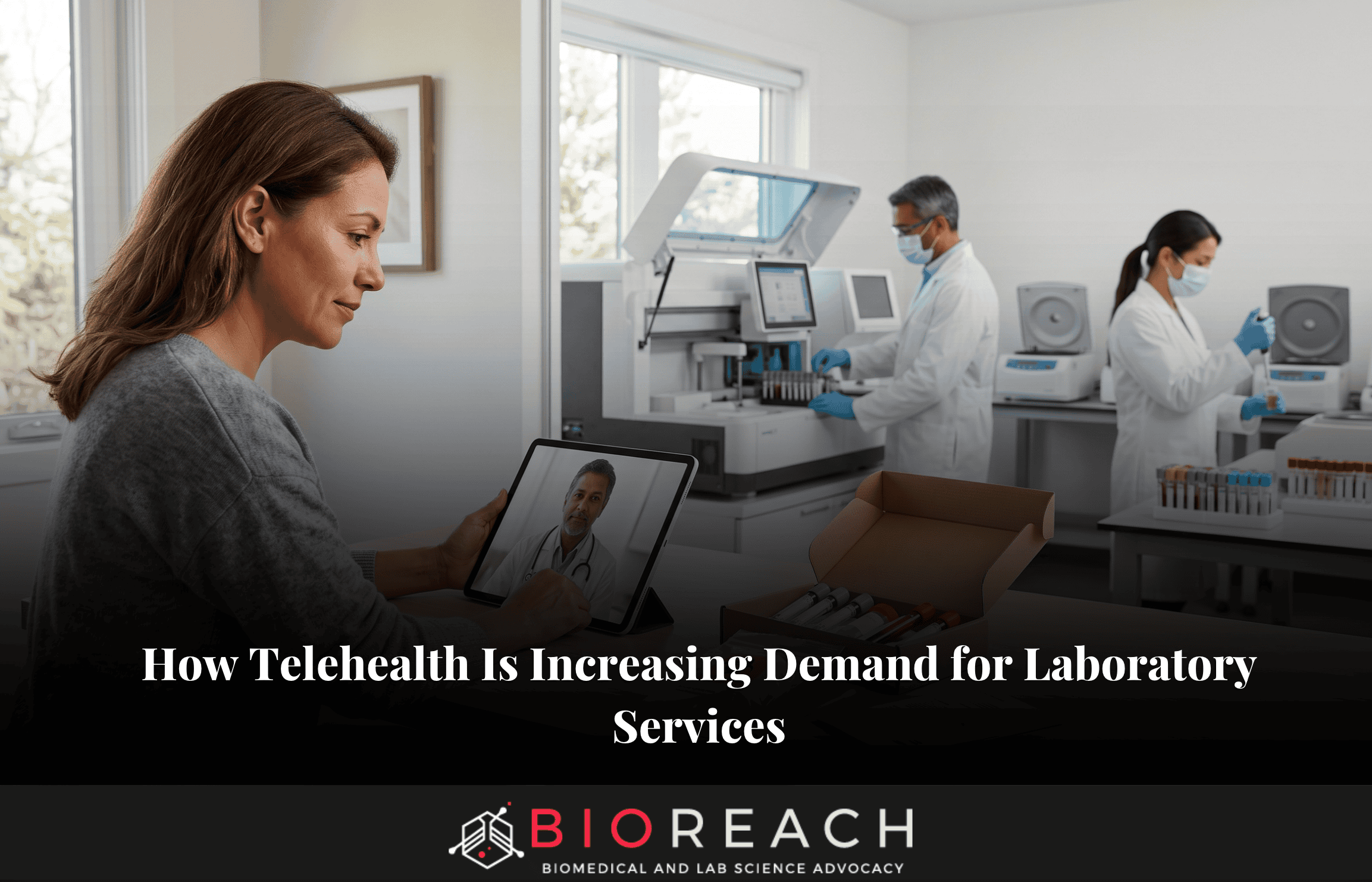
Telehealth is increasing demand for laboratory services because virtual visits still need objective diagnostic data to be useful, and that data comes from the laboratory. When a patient cannot be physically examined, laboratory tests become even more central to diagnosis and monitoring, so telehealth expands rather than reduces the need for testing. The US telehealth and retail lab testing market was valued at $18.7 billion in 2026 and is projected to reach $61.78 billion by 2035, growing at a 14.20 percent compound annual growth rate. Telehealth also reshapes how testing happens, driving growth in home sample collection, pharmacy-based draw sites, and direct laboratory-to-patient result delivery. The result is more testing, delivered through new channels, all of which depends on the same laboratory science and professionals that underpin traditional care.
The rapid, permanent expansion of telehealth since 2020 has changed how millions of people access healthcare, but it has not changed a fundamental truth: a clinician needs objective information to diagnose and manage disease, and laboratory testing is the primary source of that information. Understanding how telehealth is reshaping demand for laboratory services matters for laboratories planning capacity, for professionals whose roles are evolving, and for a healthcare system integrating virtual and physical care. This article examines why telehealth increases testing demand, how it changes the channels through which testing happens, the challenges this creates, and what it means for the laboratory profession.
Why Virtual Care Increases the Need for Testing
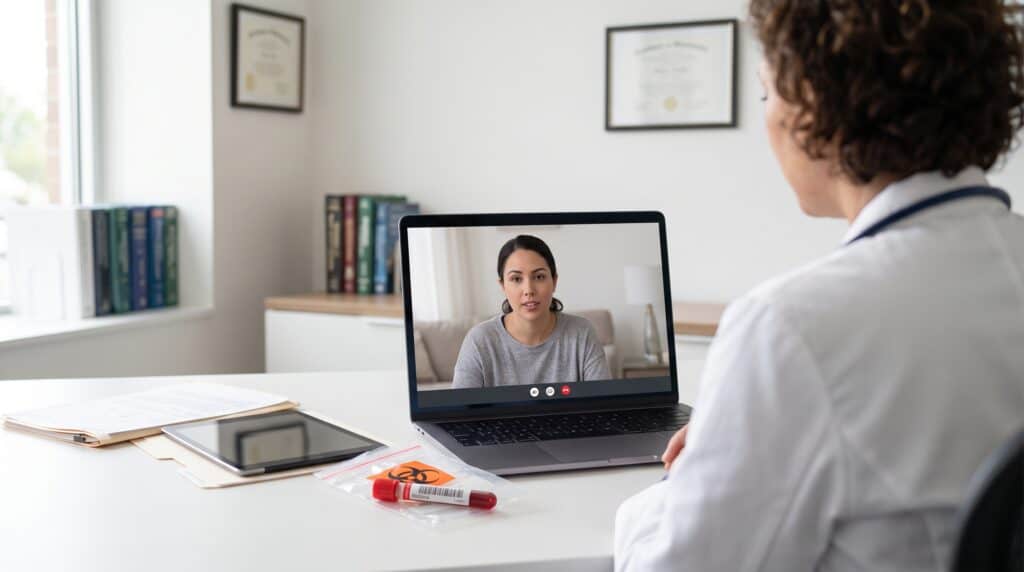
It might seem that telehealth, by moving care out of physical facilities, would reduce laboratory testing. The opposite is true, for a straightforward reason: telehealth removes the physical examination, and laboratory data fills the gap.
In a traditional in-person visit, a clinician gathers information through physical examination, palpation, auscultation, and direct observation, alongside any laboratory tests. In a virtual visit, most of that physical information is unavailable. The clinician cannot feel an abdomen, listen to a chest, or examine a lesion in the same way. What remains available, and becomes proportionally more important, is objective diagnostic data from the laboratory. A virtual visit for fatigue, for example, leans heavily on blood work to distinguish among anemia, thyroid dysfunction, diabetes, and other causes that a physical exam alone could not resolve. Laboratory testing becomes the clinician’s primary window into the body.
Telehealth also expands access to care overall, and more care means more testing. By removing barriers of geography, transportation, and scheduling, virtual care brings people into the healthcare system who might otherwise have gone without, including those managing chronic conditions that require regular monitoring. Chronic disease management programs now absorb substantial virtual consultation capacity, and chronic disease management is testing-intensive, requiring ongoing measurement of markers like HbA1c, lipids, and kidney function. Each new patient brought into regular care through telehealth generates recurring demand for the clinical chemistry testing that monitors their condition.
How Telehealth Changes the Channels of Testing
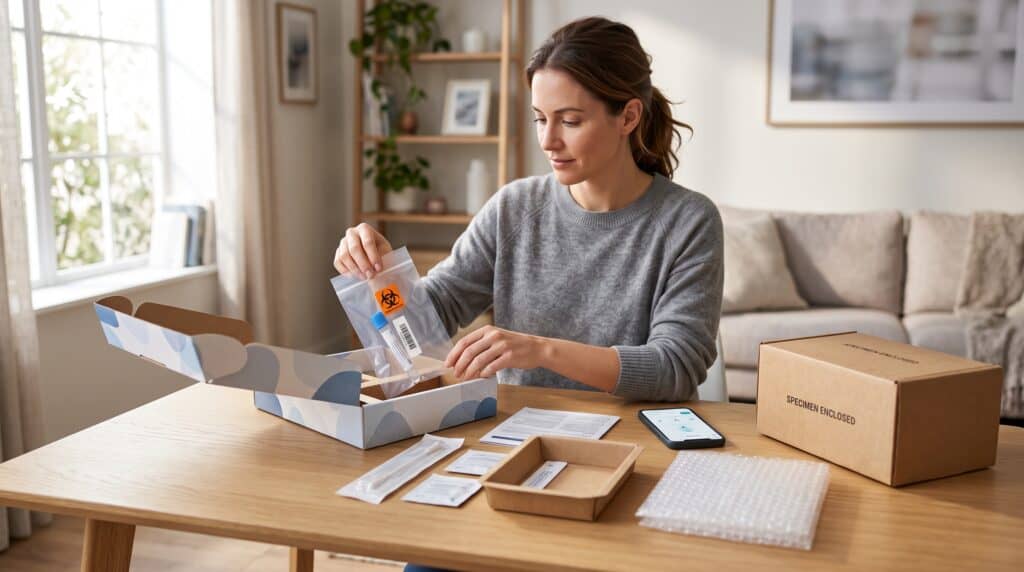
Telehealth not only increases the volume of testing; it changes how and where testing happens, creating new channels that laboratories must serve.
Home sample collection is the most visible shift. When a visit is virtual, sending the patient to a distant laboratory can undermine the convenience that made telehealth attractive in the first place. In response, the model increasingly relies on the patient collecting a sample at home and mailing it to a laboratory, or on mobile phlebotomy that brings collection to the patient. Diagnostic sample logistics revenue is tilting toward home-collection and pharmacy-integrated channels, and telehealth platform integration is the fastest-growing distribution channel in the at-home diagnostics market. This connects telehealth directly to the growth of home-based testing.
Pharmacy and retail partnerships form another expanding channel. Retail pharmacy lab partnerships are multiplying, giving telehealth patients convenient nearby locations for sample collection without a clinic visit. National laboratory networks are leveraging their phlebotomy footprints to anchor fast turnaround for telehealth-ordered tests, integrating physical collection sites with virtual care.
Direct-to-patient result delivery completes the loop. In the telehealth model, results often flow back to the patient through the same digital platform that hosted the visit, sometimes with the clinician’s interpretation attached, sometimes more directly. This changes the post-analytical phase of testing, placing new emphasis on clear digital reporting and on the systems that route results to the right place quickly.
The overall effect is a testing ecosystem that is more distributed and more digitally integrated than the traditional model of physician orders, patient visits, patient-visits-lab, clinician-interprets. Laboratories increasingly interface with telehealth platforms, home-collection logistics, and pharmacy partners as part of a connected diagnostic workflow.
The Challenges Telehealth Creates for Laboratories
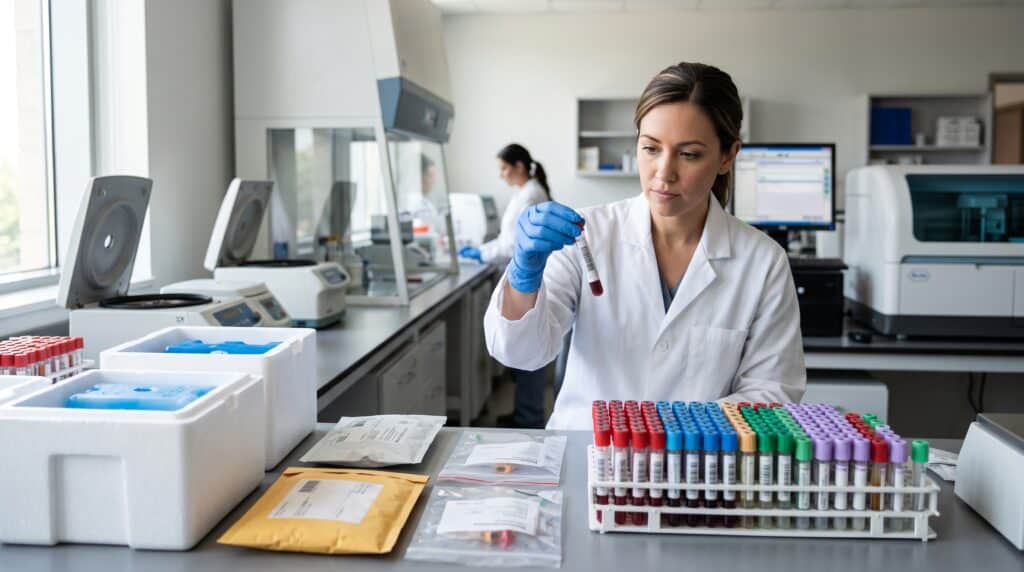
The growth telehealth drives comes with real challenges that laboratories and the broader system must manage.
Pre-analytical quality is the foremost concern, as it is with all remote testing. When collection moves out of controlled clinical settings into homes and varied locations, the risk of specimen problems rises. The pre-analytical phase already accounts for the majority of laboratory errors even under controlled conditions, and distributed collection adds variability in technique, handling, and transport. Maintaining accuracy across these channels requires better collection devices, clear patient instructions, and robust logistics.
Result interpretation and communication grow more complex when care is virtual and results may reach patients directly. Ensuring that a telehealth patient understands their results, and that genuinely concerning findings prompt appropriate follow-up rather than being missed in a digital inbox, places new demands on reporting design and on the laboratory-clinician-patient communication chain.
Regulatory and logistical complexity is significant. Telehealth spans state lines, raising interstate licensing questions, and the regulatory treatment of home collection, laboratory-developed tests, and direct-to-consumer diagnostics continues to evolve. Laboratories serving multi-state telehealth platforms must navigate a fragmented landscape of scope-of-practice rules, privacy requirements, and reimbursement policies.
Capacity and integration planning becomes essential as volume grows through new channels. Laboratories must build the interfaces, logistics, and staffing to serve telehealth-driven demand reliably, integrating with digital platforms and home-collection networks while maintaining the quality standards that make results trustworthy.
What This Means for the Laboratory Profession
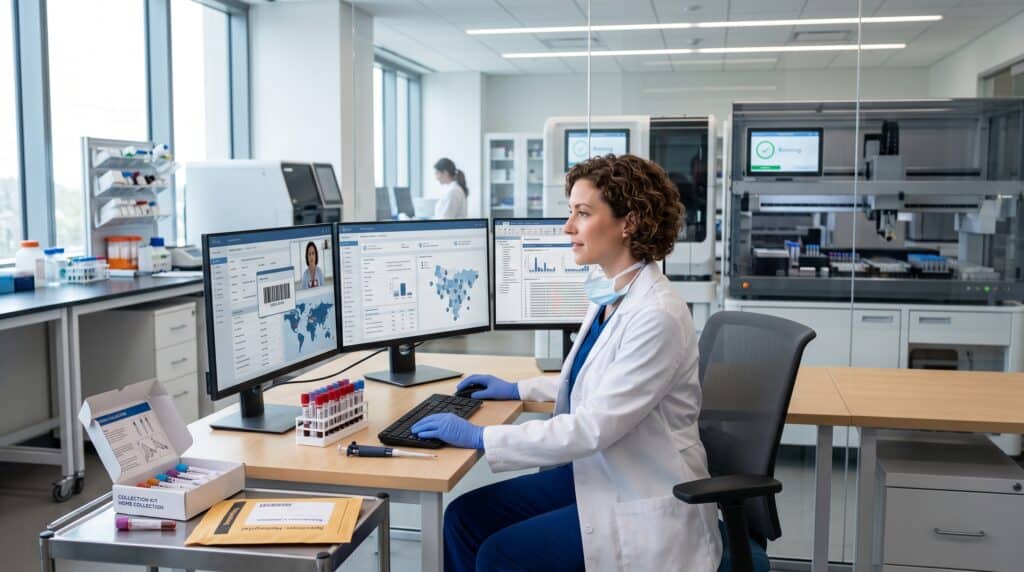
Telehealth’s growth reinforces, rather than diminishes, the centrality of the laboratory. As virtual care removes the physical exam, the laboratory becomes the clinician’s most important source of objective diagnostic information, making the accuracy and timeliness of testing more consequential than ever. The profession that produces that information sits at the heart of the telehealth model even though it operates behind the scenes.
The role is evolving in response. Laboratory professionals are increasingly involved in designing and validating home-collection approaches, building the digital interfaces that connect laboratories to telehealth platforms, ensuring result-reporting systems deliver clear and actionable information to remote patients and clinicians, and maintaining quality across a more distributed collection landscape. These are higher-skill, more systems-oriented responsibilities that reflect the profession’s growing engagement with informatics and logistics.
There is also an access dimension aligned with the mission of organizations working to expand laboratory medicine. Telehealth paired with distributed testing has real potential to extend diagnostic access to rural and underserved populations who lack convenient access to traditional care. Realizing that potential depends on maintaining laboratory quality across the new channels, so that expanded access means expanded access to trustworthy results, not just convenient ones. The demand telehealth creates is ultimately demand for the laboratory profession’s expertise, and meeting it well requires the workforce, quality systems, and professional judgment that define good laboratory medicine.
Conclusion
Telehealth is increasing demand for laboratory services because virtual care depends on laboratory data to compensate for the absence of the physical exam, and because expanded access brings more patients into testing-intensive care. The market figures reflect this: telehealth and retail lab testing is one of the fastest-growing segments in healthcare. Beyond raising volume, telehealth is reshaping the channels of testing toward home collection, pharmacy partnerships, and direct digital result delivery.
This growth brings challenges, chiefly maintaining pre-analytical quality and clear communication across a distributed, digital model, but it also underscores a fundamental point: the more healthcare moves to virtual delivery, the more it relies on the objective diagnostic information only the laboratory can provide. Telehealth does not replace the laboratory; it makes the laboratory more central to modern care. Meeting the demand it creates, reliably and equitably, is one of the defining opportunities for laboratory medicine in the years ahead.
Frequently Asked Questions
Does telehealth increase or decrease the need for laboratory testing?
Telehealth increases the need for laboratory testing. Because a virtual visit removes most of the physical examination, clinicians rely more heavily on objective laboratory data to diagnose and monitor patients. Telehealth also expands overall access to care, bringing more people, including those with chronic conditions requiring regular monitoring, into the healthcare system, which generates more testing. The telehealth and lab testing market is growing rapidly as a result.
How do you get lab tests done through a telehealth visit?
Testing for telehealth visits increasingly happens through new channels: home-collection kits that the patient uses and mails to a laboratory, mobile phlebotomy that brings collection to the patient, or nearby pharmacy and retail collection sites partnered with laboratories. Results typically return through the digital platform that hosted the visit, sometimes with the clinician’s interpretation attached. Traditional laboratory visits remain an option as well.
Are telehealth-ordered lab tests as reliable as in-person tests?
The laboratory analysis is performed to the same professional standards by CLIA-certified laboratories regardless of how the visit occurred. The main reliability consideration is the pre-analytical phase: when samples are collected at home or outside controlled clinical settings, there is more room for collection or handling errors. Good collection devices, clear instructions, and reliable transport logistics are what keep distributed testing accurate.
Why does virtual care depend so much on laboratory results?
In a virtual visit, the clinician cannot perform a hands-on physical examination, feeling, listening, and directly observing in the way an in-person visit allows. Laboratory results provide the objective, measurable information that fills this gap, often becoming the clinician’s primary window into what is happening inside the body. This makes the accuracy and timeliness of laboratory testing especially important in telehealth.
How is telehealth changing the laboratory profession?
Telehealth is making laboratory testing more central to care while shifting how it is delivered. Laboratory professionals are increasingly involved in designing and validating home-collection methods, building digital interfaces between laboratories and telehealth platforms, ensuring clear result reporting to remote patients, and maintaining quality across a more distributed collection landscape. These are higher-skill, more systems-oriented responsibilities than traditional bench work alone.
Bio-Reach is a non-profit organization dedicated to advancing Laboratory Medicine through advocacy, education, and global collaboration. To learn more or get involved, visit bio-reach.org.