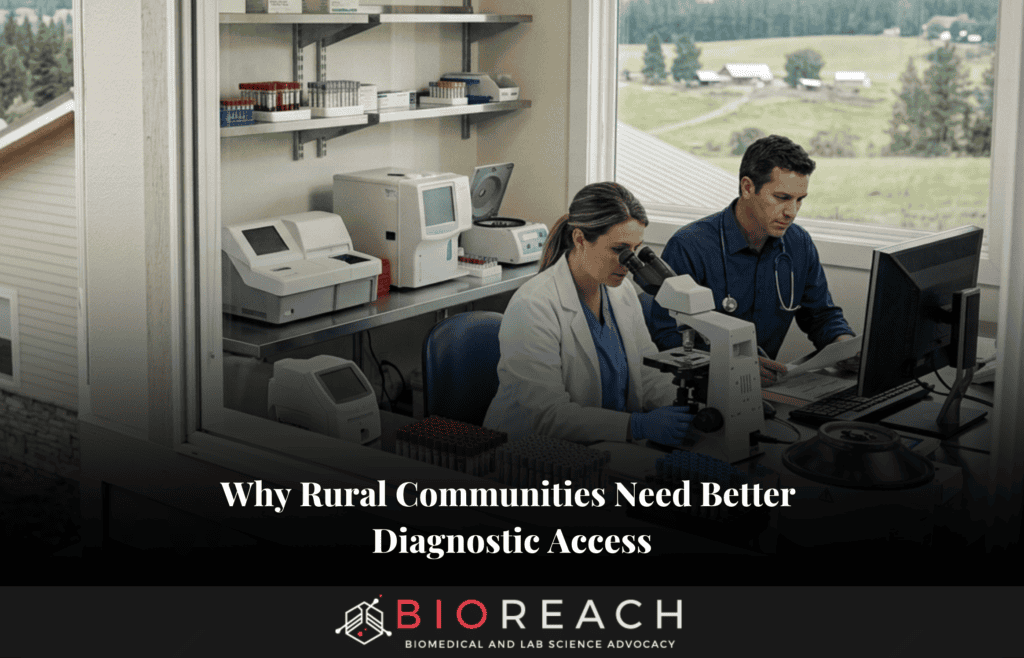
Rural communities need better diagnostic access because laboratory and imaging services in these areas are collapsing at the same time demand for them is rising. According to the Center for Healthcare Quality and Payment Reform, 734 rural hospitals across the United States, roughly one in three rural facilities nationwide- are currently at risk of closure, and the national median operating margin for rural hospitals sits at just 2.0 percent, with 41.2 percent of all rural hospitals currently operating in the red. More than 60 percent of federally designated Health Professional Shortage Areas are in rural locations, meaning the shortage of clinicians and laboratory staff compounds the shortage of facilities themselves. When rural hospitals close or scale back, the laboratory testing that catches disease early and guides treatment decisions disappears with them, forcing residents to travel farther, wait longer, and often go without the testing earlier diagnosis depends on.
Roughly one in five Americans lives in a rural community, and for many, access to basic diagnostic testing is neither convenient nor guaranteed. The financial and workforce pressures squeezing rural healthcare are not abstract policy concerns; they translate directly into delayed diagnoses, worse outcomes, and preventable deaths. This article examines the scale of the rural diagnostic access problem, why it is worsening, and what solutions are showing real promise.
The Scale of the Problem
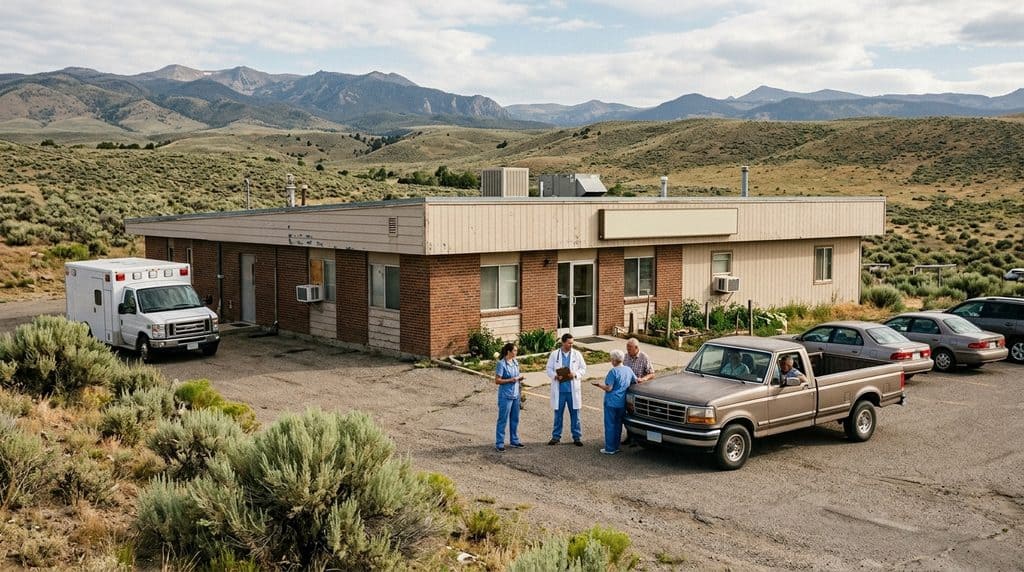
Rural hospital closures have accelerated to a pace that the healthcare system has never fully absorbed. Between 2011 and 2023, 293 rural hospitals stopped providing obstetric services, representing 24 percent of the nation’s rural OB units, and obstetric deserts often signal broader service reductions, including diagnostic and laboratory capacity, that follow the same financial pressures. More than 100 rural hospitals have already closed over the past decade, and millions of people in small towns now live farther than ever from the nearest emergency room, let alone from a full-service laboratory.
The financial fragility driving these closures is severe and, by some measures, worsening. Forty-six percent of rural hospitals report a negative operating margin, and 432 facilities are considered vulnerable to closure, according to recent analysis, figures that reflect chronic underfunding rather than a temporary downturn. Nearly half of rural healthcare facilities operate with negative margins, forcing them to do more with fewer resources, and this financial strain impacts every part of care, including diagnostics, with limited access to laboratory infrastructure and digital tools translating directly into delayed test results and slower treatment decisions.
This is not solely a US phenomenon. Nearly half of the global population lacks access to essential diagnostics, and this gap is most pronounced in rural and remote areas, where inadequate infrastructure, workforce shortages, and outdated technology hinder early disease detection and treatment. Key challenges include unreliable electricity, insufficient laboratory resources, poor specimen storage, and a lack of skilled personnel due to migration and limited training opportunities, a pattern that echoes across rural regions worldwide, from the American Midwest to sub-Saharan Africa.
Why Diagnostic Access Specifically Suffers
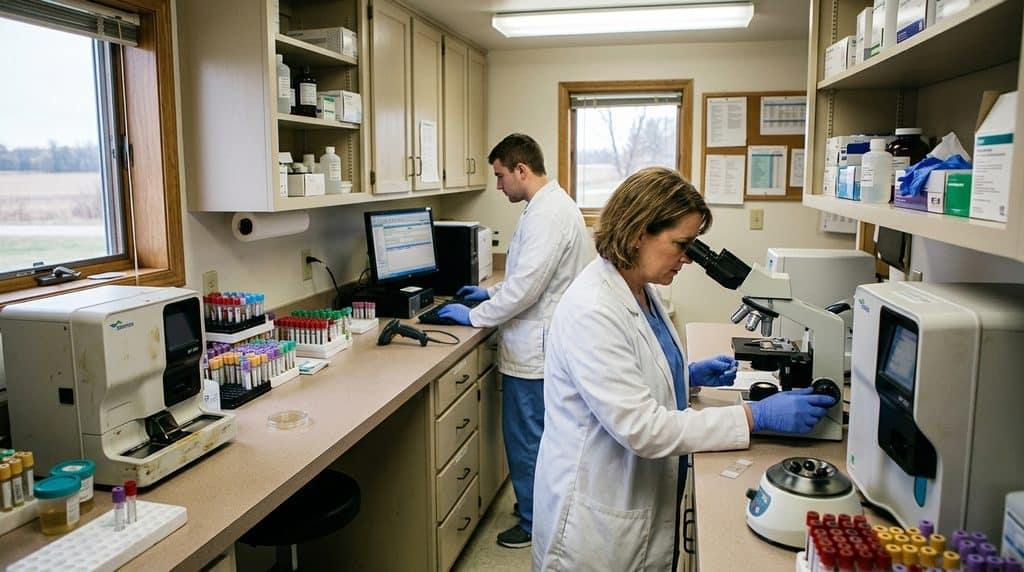
Diagnostic services are often among the first casualties when a rural facility comes under financial pressure, for reasons specific to how laboratory medicine operates.
Laboratory testing requires sustained volume to remain financially viable. Unlike a single physician visit, a full-service laboratory needs enough test volume to justify the cost of instruments, reagents, quality control programs, and trained staff. In sparsely populated areas, that volume often does not exist, making comprehensive on-site testing one of the first services scaled back when a rural facility tightens its budget, even before more visible services like inpatient beds.
Workforce shortages hit rural laboratories disproportionately hard. The broader laboratory workforce shortage already leaves hospitals nationwide struggling to fill positions, but rural facilities compete at a structural disadvantage: lower pay scales, professional isolation, and fewer amenities make it harder to recruit and retain skilled laboratory professionals, even when funding exists to support the position. This mirrors the pipeline problems that keep laboratory science invisible to students in general, compounded in rural areas by geographic distance from training programs.
Specimen logistics add further complexity. When on-site testing is not viable, specimens must be transported to distant reference laboratories, introducing the same pre-analytical vulnerabilities that affect any specimen in transit, temperature excursions, delays, and handling errors, but stretched across far greater distances than urban laboratories typically face. A result that would return within hours in a city may take a full day or more to reach a rural clinician.
The Real Consequences for Patients
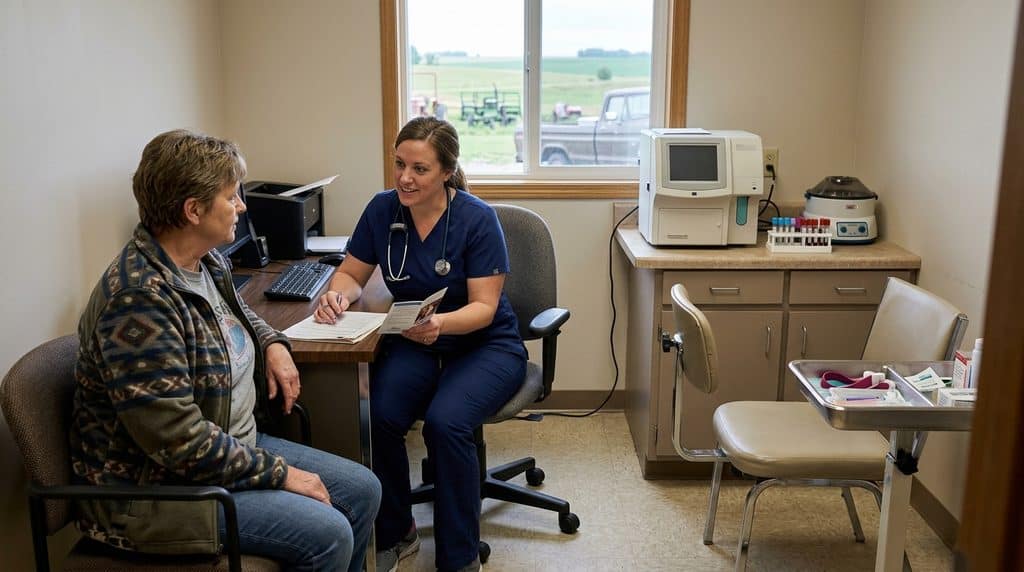
The consequences of diminished rural diagnostic access are measured in delayed diagnoses, worse outcomes, and, in some documented cases, preventable harm.
Distance itself is a direct barrier to care. When a rural hospital closes or eliminates diagnostic services, residents must travel significantly farther for testing that used to be available locally, and that distance disproportionately affects patients who lack reliable transportation, cannot take time off work, or face mobility limitations. Care deserts for services like obstetrics and chemotherapy, both of which depend heavily on laboratory monitoring, force patients into difficult choices between forgoing timely care and undertaking burdensome travel.
Delayed results delay treatment. When specimens must travel long distances to a distant laboratory, turnaround times lengthen for conditions where speed matters, infections requiring prompt antibiotic selection, cardiac markers guiding emergency treatment, and coagulation studies needed before urgent procedures. A delay that would be a minor inconvenience in an urban setting can become clinically consequential in a rural one.
Preventive screening rates suffer measurably in underserved areas. Cancer screening rates in medically underserved populations remain substantially lower than national averages, with breast cancer screening at 45.4 percent, cervical cancer screening at 51 percent, and colorectal cancer screening at 40.2 percent, compared to general population rates of 78.2 percent, 82.9 percent, and 72.3 percent, respectively. Because screening depends on accessible laboratory and diagnostic infrastructure, these gaps translate directly into cancers and chronic conditions caught later, when treatment is harder, and outcomes are worse.
What Solutions Are Showing Promise
Despite the severity of the problem, several approaches are demonstrating real, measurable improvement in rural diagnostic access.
Mobile laboratories and health units are extending testing directly into communities that lack fixed infrastructure. More than 3,600 mobile health units currently operate, with 65 percent serving rural communities, bringing point-of-care and CLIA-waived laboratory testing to populations that would otherwise face significant travel burdens. This approach, examined in more depth in the discussion of mobile laboratories and community health outreach, has demonstrated strong returns, with Mobile Health Map data showing that every dollar spent on mobile units returns eighteen dollars in value.
Telehealth integration extends diagnostic reach without requiring physical relocation of services. When paired with local specimen collection, telehealth consultation increases the value of laboratory results by connecting rural patients to specialists who can interpret complex findings that a local generalist might not routinely encounter, and remote monitoring extends the reach of scarce specialist expertise across large rural service areas.
Refurbished and shared analyzer programs are lowering the capital barrier to on-site testing. Programs that provide rural facilities with certified, cost-effective refurbished laboratory analyzers reduce the financial barrier that keeps small facilities from offering in-house testing, directly addressing the volume-versus-cost equation that pushes diagnostics out of financially strained rural hospitals.
Workforce development targeted specifically at rural placement addresses the staffing side of the equation. Loan forgiveness programs for clinicians and laboratory professionals who commit to rural practice, partnerships between training programs and rural health systems, and community partnerships that build local training pipelines all show promise in building a homegrown workforce rather than relying solely on recruitment from elsewhere, an approach that tends to produce more durable retention over time.
Conclusion
Rural communities need better diagnostic access because the financial and workforce pressures on rural healthcare are actively eroding the laboratory infrastructure these communities depend on, at a pace that has already closed over a hundred hospitals and left hundreds more at risk. The consequences are not abstract: longer travel, delayed results, and measurably lower screening rates that translate into worse outcomes for rural patients.
The solutions gaining traction- mobile laboratories, telehealth integration, accessible analyzer technology, and targeted workforce development- share a common thread: they bring diagnostic capability closer to where rural residents actually live, rather than requiring rural residents to travel further toward shrinking centralized infrastructure. Closing the rural diagnostic access gap is achievable, but it requires sustained investment in exactly the kind of laboratory infrastructure and workforce that rural healthcare has been losing for over a decade.
Frequently Asked Questions
Why are rural hospitals losing diagnostic services?
Rural hospitals face severe financial pressure, with a national median operating margin of just 2.0 percent and over 40 percent operating at a loss. Laboratory testing requires sustained volume to remain financially viable, and low population density in rural areas often cannot support the cost of full-service, on-site testing, making diagnostics one of the first services reduced when a rural facility tightens its budget.
How many rural hospitals are at risk of closing?
According to the Center for Healthcare Quality and Payment Reform, 734 rural hospitals across the United States, roughly one in three rural facilities nationwide, are currently at risk of closure. More than 100 rural hospitals have already closed over the past decade, and 432 facilities have been separately identified as vulnerable based on financial indicators.
How does poor rural diagnostic access affect patient outcomes?
Reduced rural diagnostic access leads to longer travel distances for testing, delayed results for conditions where speed matters, and measurably lower preventive screening rates. Cancer screening rates in medically underserved populations run well below national averages across breast, cervical, and colorectal cancer screening, meaning conditions are often caught later, when treatment is more difficult and outcomes are worse.
What is being done to improve diagnostic access in rural areas?
Solutions include mobile health units and mobile laboratories that bring testing directly into rural communities, telehealth integration that connects rural patients with specialist interpretation, refurbished and lower-cost analyzer programs that reduce the capital barrier to on-site testing, and workforce development programs, including loan forgiveness and local training partnerships, aimed at building a sustainable rural laboratory workforce.
Is the rural diagnostic access problem only happening in the United States?
No, it is a global issue. Nearly half of the world’s population lacks access to essential diagnostics, and this gap is most pronounced in rural and remote areas everywhere, driven by unreliable infrastructure, workforce shortages, and limited laboratory resources. The specific pressures vary by country, but the underlying pattern, diagnostic access concentrating in urban centers while rural areas fall behind, is consistent worldwide.
Bio-Reach is a non-profit organization dedicated to advancing Laboratory Medicine through advocacy, education, and global collaboration. To learn more or get involved, visit bio-reach.org.