Community partnerships strengthen healthcare workforce development by connecting hospitals, community colleges, high schools, and workforce boards directly to the training pipeline, aligning what students learn with what employers actually need, and removing the financial and logistical barriers that keep qualified candidates from completing their education. Traditional pathways alone cannot meet future demand, so hospitals are investing in career ladders, apprenticeships, community partnerships, and grow-your-own strategies to widen access to healthcare careers. These collaborations matter most for laboratory medicine and other allied health fields, where accredited training capacity has shrunk even as demand for skilled professionals keeps rising. Well-designed partnerships create tailored talent pipelines for employers and employer-validated, better-enrolled programs for schools, a structure increasingly recognized as essential rather than optional.
Healthcare workforce shortages have moved from a periodic concern to a defining feature of the industry’s operating environment. Nowhere is this more visible than in clinical laboratory medicine, where demand for trained professionals consistently outpaces the supply graduating each year. Community partnerships, structured collaborations between healthcare employers, educational institutions, and local organizations, have emerged as one of the most effective tools for closing this gap. This article examines what these partnerships look like, why they work, and how laboratory medicine specifically can benefit from a partnership-driven approach to workforce development.
Why Traditional Pipelines Are No Longer Enough
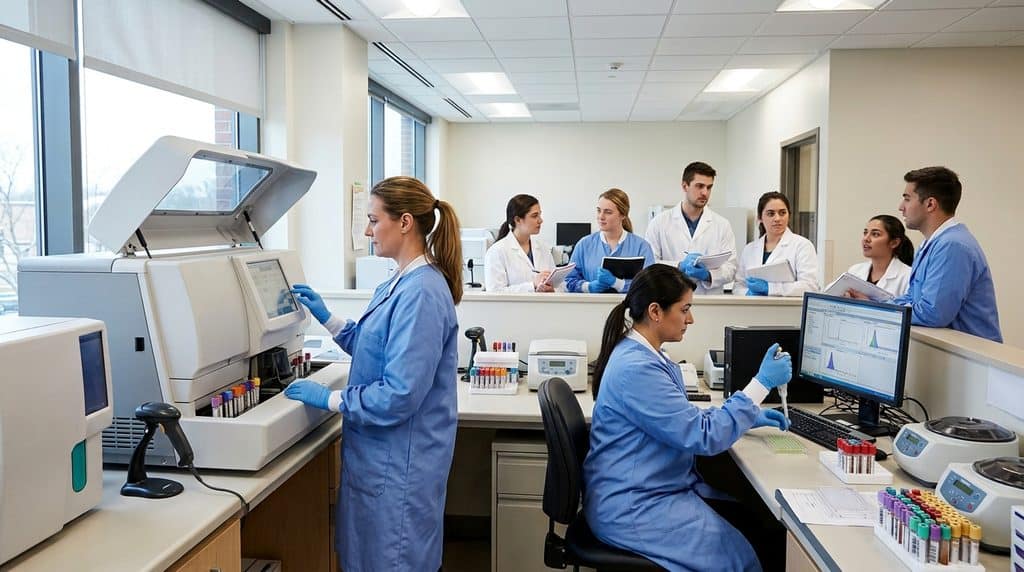
For decades, healthcare workforce development relied on a fairly linear model: students enrolled in college or vocational programs, completed their coursework and clinical requirements, and entered the workforce as trained professionals. That model is straining under pressures it was not built to handle.
Hospitals and health systems face significant workforce shifts, with staffing shortages and rising patient demand pushing organizations to reconsider how they deliver care, develop their workforce, and manage costs. Rural and underserved communities face the steepest shortages, and more flexible staffing, virtual models, and local workforce development will be essential to avoid widening inequities. The traditional pipeline, operating school by school and employer by employer without coordination, simply cannot scale quickly enough to meet this need on its own.
Laboratory medicine illustrates the strain acutely. Accredited training programs require clinical placement sites, and as laboratories operate leaner, their capacity to host and supervise students shrinks, even as the demand for graduates grows. This mismatch between training capacity and workforce need is exactly the kind of structural problem that isolated institutions struggle to solve alone but that coordinated partnerships are built to address.
What Effective Healthcare Workforce Partnerships Look Like
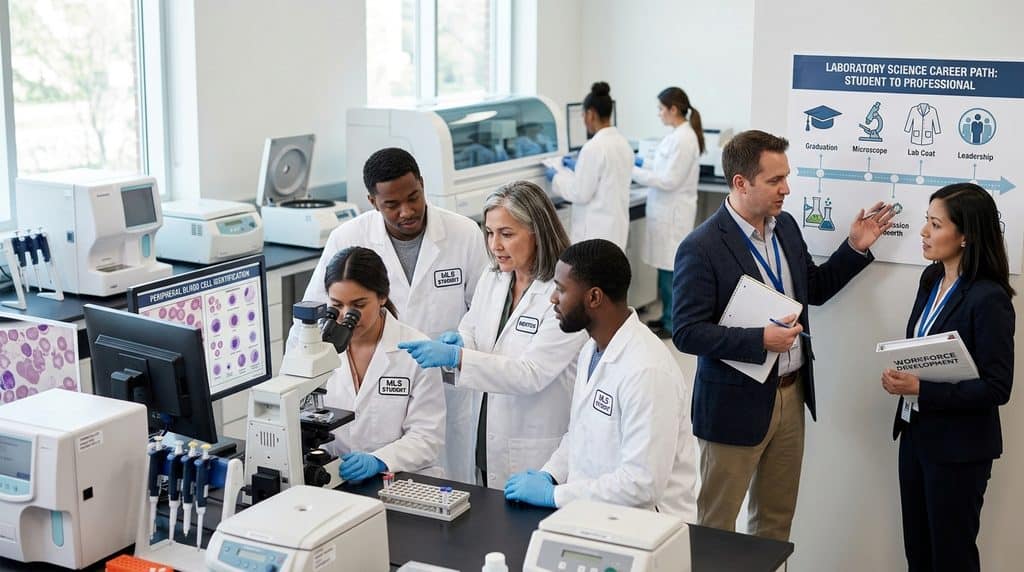
Community partnerships take several forms, and the most effective ones combine multiple elements into a coordinated pipeline rather than relying on a single intervention.
Employer-education co-design is foundational. A co-designed program gives the healthcare system a tailored talent pipeline and gives the educational institution an employer-validated program with a built-in enrollment channel and strong outcomes. When hospitals and laboratories help shape curricula, they ensure graduates emerge with the specific competencies needed on the job, reducing onboarding friction and improving retention from day one.
Apprenticeships and grow-your-own strategies extend this collaboration into paid, structured pathways. To close the gap between workforce demand and available talent, hospitals and health systems are creating new pipelines with career ladders, apprenticeships, community partnerships, and grow-your-own approaches. These models let incumbent workers, or new entrants from the community, earn a wage while training toward higher-skill roles, directly addressing the financial barriers that keep many capable candidates from completing traditional programs. This mirrors the value of apprenticeship models in bridging education and employment gaps in laboratory science specifically.
Consortium-based training expands capacity beyond what any single institution can offer. Regional collaboratives that bring together multiple community colleges, employers, and workforce development boards can pool resources, share clinical training sites, and coordinate curricula across a wider geographic area, directly addressing the placement bottlenecks that limit how many students individual programs can train.
Comprehensive student supports address the barriers that cause capable students to drop out before completion. Partnership-funded programs increasingly bundle tuition assistance with childcare support, transportation help, and other wraparound services, recognizing that financial and logistical obstacles, not academic ability, are often what stand between a student and a completed credential.
Counselor and community outreach connects the partnership to the people who need to hear about it. Because so many potential candidates, especially in underserved communities, never learn that healthcare career pathways exist, partnerships that actively engage high school counselors, community organizations, and local employment offices are far more effective at reaching candidates who would otherwise never enter the pipeline.
Why Partnerships Work Better Than Isolated Efforts

The advantage of a partnership model over isolated institutional efforts comes down to alignment and shared risk. When a hospital and a community college design a program together, the resulting credential is, by construction, aligned with actual job openings, which sharply reduces the chance that graduates emerge into a market that does not want their specific skills. This kind of partnership infrastructure can extend to nursing leadership, health informatics, public health, and other allied health fields, including clinical laboratory science, wherever a defined, employer-validated pathway would strengthen both enrollment and hiring outcomes.
Partnerships also distribute the cost and risk of workforce development across multiple stakeholders rather than leaving it entirely to cash-strapped schools or short-staffed employers. Community colleges are uniquely positioned to respond to industry needs, remove barriers to education, and connect learners with high-quality careers, and grant-funded partnerships that combine tuition support, industry-recognized certification, and direct pipelines into local employers have demonstrated the ability to train substantial numbers of workers for specific regional shortages, laboratory science among them, within a few years.
There is also a durability advantage. Individual scholarship programs or one-off recruitment drives tend to fade once initial funding or enthusiasm wanes. Structural partnerships, embedded in ongoing institutional relationships between named employers and named schools, are more likely to persist and adapt as workforce needs evolve, because both sides have an ongoing stake in the pipeline’s success.
Applying This Model to Laboratory Medicine
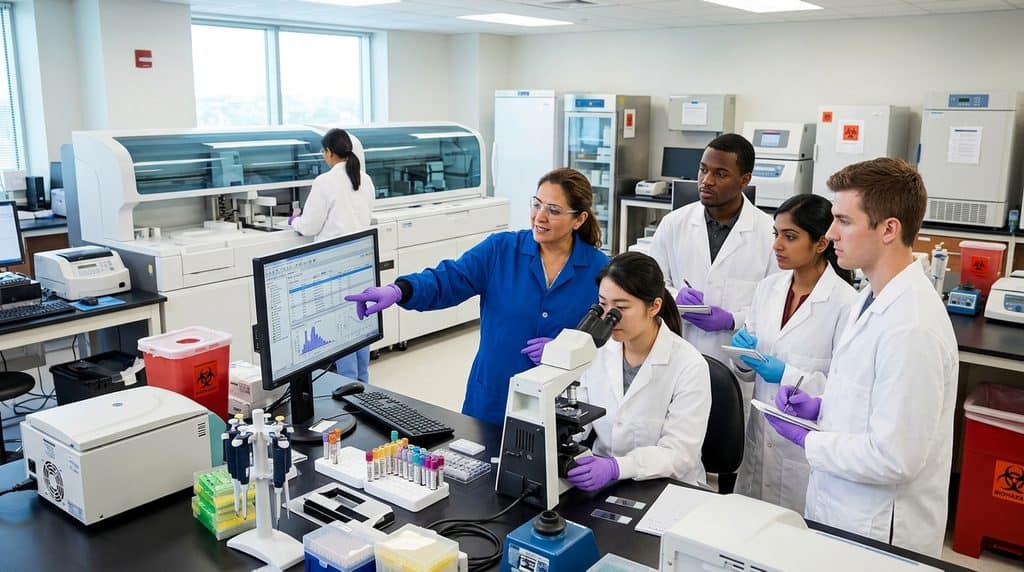
Laboratory medicine is particularly well suited to a partnership-driven workforce strategy, for reasons specific to the field. Training requires specialized equipment and supervised clinical placements that few institutions can fund or host alone, making shared, employer-connected infrastructure especially valuable. The profession also suffers from an acute visibility problem, meaning that outreach components of a partnership, connecting with counselors, community organizations, and prospective students who have never heard of the field, are not a supplementary nice-to-have but a core necessity.
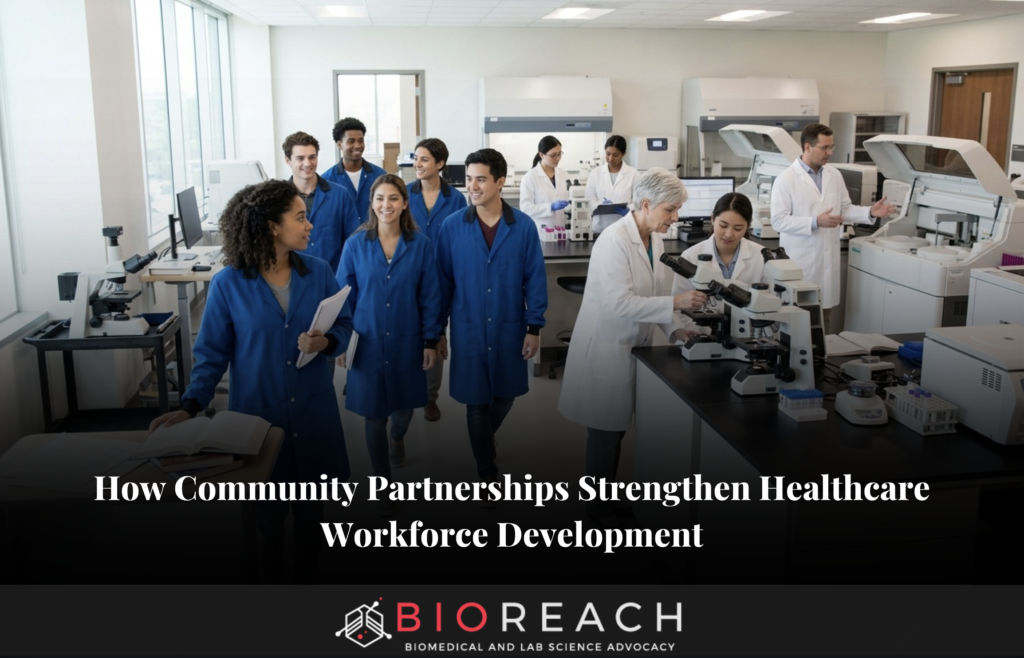
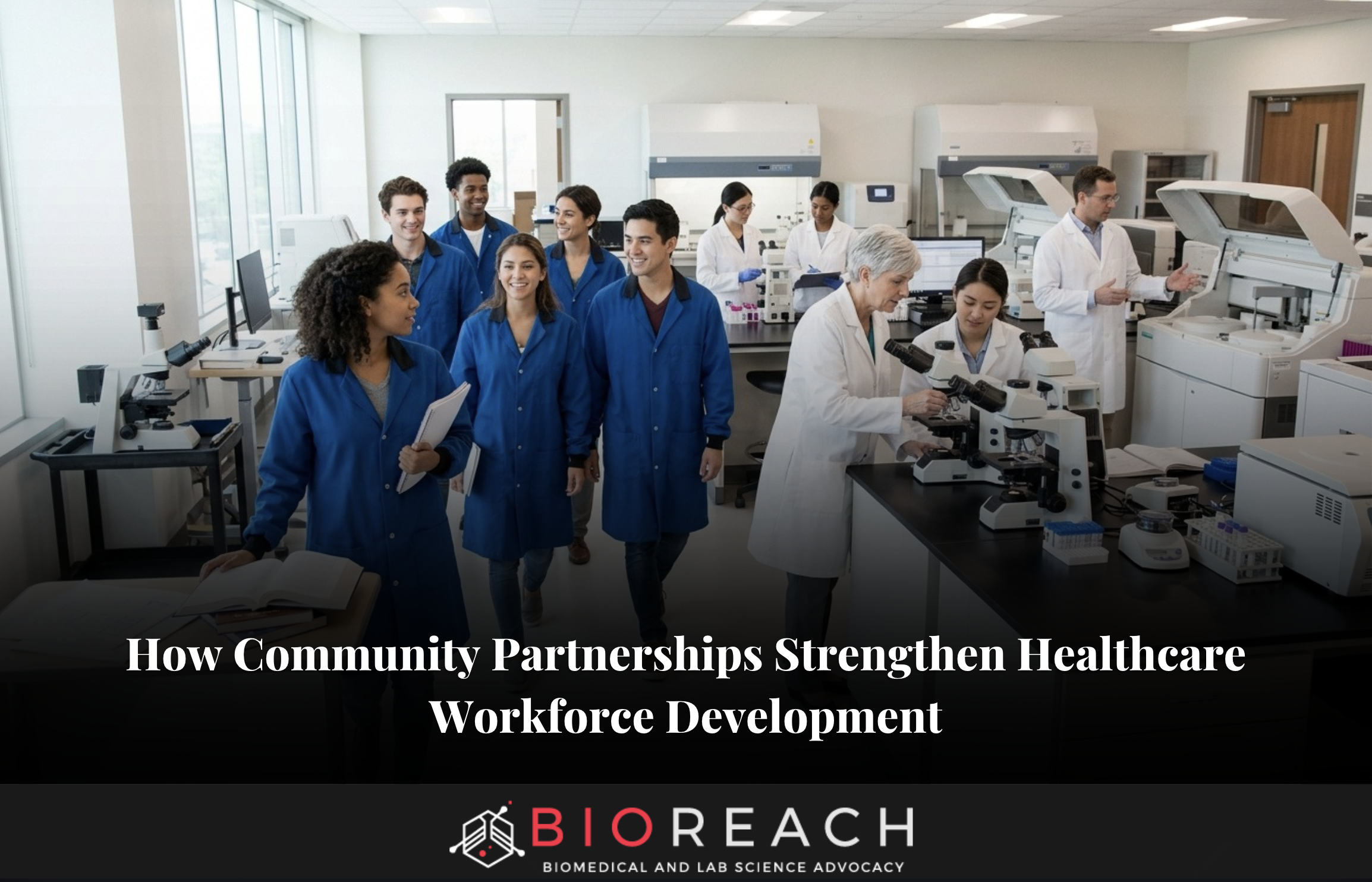
A laboratory-focused community partnership might connect a hospital system’s laboratory directly with a local community college’s medical laboratory technician program, co-designing coursework around the hospital’s actual testing menu and instrumentation, offering paid clinical rotations that double as a recruitment pipeline, and extending outreach into local high schools to build awareness years before students choose a major. This kind of structure directly attacks the combination of low awareness and limited clinical placement capacity that constrains the laboratory workforce pipeline today.
Bio-Reach’s own work reflects this partnership philosophy, connecting schools, laboratory professionals, and communities to build awareness and open pathways into laboratory science careers, particularly for students from communities historically underrepresented in the field. The model recognizes that no single institution, whether a school, a hospital, or an advocacy organization, can solve the workforce shortage alone. Coordinated partnership is not a supplementary strategy; it is the mechanism by which the pieces of the pipeline- awareness, training capacity, financial support, and hiring- actually connect.
Conclusion
Healthcare workforce development, and laboratory medicine workforce development specifically, has outgrown the traditional model of schools and employers operating independently. Community partnerships that align curricula with employer needs, fund apprenticeships and wraparound student supports, pool clinical training capacity across institutions, and actively reach into underserved communities are proving to be the most effective response to a shortage that isolated efforts cannot close.
For laboratory medicine, where training capacity is constrained and public awareness is thin, this partnership model is not optional. It is the structure through which awareness, training capacity, and hiring finally connect into a functioning pipeline. Every hospital, community college, and advocacy organization that invests in these coordinated relationships is investing directly in the diagnostic workforce the healthcare system depends on.
Frequently Asked Questions
What is a healthcare workforce partnership?
A healthcare workforce partnership is a structured collaboration between healthcare employers, such as hospitals or laboratories, and educational institutions, such as community colleges or high schools, along with organizations like workforce development boards. These partnerships co-design training programs, fund apprenticeships and student supports, and coordinate outreach so that the training pipeline is directly aligned with actual job openings and the barriers that prevent students from completing it are addressed.
Why are community partnerships important for healthcare workforce shortages?
Traditional education and hiring pathways, operating independently, cannot scale fast enough to meet today’s healthcare staffing needs, especially in fields like laboratory medicine with limited clinical training capacity. Partnerships pool resources across institutions, align curricula with employer needs so graduates are job-ready, fund apprenticeships that let candidates earn while they learn, and reach into communities that traditional recruitment misses, closing gaps that no single institution can close alone.
How do apprenticeships fit into healthcare workforce partnerships?
Apprenticeships and grow-your-own programs let students or incumbent workers earn a wage while completing the training required for a healthcare credential. This removes the financial barrier of unpaid clinical placements or coursework, which is often what causes capable candidates to drop out before finishing. Hospitals benefit by training candidates directly in their own systems and workflows, effectively building their future workforce during the training period itself.
Are community partnerships effective for laboratory science specifically?
Yes, and arguably laboratory science needs them more than most allied health fields, because training requires expensive equipment and clinical placements that few schools can fund alone, and because public awareness of the profession is unusually low. Partnerships that connect laboratories directly with training programs and extend outreach into schools address both the capacity and the awareness problems that constrain the laboratory workforce pipeline.
Who typically participates in a healthcare workforce partnership?
Participants usually include hospitals or health systems, community colleges or universities with relevant training programs, workforce development boards, and sometimes high schools, community organizations, and philanthropic funders. Successful partnerships bring these groups together around a shared, coordinated pipeline rather than each acting independently, with the employer providing job-market alignment and often clinical placements, and the school providing the educational infrastructure and enrollment channel.
Bio-Reach is a non-profit organization dedicated to advancing Laboratory Medicine through advocacy, education, and global collaboration. To learn more or get involved, visit bio-reach.org.