Introducing laboratory science to middle school students means giving young people, typically ages 11 to 14, hands-on exposure to what medical laboratory professionals actually do, through activities like microscopy, blood typing simulations, and rapid test demonstrations, before they narrow their career interests. It matters because the laboratory profession faces a severe workforce shortage rooted largely in the fact that students never learn the field exists. Middle school is an ideal moment to intervene: it is early enough to shape career awareness before students commit to other paths, and old enough for students to grasp the science. Workforce experts specifically recommend that outreach begin as early as middle school, in cooperation with existing STEM programs, to build awareness among both students and the educators who advise them.
The medical laboratory workforce is aging and shrinking relative to demand, and the single most cited cause is not pay or working conditions but visibility. Young people cannot choose a profession they have never heard of. Reaching them in middle school, when curiosity about science is high and career paths have not yet narrowed, is one of the highest-leverage interventions available to the field. This article explains why middle school is the right moment, what effective laboratory science education looks like at that age, the obstacles to overcome, and the lasting benefits, both for the workforce and for scientific literacy generally.
Why Middle School Is the Right Moment
The case for reaching students early rests on how career awareness actually develops. By high school, many students have already formed impressions of which careers are available and desirable, impressions shaped by family, media, and the limited set of professions they have encountered. Medical laboratory science, invisible in all three, rarely makes that list. By the time a student is choosing a college major, the field is competing against professions they have known about for years.
Middle school sits at a more formative point. Students at this age are developing the interests that will guide later choices; they are old enough to understand and enjoy real scientific concepts, and they have not yet committed to a path. Introducing laboratory science here means it becomes one of the options a student carries forward rather than one they discover too late, if at all. This is precisely why the argument for teaching laboratory medicine in schools applies with particular force to the middle grades.
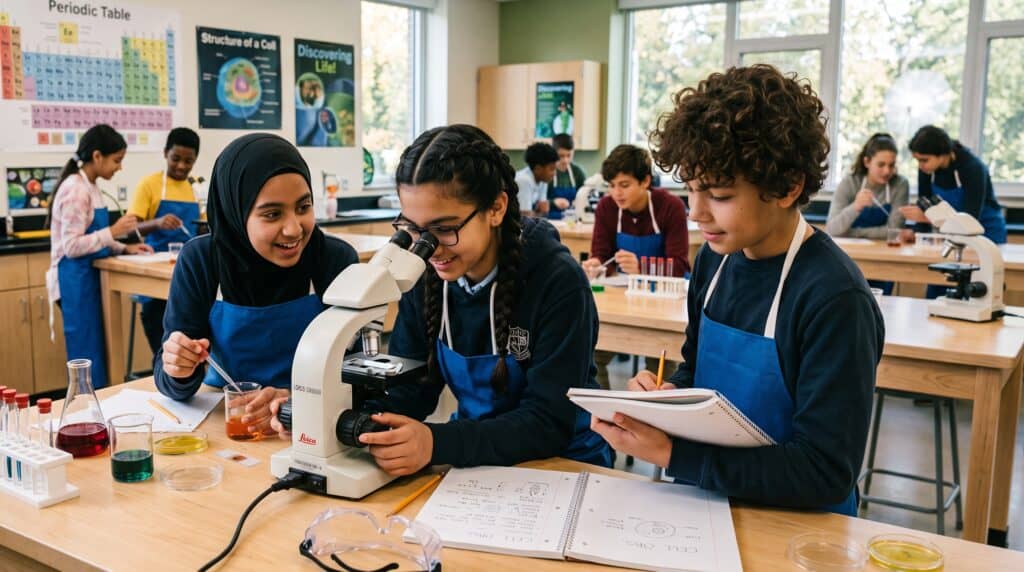
There is also a developmental fit. Middle schoolers respond powerfully to hands-on, tangible experiences, and laboratory science is fundamentally a hands-on discipline. A student who looks at their own cheek cells under a microscope or watches a simulated blood-typing reaction change color experiences science as something they do rather than something they read about. That kind of direct engagement is far more memorable, and far more likely to spark lasting interest, than a lecture about career statistics.
The Workforce Case Behind the Effort
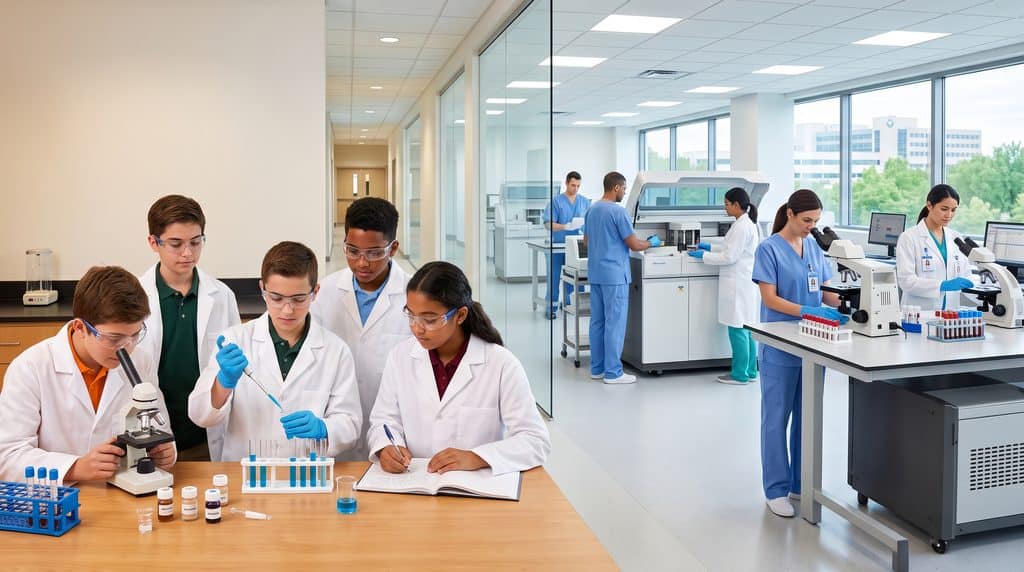
The urgency of early outreach comes from the scale of the workforce problem it addresses. The medical laboratory profession faces a shortage that current graduation rates cannot close, with far more open positions than qualified professionals to fill them, driven largely by retirements outpacing new entrants. The number of accredited training programs has declined over the past decade, and the field educates well under half the professionals it needs.
The root cause connects directly back to the classroom. Because the profession is invisible to students, enrollment in laboratory science programs stays low; because enrollment is low, programs face closure; and because programs close, the field becomes even less visible. Middle school outreach interrupts this cycle at its earliest point by building awareness before students have written the profession off, or more accurately, before they have failed to write it on their list at all.
Reaching students early also serves equity. Students from underrepresented and lower-income communities are least likely to have family members or informal networks that introduce them to niche healthcare careers. Bringing laboratory science into middle schools, especially those serving these communities, opens a pathway to a stable, credentialed profession for students who might otherwise never encounter it. This is central to the mission of programs like Bio-Reach’s Lab Lit initiative, which partners with schools to introduce laboratory science to young people with a particular focus on communities historically underrepresented in healthcare. Building a diverse laboratory workforce begins with reaching diverse students early.
What Effective Middle School Laboratory Education Looks Like
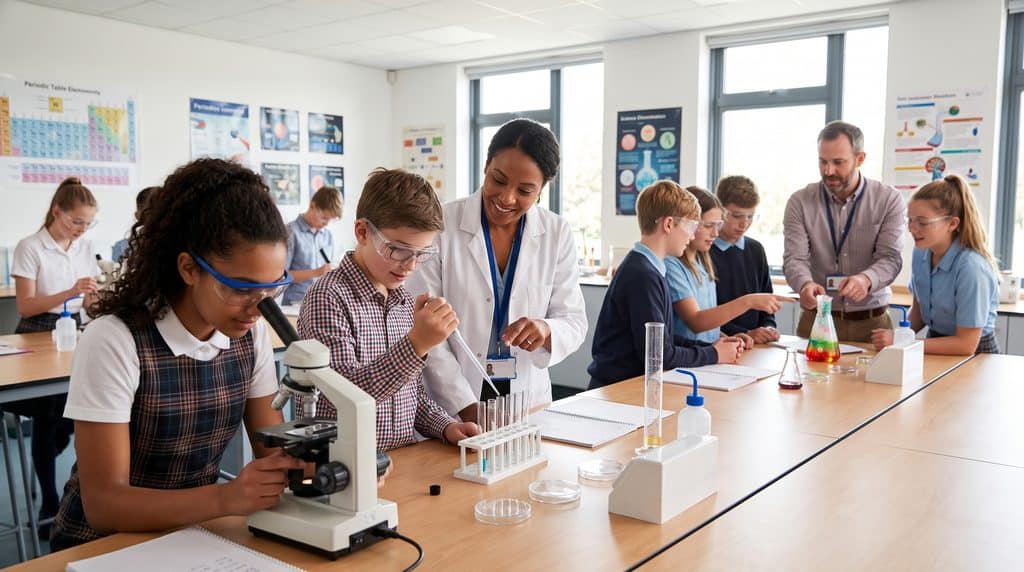
Introducing laboratory science to middle schoolers is not about adding dense curriculum. It is about creating memorable, hands-on encounters with the work, designed for the age group. Several approaches have proven effective.
Hands-on demonstrations are the foundation. Activities like examining cells under a microscope, performing simulated blood typing with safe substitutes, watching a rapid test produce a visible result, or using a pipette to measure tiny volumes turn abstract ideas into concrete experiences. When a student performs a technique themselves, the profession stops being invisible and becomes something they have actually touched.
Laboratory professionals visiting classrooms bring the work to life in a way no textbook can. When a real medical laboratory scientist explains what they do, shows the tools of the trade, and connects their work to patients whose diagnoses depended on it, students see both the science and the person behind it. Role models matter enormously at this age, and seeing a relatable professional makes the career feel attainable.
Connecting laboratory science to patient stories gives the work emotional weight. Middle schoolers respond to the idea that the laboratory is the place behind every diagnosis, that the blood test which caught a friend’s illness or a relative’s condition was analyzed by a laboratory scientist. Framing laboratory work as detective work that solves medical mysteries and helps real people makes it compelling rather than dry.
Integration with existing STEM programs makes the effort scalable and sustainable. Rather than requiring entirely new infrastructure, laboratory science can be woven into science classes, STEM clubs, and career days that schools already run. Experts specifically recommend this cooperation with existing STEM programs as the practical route to reaching students at scale.
Equipping teachers and counselors multiplies the impact. Middle school science teachers and counselors influence many students over years, yet most have never been exposed to laboratory medicine as a career. Providing them with demonstration materials, career information, and simple activities turns each educator into an ongoing ambassador for the profession, extending the reach of any single classroom visit.
The Obstacles to Overcome
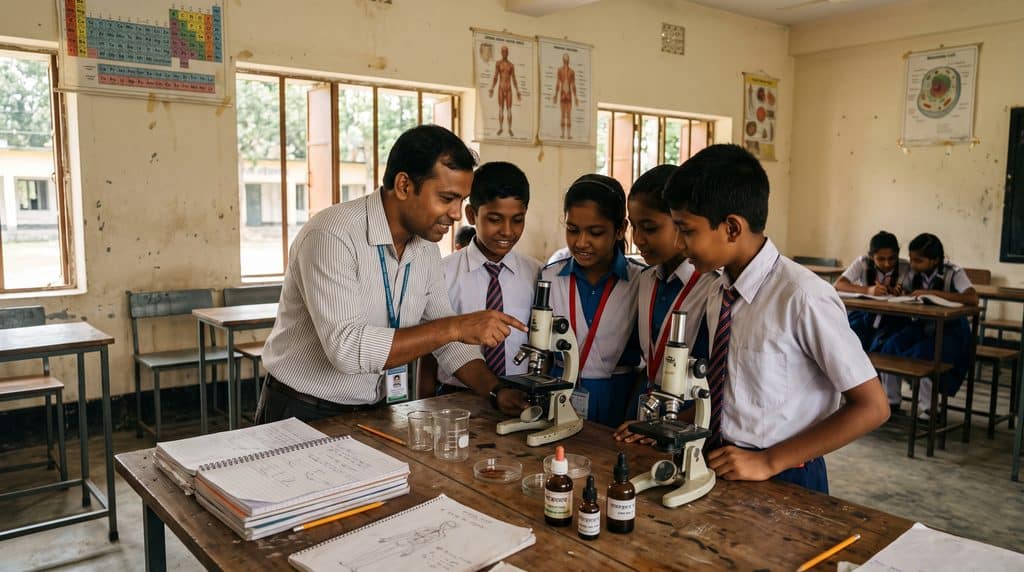
Introducing laboratory science to middle schoolers faces real obstacles, though none are insurmountable. The most basic is that the educators themselves often do not know the field exists, which means outreach must reach teachers and counselors before it can reach students effectively. Building that awareness among educators is a prerequisite, not an afterthought.
Resource constraints are a practical barrier. Schools operate under tight budgets and packed schedules, and adding anything to the curriculum competes with existing priorities. This is why low-cost, ready-to-use materials and partnerships that bring outside professionals and resources into the school are so valuable; they lower the burden on the school itself.
Sustaining engagement beyond a one-time event is a further challenge. A single exciting demonstration can spark interest, but that interest needs reinforcement through follow-up activities, continued exposure in later grades, and pathways that let a curious middle schooler keep learning about the field as they move toward high school and its more concrete opportunities like phlebotomy programs and health science coursework.
The Lasting Benefits

The benefits of introducing laboratory science in middle school extend well beyond immediate recruitment, though recruitment alone would justify the effort.
The clearest benefit is a stronger, earlier-primed workforce pipeline. Students who encounter laboratory science at 12 and carry that awareness forward are far more likely to pursue it than students who never hear of it until college. Because the pipeline takes years to fill, planting seeds early is the only way to address a shortage that current graduation rates cannot close on their own.
A broader benefit is scientific literacy for all students, including those who will never enter the field. Every one of them will be a patient someday, and understanding how laboratory testing works, why specimen quality matters, and what test results mean makes them better-equipped healthcare consumers as adults. Teaching laboratory science also reinforces general scientific reasoning, careful measurement, the value of controlled conditions, and evidence-based thinking, that serves students regardless of career.
Finally, early exposure advances equity by opening a pathway to a stable, respected profession for students from communities that have historically been underrepresented in laboratory medicine and in healthcare more broadly. A student inspired in middle school, and supported along the way, can become the diagnostic professional a shorthanded field urgently needs.
Conclusion
Introducing laboratory science to middle school students is a small investment with an outsized potential return. At an age when curiosity is high and career paths are still open, hands-on exposure to the work of the laboratory can plant a seed that grows into a career, helping to address a workforce shortage whose root cause is simply that too few young people know the profession exists.
The approach that works is not complicated: hands-on demonstrations, real professionals in the classroom, patient stories that give the work meaning, integration with existing STEM programs, and educators equipped to keep the message alive. The obstacles, educator awareness, resources, and sustained engagement- are real but surmountable. The next generation of laboratory scientists is sitting in middle school classrooms right now, and whether they ever discover the field may depend on whether someone shows them, hands-on, the work that makes modern medicine possible.
Frequently Asked Questions
Why should laboratory science be taught in middle school specifically?
Middle school, roughly ages 11 to 14, is when students develop the interests that guide later career choices, before those paths narrow in high school. Students at this age are old enough to understand real scientific concepts and respond strongly to hands-on activities, but young enough that introducing a new career option still shapes their thinking. Because the laboratory profession is invisible to most students, reaching them early is the most effective way to build awareness before they commit to other paths.
What laboratory activities work well for middle schoolers?
Hands-on, visual activities work best: examining cells under a microscope, safe simulated blood-typing demonstrations, watching rapid tests produce visible results, and using pipettes to measure small volumes. Visits from real laboratory professionals and connecting the work to patient stories, framing the lab as the place behind every diagnosis, make the experience memorable and help students see both the science and the people who do it.
How does teaching laboratory science help the workforce shortage?
The medical laboratory profession faces a severe shortage driven largely by low awareness: students cannot choose a career they have never heard of, so enrollment stays low, programs close, and the field becomes even less visible. Introducing laboratory science in middle school interrupts this cycle early by building awareness before students overlook the field, gradually strengthening a pipeline that current graduation rates cannot fill on their own.
Do students need special equipment to learn laboratory science?
Not necessarily. Many effective activities use low-cost or simulated materials, safe substitutes for blood typing, basic microscopes, and simple demonstration kits, and can be integrated into existing science classes and STEM programs rather than requiring new infrastructure. Partnerships that bring laboratory professionals and their resources into schools also lower the burden on the school itself.
Does early exposure to laboratory science benefit students who do not become lab scientists?
Yes. Every student will be a patient at some point, and understanding how laboratory testing works, why sample quality matters, and what results mean makes them more capable healthcare consumers as adults. Laboratory science education also builds general scientific reasoning, careful measurement, evidence-based thinking, and the value of controlled conditions, which serve students in any career.
Bio-Reach is a non-profit organization dedicated to advancing Laboratory Medicine through advocacy, education, and global collaboration. To learn more or get involved, visit bio-reach.org.