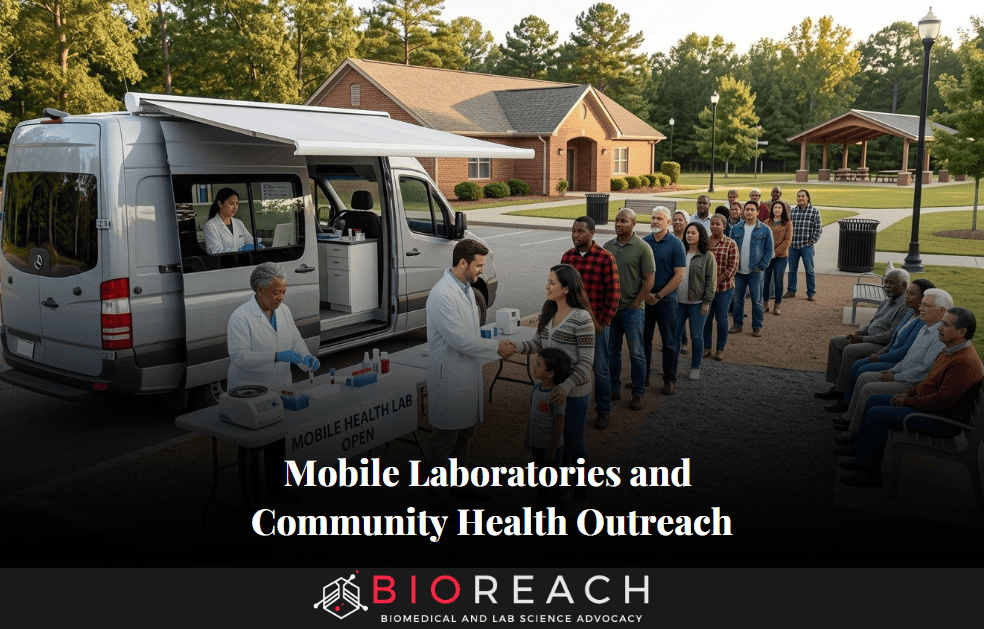
Mobile laboratories are CLIA-certified diagnostic facilities built into vans or trailers that travel directly to underserved communities, offering laboratory testing to people who face barriers to accessing fixed clinical sites. More than 3,600 mobile health units currently operate in the United States, with 65 percent serving rural communities, and their economic value is well documented: Mobile Health Map data shows that every dollar spent on mobile units returns eighteen dollars in value. By bringing testing directly to community events, neighborhoods, and rural areas rather than requiring residents to travel to a clinic, mobile laboratories have proven effective at reaching uninsured, low-income, and rural populations who would otherwise go untested, particularly when paired with genuine community partnership in program design.
Access to laboratory testing depends on more than whether a test exists; it depends on whether the person who needs it can actually reach it. For millions of people, distance, cost, lack of insurance, transportation barriers, and distrust of the healthcare system stand between them and basic diagnostic testing. Mobile laboratories address this gap directly by bringing certified testing capability to the communities that need it most. This article examines how mobile laboratories work, the evidence for their effectiveness, and what makes community outreach programs succeed.
What Mobile Laboratories Actually Do
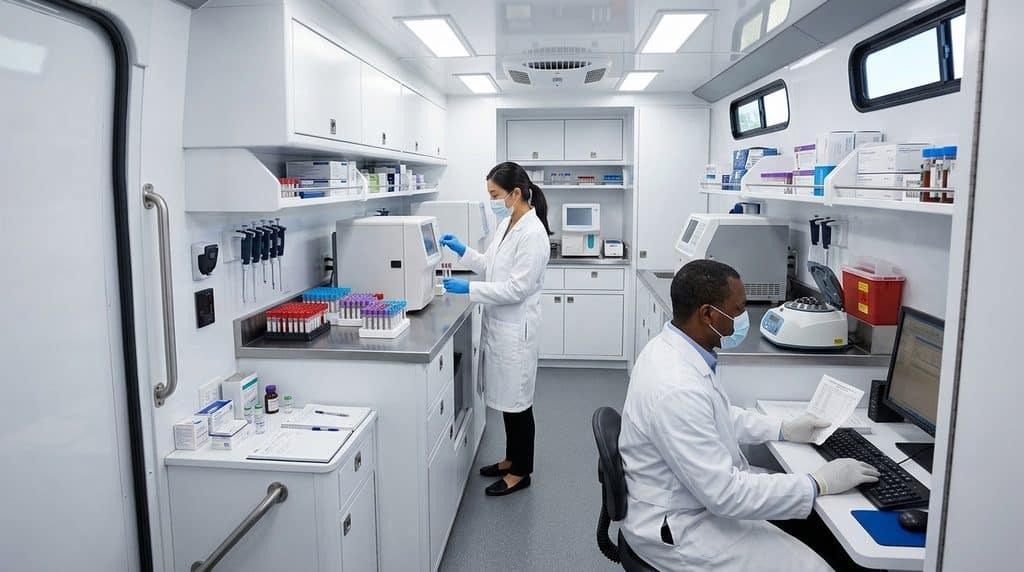
A mobile laboratory is not a stripped-down or lesser version of a fixed clinical laboratory; it is a fully certified diagnostic facility built for mobility. Mobile health clinics commonly offer primary care visits, laboratory services, and specialty care visits, along with free screenings such as blood pressure and blood glucose tests, bone density scans, and various point-of-care tests. Depending on the unit’s scope and certification, testing can range from simple CLIA-waived point-of-care tests to more complex laboratory analysis processed on board or transported to a partner reference laboratory.
The regulatory framework governing mobile laboratories mirrors that of fixed facilities. Mobile clinics are subject to federal regulations on accreditation, including obtaining Clinical Laboratory Improvement Amendments waivers for less complex testing, ensuring that a test performed in a van in a church parking lot meets the same quality bar as one performed in a hospital laboratory. This quality consistency is what makes mobile laboratory results clinically trustworthy rather than merely convenient.
The infrastructure required to operate a mobile laboratory well extends beyond the vehicle itself. A well-designed mobile health clinic pilot combining telehealth consultations, laboratory testing, and in-person primary care examinations required coordinated work on technology and equipment selection, overall clinic design, vehicle vendor selection, clinical scheduling and workflows, and staffing models, underscoring that an effective mobile program is a genuine operational undertaking, not simply a van with a phlebotomist inside.
The Evidence for Mobile Laboratories and Community Health
Effectiveness
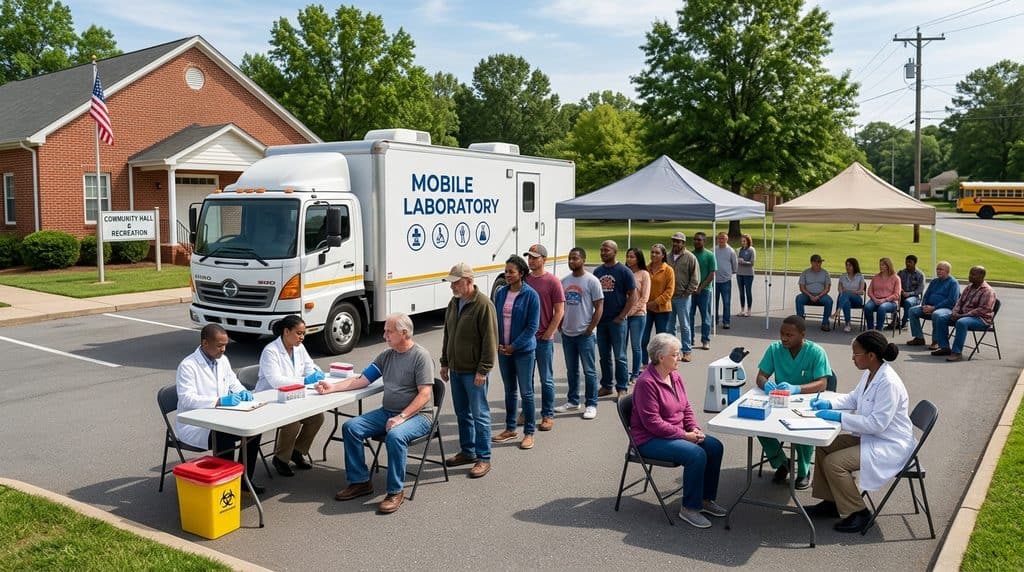
The case for mobile laboratories is not merely intuitive; it is backed by a growing body of program evaluation data demonstrating real reach into populations that traditional healthcare delivery struggles to serve.
A Connecticut program offering free saliva-based diagnostic testing illustrates the scale of impact achievable through sustained mobile outreach. Across 123 community events, the program tested 1,428 individuals, of whom 54 percent identified as BIPOC, 59 percent reported an annual household income under $25,000, and 31 percent were uninsured. The program did not merely reach people who would have been tested elsewhere; it reached people the traditional system was missing. Twenty-nine percent of participants received their first-ever COVID-19 test through the program, and 48 percent were unaware of alternative testing options that existed.
Speed and convenience proved central to the program’s success. Results were reported in an average of 3.1 hours, enabling many participants to receive their diagnostic results during the same community event, collapsing the traditional gap between specimen collection and result delivery that can cause patients to lose contact with the healthcare system before ever learning their result. This kind of same-visit result delivery directly addresses one of the persistent challenges in the broader post-analytical phase of laboratory testing, ensuring that a result reaches the person who needs it rather than disappearing into a system the patient cannot easily follow up with.
Rural-specific pilots have shown similarly strong results. A digitally capable mobile health clinic serving four underserved rural communities provided 1,498 patient appointments over roughly a year, combining telehealth consultations, laboratory testing, and in-person examinations, while also establishing newly available broadband internet access for the communities served, a valuable secondary benefit that extended beyond the immediate healthcare mission.
The economic case is equally compelling. Mobile units deliver care at lower cost than traditional clinics, and for every dollar spent, eighteen dollars in value is returned, alongside benefits including expanded access to care, reduced geographic barriers, increased preventive care, better chronic disease management, and increased follow-up care.
What Makes These Programs Succeed
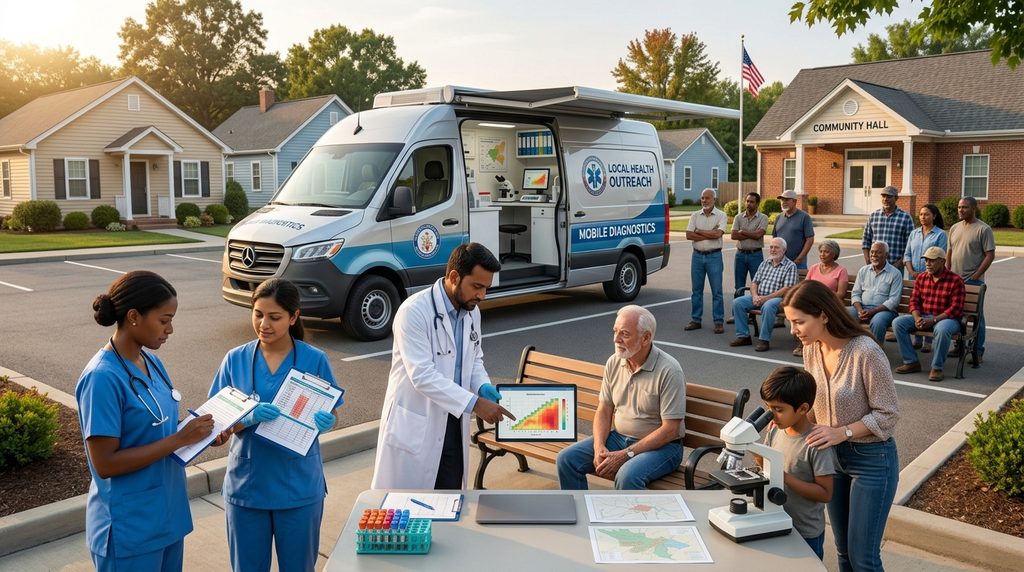
Not every mobile laboratory program achieves the reach and trust documented in the strongest examples. The evidence points to several factors that distinguish effective programs from less successful ones.
Genuine community partnership in program design is the clearest differentiator. Effective programs engage community leaders and organizations throughout the project, using iterative engagement through emails, phone calls, surveys, and in-depth conversations with key stakeholders to refine and expand outreach strategies and better understand evolving community health needs. Programs that leverage trusted community contacts to build trust with target populations, and that specifically seek input on testing locations and engagement strategies from partners such as health departments, food banks, and religious institutions, consistently perform better than programs designed without that input. This approach mirrors the broader principle that strengthening healthcare workforce and service delivery requires genuine community partnership rather than top-down program design.
Pairing testing with existing community touchpoints increases participation without requiring people to make a separate trip specifically for healthcare. Programs that identify events or services to pair testing with, rather than asking community members to visit a standalone site, consistently report higher engagement than standalone testing locations.
Addressing trust barriers directly matters as much as addressing logistical ones. Survey data from mobile testing participants found that transportation challenges and difficulty accessing needed healthcare were common barriers reported even among those who ultimately engaged with mobile testing, underscoring that mobile programs succeed by removing multiple overlapping barriers at once, not simply the barrier of physical distance.
Maintaining the same quality standards as fixed facilities protects the credibility that makes outreach worthwhile. A mobile program’s community trust depends entirely on the reliability and accuracy of the results it delivers, meaning that quality management cannot be relaxed simply because the setting is a parking lot rather than a hospital. The same pre-analytical rigor around specimen collection and handling that governs any laboratory applies fully in a mobile setting, arguably with even less margin for error given the more variable operating conditions.
Applications Beyond Infectious Disease Screening
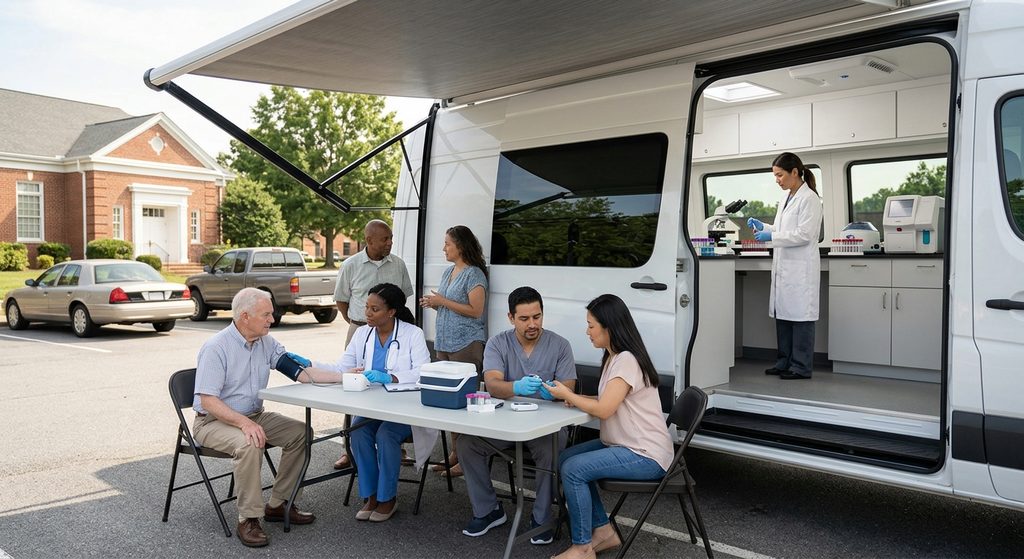
While much of the published evidence on mobile laboratories comes from infectious disease testing programs, particularly those launched during and after the COVID-19 pandemic, the model extends well beyond that use case. Mobile units are increasingly used for chronic disease screening and management, supporting blood pressure and glucose monitoring for diabetes and hypertension management in communities with limited primary care access. They support cancer screening outreach, addressing exactly the kind of screening gaps documented in underserved populations where mammography, cervical, and colorectal screening rates lag well behind national averages. And they are increasingly integrated into broader rural diagnostic access strategies, extending laboratory capability into communities where fixed facilities have closed or never existed.
Conclusion
Mobile laboratories represent one of the most evidence-backed, cost-effective solutions to the persistent problem of diagnostic access for underserved populations. Program after program has demonstrated the same pattern: when testing is brought directly into communities, paired with genuine partnership and trust-building, and delivered with same-visit results and full laboratory quality standards, populations that traditional healthcare delivery consistently misses show up, get tested, and often receive their first diagnostic test in years.
The return on investment, both in dollar terms and in the value of catching disease earlier in populations that would otherwise go undiagnosed, makes the case for expanding mobile laboratory capacity compelling. As rural hospital closures and healthcare access gaps continue to widen in many regions, mobile laboratories are not a stopgap measure but an increasingly essential and permanent component of how equitable diagnostic access will be delivered.
Frequently Asked Questions
What is a mobile laboratory?
A mobile laboratory is a CLIA-certified diagnostic testing facility built into a van, trailer, or similar mobile unit that travels directly to communities rather than requiring people to visit a fixed clinical site. Testing ranges from simple point-of-care tests to more complex laboratory analysis, and mobile laboratories are subject to the same federal quality and accreditation regulations as fixed laboratories.
Are mobile laboratories as accurate as testing in a regular laboratory?
Yes, when properly operated. Mobile laboratories must meet the same CLIA requirements and quality standards as fixed facilities, and the specific certification required depends on the complexity of testing performed. Maintaining rigorous specimen collection and handling practices in a mobile setting is essential to preserving this accuracy, since mobile units often face more variable operating conditions than a hospital laboratory.
Do mobile laboratories actually reach people who wouldn’t otherwise get tested?
Evidence strongly supports this. In one documented program, 29 percent of participants received their first-ever test for the condition being screened through the mobile program, and nearly half were previously unaware that alternative testing options existed. Mobile programs specifically reach uninsured, low-income, and rural populations at rates well above what fixed clinical sites typically achieve.
What makes a mobile laboratory outreach program successful?
The strongest evidence points to genuine community partnership in program design, including ongoing input from local leaders and organizations on testing locations and outreach strategies; pairing testing with existing community events rather than requiring standalone visits; and delivering results quickly, ideally during the same visit, so participants receive actionable information immediately rather than losing contact with the healthcare system.
Is investing in mobile laboratories cost-effective?
Yes. Mobile Health Map data indicates that every dollar spent on mobile health units returns eighteen dollars in value, reflecting benefits including expanded access to care, increased preventive screening, better chronic disease management, and reduced reliance on costlier emergency care that often results when conditions go undetected until they become acute.
Bio-Reach is a non-profit organization dedicated to advancing Laboratory Medicine through advocacy, education, and global collaboration. To learn more or get involved, visit bio-reach.org.