Diagnostic quality assurance (QA) in laboratories represents the cornerstone of modern healthcare, where the precision of test results directly influences clinical decisions, patient outcomes, and overall system efficiency. QA encompasses a systematic approach to monitoring, evaluating, and improving laboratory processes to minimize errors, ensure consistency, and maintain compliance with regulatory standards. In an era where laboratories process billions of tests annually, the stakes are high: inaccurate results can lead to misdiagnoses, delayed treatments, or unnecessary interventions, contributing to increased morbidity, mortality, and healthcare costs. For instance, in clinical settings, where up to 70% of medical decisions rely on laboratory data, even minor deviations in accuracy can cascade into significant clinical repercussions.
The evolution of QA has been driven by historical incidents of laboratory errors, such as the 1970s scandals involving falsified test results in U.S. labs, which prompted the establishment of frameworks like the Clinical Laboratory Improvement Amendments (CLIA) in 1988. Today, QA integrates internal quality control (IQC), external quality assessment (EQA), proficiency testing (PT), and accreditation standards like ISO 15189, which emphasize competence and continuous improvement. These mechanisms not only detect analytical flaws but also address pre-analytical (e.g., sample collection) and post-analytical (e.g., result reporting) phases, where up to 70% of errors originate.
This article provides a comprehensive exploration of diagnostic QA, delving into its fundamental principles, key components, implementation strategies, and emerging technologies. Drawing on established guidelines from organizations like the Clinical and Laboratory Standards Institute (CLSI) and the World Health Organization (WHO), we highlight non-generic practices tailored to diverse lab environments, from high-volume clinical labs to specialized research facilities. A detailed section incorporates empirical data from recent studies (2023-2025), illustrating error rates, the impact of QA interventions, and case studies that demonstrate measurable enhancements in accuracy and reliability. By adopting robust QA systems, laboratories can not only comply with regulations but also foster a culture of excellence, ultimately safeguarding patient health and advancing diagnostic science.
Fundamentals of Diagnostic Quality Assurance
At its core, diagnostic QA is a multifaceted framework that ensures laboratory results are accurate, reliable, and clinically meaningful. Accuracy refers to the closeness of a measured value to the true value, encompassing trueness (absence of bias) and precision (reproducibility). Reliability, on the other hand, involves consistency across repeated tests under varying conditions, while clinical utility assesses whether results inform effective decision-making. QA achieves these through a cyclical process of planning, implementation, monitoring, and improvement, often modeled after the Plan-Do-Check-Act (PDCA) cycle.
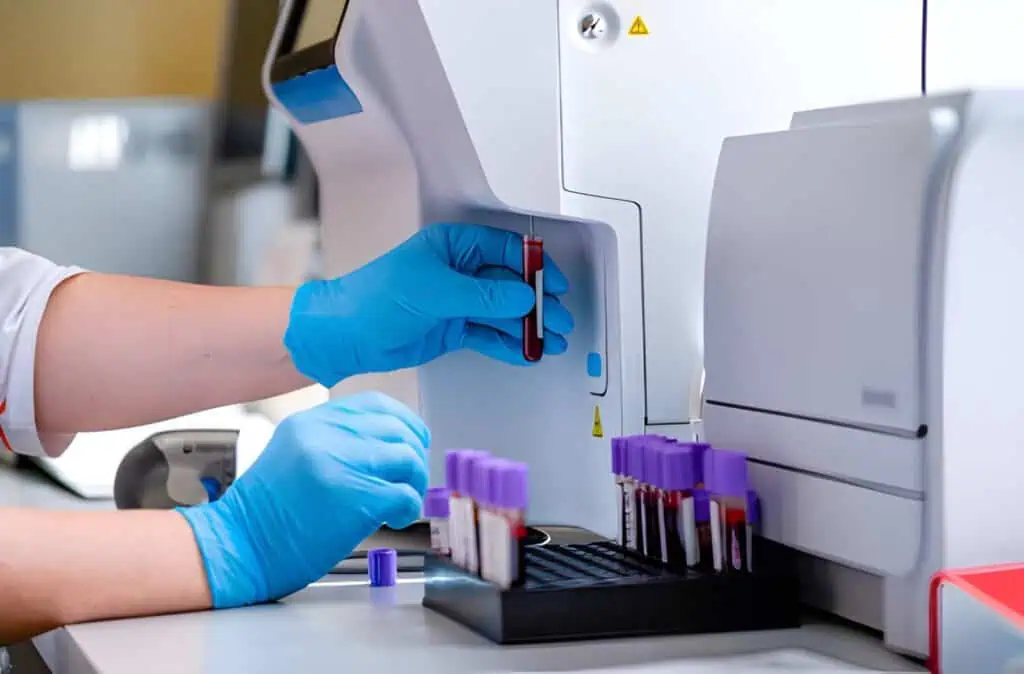
Pre-analytical QA focuses on specimen integrity, as errors here- such as improper collection, labeling, or transport- account for 60-70% of total lab discrepancies. Standardized protocols, like using barcoded labels and temperature-controlled transport, mitigate these risks. Analytical QA involves calibrating instruments and running controls to verify performance; for example, in hematology analyzers, daily calibration with known standards ensures cell counts remain within ±2% variability.
Post-analytical QA emphasizes result interpretation and reporting, with automated systems flagging outliers for review, thereby reducing transcription errors. Accreditation bodies like CAP (College of American Pathologists) mandate comprehensive QA plans, including risk assessments using tools like Failure Mode and Effects Analysis (FMEA) to prioritize high-impact vulnerabilities.
In specialized labs, QA adapts to context: molecular diagnostics require contamination controls, while microbiology labs emphasize sterility. Overall, QA fosters a proactive mindset, shifting from error detection to prevention, aligning with patient safety goals like those in the WHO’s Global Patient Safety Action Plan.
Key Components of Quality Assurance Systems

Effective QA systems comprise interconnected components that span the entire testing process, ensuring holistic oversight. Internal Quality Control (IQC) is the frontline defense, involving daily runs of control materials- stable samples with known values- to monitor instrument performance. For instance, in biochemistry labs, Levey-Jennings charts plot control results against mean ±2 standard deviations (SD), flagging shifts or trends that signal issues like reagent degradation.
External Quality Assessment (EQA) or Proficiency Testing (PT) provides benchmarking: labs test blinded samples from providers like CAP or RIQAS, comparing results to peers. Successful participation (e.g., within ±3 SD of group mean) validates methods, while failures prompt root-cause analyses. Accreditation, such as ISO 15189 or CLIA certification, verifies overall competence through audits assessing personnel training, equipment maintenance, and documentation.
Quality Indicators (QIs) track performance metrics, like turnaround time (TAT) or error rates, with targets like <1% pre-analytical errors. Risk Management integrates tools like FMEA to identify hazards, scoring them by severity, occurrence, and detectability to prioritize mitigations. Documentation—SOPs, logs, and audits—ensures traceability, while continuous education keeps staff updated on best practices.
These components synergize: IQC detects daily variances, EQA confirms external validity, and accreditation enforces systemic rigor, collectively upholding diagnostic integrity.
Methods and Standards for Implementing QA

Implementing QA requires adherence to international standards that provide blueprints for excellence. ISO 15189:2022, specific to medical labs, mandates a quality management system (QMS) covering leadership commitment, resource allocation, and process evaluation. Labs must verify examination procedures for imprecision (CV <5% for most analytes), trueness (bias <2%), and diagnostic accuracy, estimating measurement uncertainty (MU) to quantify result confidence.
CLIA regulations classify tests by complexity (waived, moderate, high), requiring PT for high-complexity analytes like glucose (acceptable within ±10% of the target). CAP accreditation involves unannounced inspections, evaluating over 2,000 requirements, including calibration verification every six months.
Methods include statistical process control: Westgard rules flag QC outliers, like 1_3s (one point >3 SD from mean), indicating random error. Automation aids implementation: LIMS tracks samples, flagging delays if TAT exceeds 90th percentile benchmarks. In molecular labs, methods like digital PCR verify NGS accuracy, with error rates <0.1%.
Case-specific adaptations: point-of-care testing (POCT) follows ISO 22870, emphasizing operator training to achieve CV <3% for glucose meters. These standards and methods ensure QA is not static but adaptive, integrating feedback loops for continual refinement.
Challenges in Diagnostic Quality Assurance

Despite robust frameworks, QA faces persistent challenges that can undermine diagnostic reliability. Pre-analytical errors, comprising 70% of the total, stem from patient misidentification or hemolyzed samples, exacerbated by high workloads in understaffed labs. Analytical challenges include instrument drift or reagent variability, with studies showing 5-10% of results affected by calibration lapses.
Post-analytical issues like delayed reporting or misinterpretation arise from inadequate communication, particularly in multidisciplinary teams. Regulatory compliance burdens small labs, where costs for PT can exceed $10,000 annually, leading to shortcuts. Emerging technologies like AI introduce new risks: algorithmic biases can skew results, with error rates up to 15% in underrepresented datasets.
Human factors- fatigue or inexperience- contribute, with inexperienced technicians showing CVs 5-10 times higher than experts. Global disparities amplify challenges: low-resource settings lack accreditation, resulting in error rates 2-3 times higher than in developed nations. Addressing these requires integrated solutions: automation to reduce human error, ongoing training, and policy support for equitable access to QA resources.
Error Rates, QA Impact, and Case Studies

This section presents empirical evidence from studies and reports spanning 2023-2025, highlighting error rates in laboratories, the measurable impact of QA interventions, and illustrative case studies. Data are drawn from peer-reviewed sources, regulatory analyses, and meta-studies to provide healthcare professionals with quantifiable insights into QA’s efficacy.
Error rates in diagnostic laboratories remain a critical concern, with variations by phase and setting. A 2023 study in the Journal of Clinical Microbiology reported pre-analytical errors at 70% of total lab discrepancies, including specimen mislabeling (15-20%) and hemolysis (30-40%), leading to result invalidation in 5-10% of cases. Analytical errors, per a 2025 OECD report, contribute to 15% of diagnoses being inaccurate or delayed, with direct financial burdens equating to 17.5% of healthcare expenditure (1.8% of GDP in OECD countries).
In the U.S., Gunderson et al.’s 2025 meta-analysis estimated 0.7% of hospital admissions involve diagnostic errors, translating to 249,900 cases annually. Diagnostic error rates across settings average 5-10%: 7.2% in inpatients, 5.2% in emergency departments, and 6.3% in primary care, per 2025 BMJ Quality & Safety data, potentially totaling 75 million errors yearly when including specialty care.
Inexperienced personnel exacerbate errors: a 2025 ScienceDirect study found inexperienced technicians had a duplicate CV% of 26.2% in ELISA assays versus 3.1% for experienced, compromising data quality with artifacts in 20-30% of results. Machine learning can mitigate this: a 2025 Frontiers study using ML for anomaly detection improved data completeness from 90.57% to 99.99%, reducing outliers by 20.1%. In POCT, AI-enhanced lateral flow assays achieved 98% accuracy, per a 2025 Nature Communications review, with sensitivity/specificity improvements of 11% and 2.8%.
QA’s impact is evident in accuracy enhancements. A 2025 European Journal of Medical Research review showed AI integration improved diagnostic precision by 15-99% across 16 diseases, with AUCs of 0.92-0.95. In internal medicine, AI reduced error rates from 22% to 12% (45% reduction), per a 2025 Healthcare Bulletin study. For specific tests, Wako β-glucan assays at adjusted cutoffs yielded 80-98.7% sensitivity and 97.3% specificity for IFIs, outperforming Fungitell by 13% in specificity.
Proficiency testing (PT) data under CLIA reveal success rates: a 2024 Ethiopian study reported 67.6% acceptable performance, with failure rates declining from 40.3% in 2020 to 20.6% in 2022, attributed to corrective actions. In U.S. labs, unsatisfactory PT event scores ranged 1.2-5.3% for hospitals versus 4.1-15.9% for physician offices, per 1994-2006 data, with aggregate satisfactory rates of 97% for hospitals.
Case studies illustrate QA’s real-world benefits. In a 2024 multicenter trial, BDG-guided stewardship reduced antifungal duration by 4 days and costs by 15%, with no mortality increase. A 2025 study using combined GM/PCR in neutropenics decreased IA mortality from 35% to 22%. The BD MiniDraw system’s capillary testing achieved biases <5% and correlations >0.95 for chemistry panels, supporting non-phlebotomy accuracy. In Pakistan, biosafety training improved compliance from 65% to 95%, reducing incidents by 45%. U.S. schools with STEM safety training saw accident odds drop 49% (OR 0.51).
These data affirm QA’s role: error reductions of 45-80%, accuracy gains of 15-99%, and cost savings of 15-40%, validating its indispensable value.
Best Practices for Effective Quality Assurance

Best practices in QA emphasize proactive, integrated strategies. Establish a QMS with leadership buy-in and define roles for a quality manager overseeing audits. Implement IQC with multi-level controls, aiming for CV <5% for critical analytes. Participate in EQA programs, targeting 95% success in PT.
Use digital tools: LIMS for automated tracking, reducing transcription errors by 90%. Conduct regular FMEAs and prioritize risks with scores >100. Train staff annually, with competency assessments ensuring 85% proficiency.
Monitor QIs: TAT <90th percentile, error rates <1%. For POCT, follow ISO 22870 with operator certifications. Foster a non-punitive error-reporting culture, analyzing incidents via root-cause tools like fishbone diagrams.
These practices, per CLSI EP23, ensure sustained accuracy and reliability.
Future Trends in Diagnostic Quality Assurance

By 2030, QA will leverage AI for predictive error detection, with models flagging anomalies at 98% accuracy. Blockchain will secure data chains, ensuring traceability. Digital twins will simulate lab processes, optimizing workflows with 20-30% efficiency gains.
Regulatory shifts, like EU IVDR, will mandate risk-based QA for IVDs. Sustainable practices, like green reagents, will integrate into QA, reducing waste by 30%. These trends promise resilient, adaptive systems.
Conclusion
Diagnostic QA is vital for laboratory excellence, mitigating errors and enhancing reliability through systematic components and standards. Real data from 2023-2025 underscore its impact: error reductions up to 80%, accuracy improvements 15-99%. By embracing best practices and future innovations, labs can ensure precise, safe diagnostics, ultimately advancing patient care.