Home-based laboratory testing lets people collect a sample, such as a fingerstick of blood, saliva, or urine, at home and either read the result on a device or app or mail it to a laboratory for analysis. It is one of the fastest-growing areas in diagnostics. The global at-home diagnostics and consumer lab testing market was valued at $14.6 billion in 2025 and is projected to reach $31.4 billion by 2034, growing at a compound annual growth rate of 8.2 percent. What comes next is a shift from occasional single tests toward continuous, connected, AI-supported monitoring, driven by miniaturized biosensors, smartphone-enabled result reading, and telehealth integration. The central challenge is ensuring that convenience does not come at the cost of accuracy, since the reliability of any home test still depends on proper sample collection and rigorous laboratory science.
Home-based testing is not new in principle; glucose meters and pregnancy tests have been household items for decades, but its scope is expanding rapidly beyond those familiar examples into cholesterol, hormones, infectious disease, genetics, and even early cancer screening. Understanding where this trend is heading matters for patients weighing these products, for clinicians who will interpret their results, and for the laboratory professionals whose work underpins whether a home test can be trusted at all. This article examines what home-based testing is today, the technologies driving its future, the challenges that must be solved, and what the next phase means for laboratory medicine.
Where Home-Based Testing Stands Today
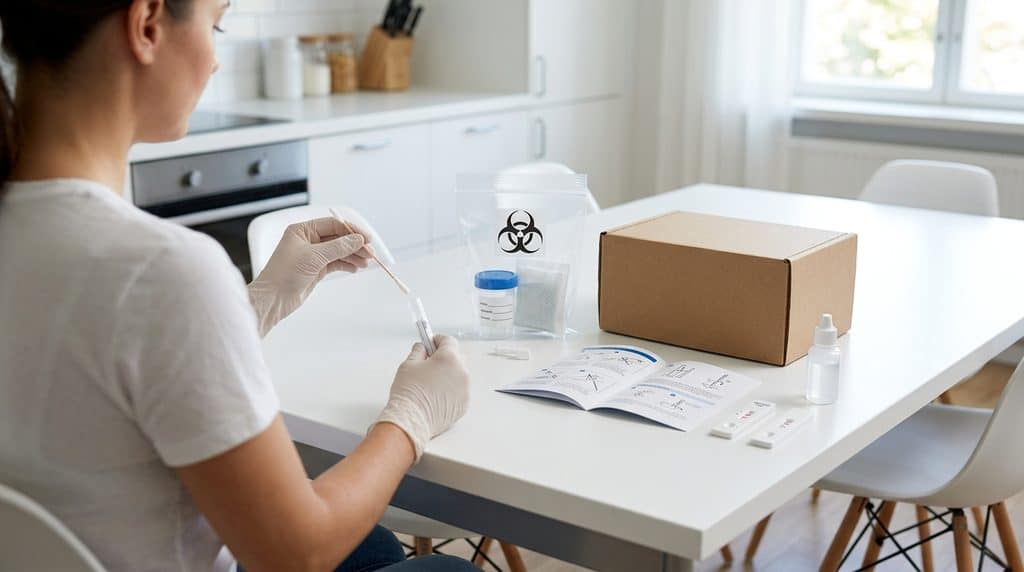
Home-based laboratory testing currently falls into two distinct categories, and the difference matters enormously for reliability. The first is fully at-home tests, where the sample is both collected and analyzed at home, producing a result on the spot, as with a rapid antigen test or a glucose meter. The second is home-collection kits, where the consumer collects a sample at home and mails it to a CLIA-certified laboratory for professional analysis. The FDA distinguishes between fully at-home processed tests, which require FDA clearance, and home collection kits where samples are sent to CLIA-certified laboratories, which face less stringent regulatory oversight.
The range of available tests has broadened well beyond the traditional staples. Consumers can now order home tests for lipid panels, HbA1c, thyroid and sex hormones, sexually transmitted infections, food sensitivities, vitamin levels, and genetic and pharmacogenomic analysis. Cancer screening biomarkers are the fastest-growing test category in the at-home diagnostics market, projected to grow at a compound annual growth rate of 11.8 percent from 2026 to 2034, driven by the scaling of multi-cancer early detection liquid biopsy tests that screen for many cancer types from a single blood draw.
The forces behind this growth are consistent across market analyses: rising consumer health awareness, the convenience of testing without a clinic visit, the privacy that home testing offers for sensitive conditions, declining assay and sequencing costs, and the integration of testing with telehealth platforms. This growth sits within the broader expansion of direct-to-consumer laboratory testing, of which home-based testing is a major and growing component.
The Technologies Driving What Comes Next
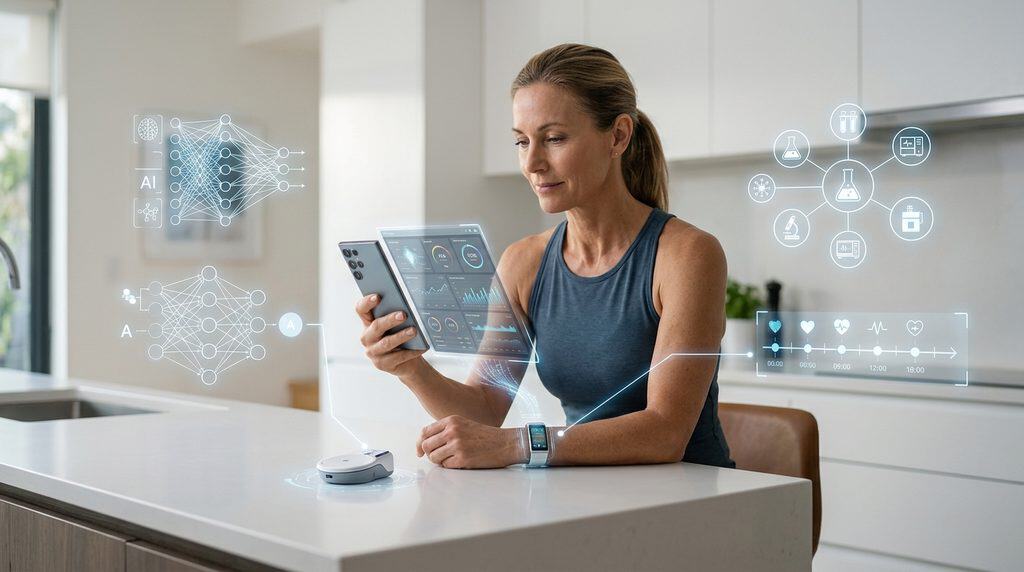
The future of home-based testing is being shaped by several converging technologies that together point toward testing that is more continuous, more connected, and more intelligent than today’s single-use kits.
Miniaturized biosensors and microsampling are perhaps the most transformative. Advances in micro-device blood collection allow meaningful analysis from tiny volumes obtained with minimal discomfort, moving beyond the traditional venous draw. As these devices improve, the range of tests that can be reliably performed from a small home-collected sample continues to widen, and the barrier of an unpleasant or difficult collection continues to fall.
Smartphone integration and connected devices turn the phone into a diagnostic hub. Smart at-home tests increasingly pair with apps that read results, track them over time, provide personalized insights, and communicate directly with healthcare professionals. This connectivity transforms a test from a one-time snapshot into part of a longitudinal health record the consumer can monitor and share.
Continuous monitoring extends this logic further. The success of continuous glucose monitoring has demonstrated that wearable, always-on measurement can outperform occasional testing for managing chronic conditions, and manufacturers are developing systems that track multiple analytes continuously. The trajectory points toward home diagnostics that monitor health continuously rather than testing episodically.
AI-powered interpretation addresses one of home testing’s central weaknesses: the absence of a professional to explain results. AI-driven analytics increasingly help translate raw results into personalized, understandable insights, and market analysts identify AI-powered result interpretation as a key driver of the category’s growth. Used well, this can partially bridge the interpretation gap, though it cannot fully replace professional clinical judgment.
Business model innovation rounds out the picture. Subscription models offering regular testing at discounted rates, retail distribution through pharmacies and online platforms, and corporate wellness programs are widening access and normalizing routine self-testing as a habit rather than a one-off event.
The Challenges That Must Be Solved
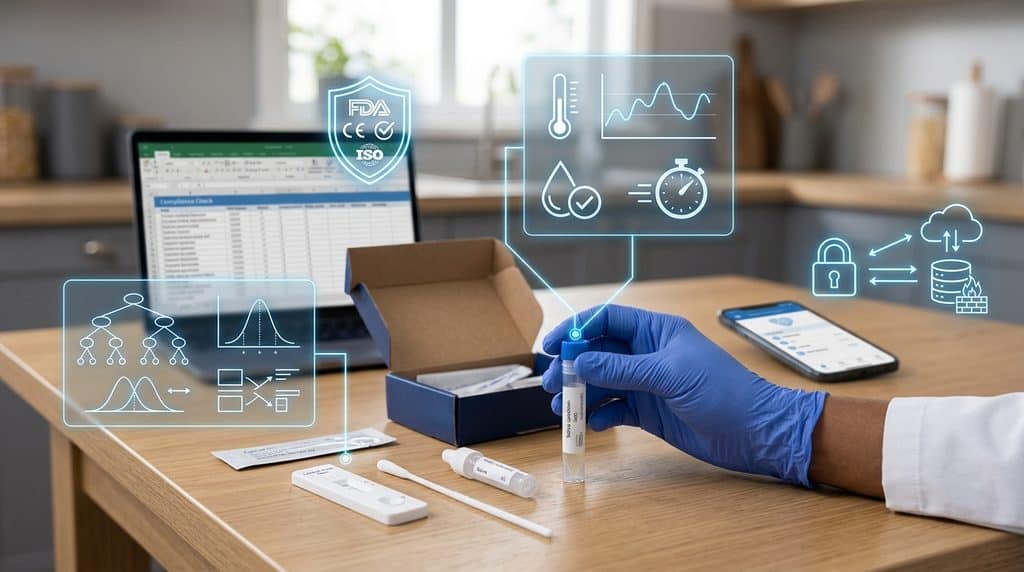
For all its promise, home-based testing faces genuine challenges that will determine whether its future is one of expanded access and better health or of unreliable results and consumer confusion.
The foremost challenge is pre-analytical quality. The accuracy of any laboratory result depends heavily on how the sample was collected, handled, and transported, the pre-analytical phase where the majority of all laboratory errors originate. A consumer collecting a sample at home, without training, in an uncontrolled environment, introduces variables that a trained phlebotomist would minimize. Hemolysis, insufficient volume, contamination, and transport delays can all compromise a home-collected specimen, and the consumer has no way to recognize when this has happened. Solving home-based testing’s future depends substantially on engineering out these specimen quality problems through better collection devices and clearer instructions.
Result interpretation remains a serious concern. A number without context can mislead, prompting either unnecessary alarm over a benign finding or false reassurance from a result that warranted follow-up. As home testing expands into consequential areas like cancer screening and genetics, the stakes of misinterpretation rise, and the need for professional guidance, whether through telehealth or clear reporting, becomes more acute.
Regulatory clarity is still developing. The distinction between FDA-cleared at-home tests and less-regulated home-collection kits is not always transparent to consumers, and analytical performance standards vary by product and manufacturer. Consumers often cannot easily judge the rigor behind a given test, and evolving FDA guidance on direct-to-consumer diagnostics is still reshaping the compliance landscape.
Data privacy grows more pressing as the volume of sensitive home-testing data expands. Genetic and health data generated at home carries real exposure, and questions of consent, security, and data custody, particularly when companies change ownership, remain incompletely resolved.
What This Means for Laboratory Medicine
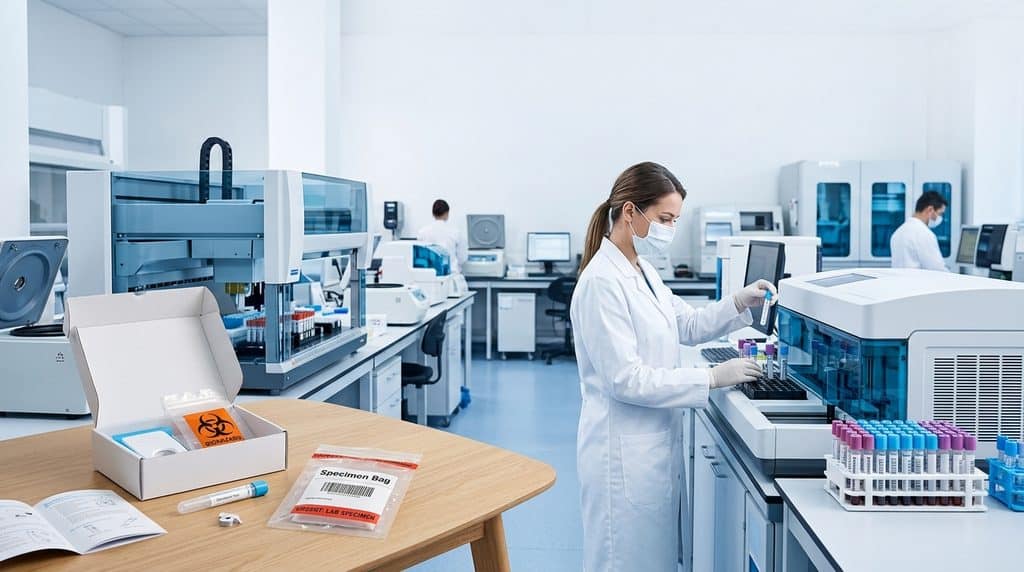
It might appear that home-based testing diminishes the role of the laboratory, since it moves collection and sometimes analysis out of professional hands. The reality is that laboratory science remains the foundation on which home testing’s credibility rests. For home-collection kits, a CLIA-certified laboratory still performs the analysis, and the same rigorous quality management that governs physician-ordered testing determines whether the result can be trusted. For fully at-home tests, laboratory scientists are central to designing, validating, and quality-controlling the assays that make instant home results possible.
If anything, the home-testing era raises the stakes for laboratory expertise. When results reach consumers directly, without a clinician’s intermediary review, the burden on the laboratory to get it right, and to provide honest, clear reporting about a test’s limitations, grows heavier. Laboratory professionals have an expanding role in designing consumer-facing reports, building reflex pathways that flag results genuinely requiring medical attention, validating the new generation of home-collection devices, and advocating for the standards that separate trustworthy home testing from the marketing-driven variety.
There is also an access dimension that aligns with the mission of organizations working to expand laboratory medicine globally. Home-based testing, done responsibly, can extend diagnostic access to people who lack convenient access to traditional care. Realizing that potential, rather than creating a two-tier system where some get convenience and others get unguided results, depends on keeping sound laboratory science and professional oversight at the center of the model.
Conclusion
Home-based laboratory testing is moving from a convenience for a few familiar tests toward a connected, continuous, AI-supported model that could reshape how people monitor their health. The market’s rapid growth reflects genuine consumer demand for convenient, private, affordable access to diagnostic information. The technologies driving what comes next, microsampling, smartphone integration, continuous monitoring, and AI interpretation, are real and advancing quickly.
But the future of home testing will be defined by whether it solves its core challenges: pre-analytical quality, result interpretation, regulatory clarity, and data privacy. None of these can be solved without laboratory science and laboratory professionals at the center. The next phase of home-based testing is not one where the laboratory disappears, but one where its expertise becomes more essential than ever to ensuring that the results people receive at their kitchen tables are results they can actually trust.
Frequently Asked Questions
Is home-based laboratory testing accurate?
It can be, but accuracy depends heavily on the type of test and how the sample is collected. Home-collection kits analyzed by CLIA-certified laboratories use the same professional methods as clinic-ordered tests, so the analysis is reliable, but the result is only as good as the sample the consumer collects. Improper collection, contamination, or transport delays can compromise accuracy, and the consumer usually cannot tell when this has happened. Fully at-home tests vary in quality, and FDA-cleared status and performance standards differ by product, so it is worth verifying the regulatory status of any kit.
What is the difference between an at-home test and a home-collection kit?
A fully at-home test is both collected and analyzed at home, giving an immediate result, like a rapid antigen test or a glucose meter, and these generally require FDA clearance. A home-collection kit has the consumer collect a sample at home and mail it to a CLIA-certified laboratory for professional analysis, with the result returned later, and these face less stringent regulatory oversight. The distinction matters because the analysis method and reliability differ substantially between the two.
What kinds of tests can you do at home now?
Beyond long-standing options like glucose and pregnancy tests, home testing now covers cholesterol and lipid panels, HbA1c, thyroid and sex hormones, sexually transmitted infections, vitamin levels, food sensitivities, and genetic and pharmacogenomic analysis. Cancer screening is the fastest-growing category, driven by multi-cancer early detection blood tests. The range continues to expand as collection devices and assays improve.
Do I still need a doctor if I use home tests?
Yes, for most consequential decisions. Home test results are not self-explanatory, and interpreting them correctly usually requires clinical context that accounts for your full health picture. Many home-testing services now integrate telehealth so a professional can review results, and reputable services guide interpretation. For any result that could affect a treatment decision, consulting a qualified healthcare provider remains important.
Will home testing replace the laboratory?
No. Home-collection kits are still analyzed by CLIA-certified laboratories, and even fully at-home tests depend on laboratory scientists to design, validate, and quality-control the assays. Home testing changes where collection happens and how results are delivered, but the laboratory science that makes a result trustworthy remains essential, and arguably more important, when results reach consumers directly without a clinician’s review.
Bio-Reach is a non-profit organization dedicated to advancing Laboratory Medicine through advocacy, education, and global collaboration. To learn more or get involved, visit bio-reach.org.