Wearable health technology is moving from fitness tracking into regulated diagnostic monitoring, with FDA-cleared devices now measuring glucose, heart rhythm, blood oxygen, and other signals continuously outside the laboratory. A meta-analysis of 11 studies covering 4,241 participants reported that Apple Watch ECG detected atrial fibrillation with pooled sensitivity of 94.8 percent and specificity of 95 percent. These devices do not replace laboratory testing, but they generate far more data points than a periodic blood draw, and the laboratory’s role is shifting toward validation, confirmation, and interpretation.
A single blood test shows a patient’s chemistry at one moment, while a wearable can show how a signal changes over days and weeks. That difference is why wearables attract attention from clinicians and consumers alike, and why laboratory professionals should understand them. This article explains what wearable devices measure, which have regulatory clearance, how accurate they are, where their limits lie, and how they fit alongside conventional diagnostic testing.
What Wearable Health Technology Measures
Wearable health technology covers a wide range of devices worn on the wrist, arm, chest, or finger, or implanted under the skin. They generally measure physiological signals rather than analyzing a specimen in a laboratory: electrical activity of the heart, pulse, blood oxygen saturation, respiration, and, in the case of continuous glucose monitors, glucose in the fluid beneath the skin.
That last point matters for laboratory professionals. As far as I know, continuous glucose monitors sense glucose in interstitial fluid rather than in blood, so their readings can differ from a laboratory glucose result, particularly when glucose is changing quickly. This is one reason device accuracy is described with its own metrics, such as the mean absolute relative difference, rather than assumed to match a laboratory analyzer.
Two broad categories are useful to distinguish. Some devices are cleared by the U.S. Food and Drug Administration as medical devices for a stated purpose. Others are sold as general wellness products and are not reviewed as medical devices, a boundary that determines how much evidence stands behind the numbers on the screen.
Which Devices Have Regulatory Clearance
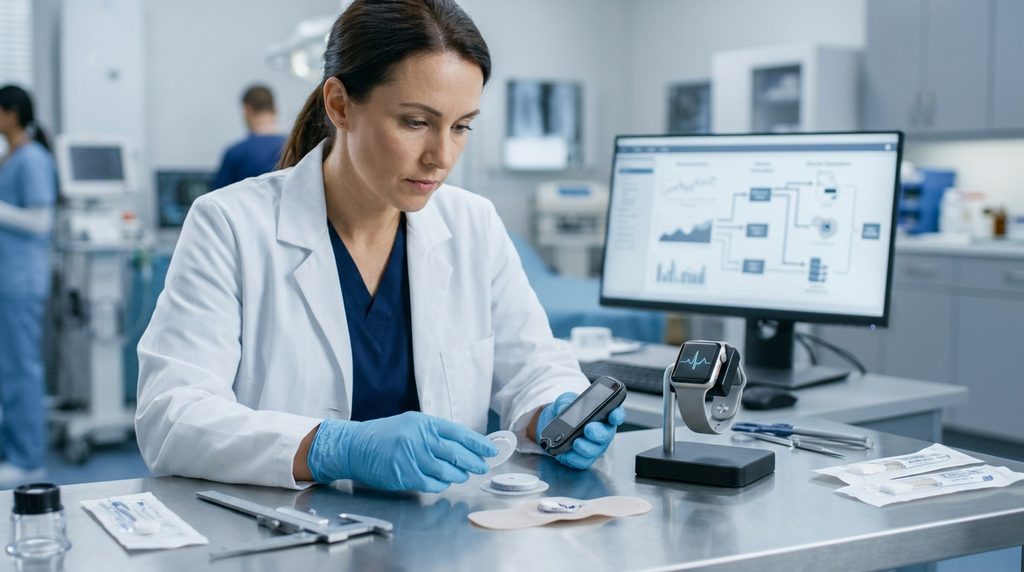
A 2025 overview from Life Science Daily, a trade publication, summarizes several cleared wearables. In glucose monitoring, Abbott’s FreeStyle Libre 2, Libre 2 Plus, Libre 3, and Libre 3 Plus, along with Dexcom’s G6 and G7, hold the FDA’s integrated continuous glucose monitor designation, which the article says allows insulin dosing decisions without a confirmatory fingerstick. The Dexcom G7 15 Day system was cleared in April 2025 with a reported mean absolute relative difference of 8.0 percent, and Eversense 365 was cleared in 2024 as the first fully implantable continuous glucose monitor, with a sensor life of one year.
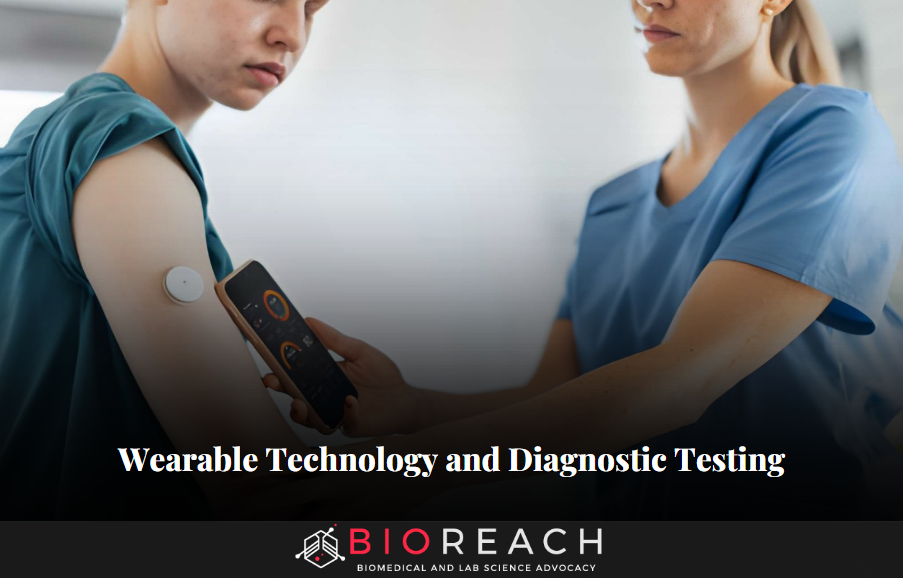
Access has widened. In March 2024, the FDA cleared the Dexcom Stelo as an over-the-counter continuous glucose monitor for adults aged 18 and older who do not use insulin, which includes people managing diabetes with oral medications and people without diabetes who want to see how diet and exercise affect their glucose. It is not intended for people with problematic hypoglycemia, and the FDA advised users not to make medical decisions from its output without consulting a healthcare provider. In September 2025, the Biolinq Shine received De Novo classification as a forearm glucose-sensing patch for people with type 2 diabetes who do not use insulin.
In cardiology, the Apple Watch was the first consumer smartwatch cleared for single-lead ECG, with an irregular rhythm notification for atrial fibrillation cleared for users with no prior diagnosis of the condition. Other 2025 clearances listed in the same overview include continuous ECG and respiratory monitoring from VitalConnect, a cardiac timing monitor from Cardiosense, and continuous heart rate and blood oxygen monitoring in a Masimo watch.
This is a secondary source, so readers who need device-level detail should confirm indications in the FDA’s own databases. The pace of clearances also means any list becomes outdated quickly.
How Accurate Are Wearables?
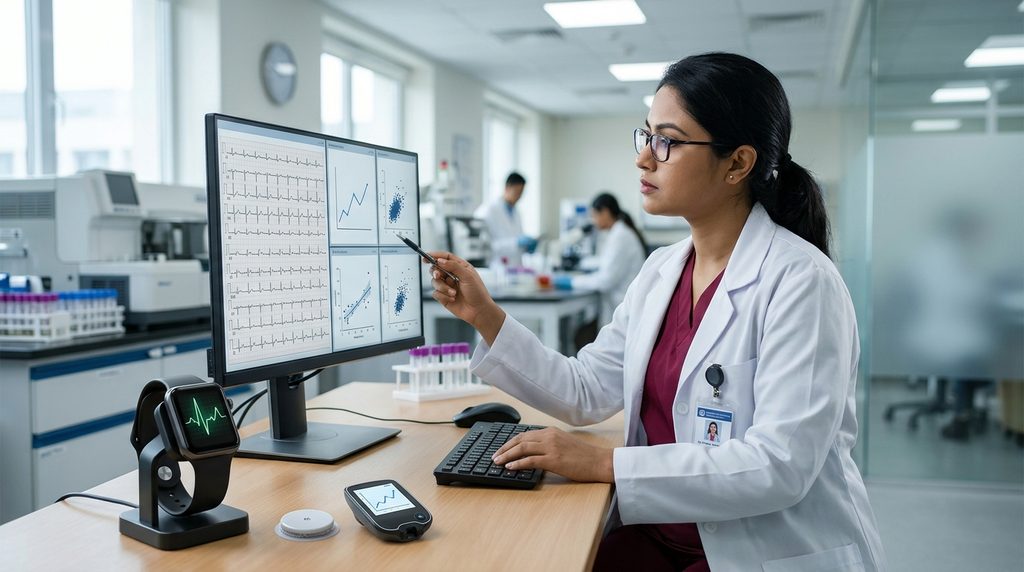
Accuracy depends on the device and the question being asked. For atrial fibrillation, a meta-analysis of 11 studies with 4,241 participants published in JACC: Advances, as summarized in the overview above, reported pooled sensitivity of 94.8 percent and specificity of 95 percent for Apple Watch ECG. Those are strong figures for a device worn on the wrist, but they describe performance in the studies reviewed and not in every population.
For glucose, the only specific accuracy figure in that overview is the 8.0 percent mean absolute relative difference reported for the Dexcom G7 15 Day, and the article cites meta-analyses showing improved HbA1c and reduced risk of hypoglycemia for continuous glucose monitoring without giving numbers. Readers should treat a single figure as one data point, since accuracy varies by device generation, sensor placement, and the glucose range being measured.
Noninvasive glucose sensing, which would measure glucose in sweat or tears rather than beneath the skin, remains an active area of research. Published reviews discuss the promise of sweat-based sensors alongside significant challenges, but I was unable to access the full reviews, so I make no specific claims here about how close these sensors are to routine use. Readers should rely on the cleared devices described above rather than on research prototypes.
The Limits of Wearable Data
Regulatory clearance is not the same as clinical proof. The Life Science Daily overview notes that 510(k) clearance shows a device is substantially equivalent to an existing one, not that it was tested in large prospective trials. It also notes that the American College of Cardiology and the European Society of Cardiology suggest wearables for atrial fibrillation diagnosis and surveillance while cautioning that validation is limited in people with no prior diagnosis.
There is also a growing category of products that fall outside review altogether. According to the same overview, under FDA guidance issued in January 2026, a product promoted as a general wellness product is not evaluated as a medical device, and the distinction depends on how the manufacturer describes it. For consumers and clinicians, that means two similar-looking devices can have very different levels of evidence behind them.
Other limits are practical. Wearables can produce false alarms that send healthy people to clinics, and missed events that give false reassurance. Data may be unevenly validated across skin tones, ages, and health conditions, and many studies enroll people who are more comfortable with technology than the general population. These are reasons to read wearable results as prompts for follow-up and not as diagnoses.
Where the Laboratory Fits
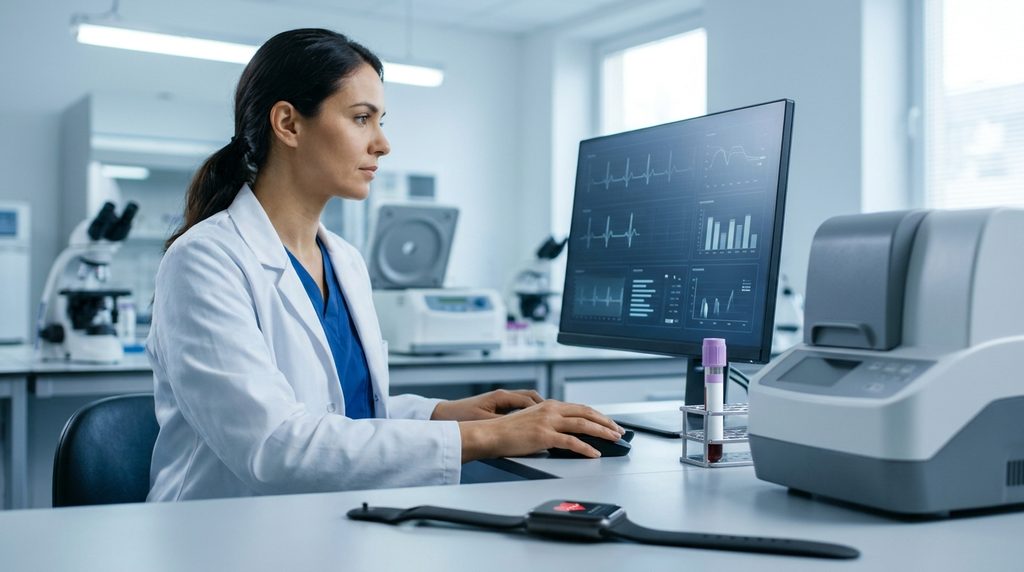
Wearables and laboratories answer different questions. A wearable can flag an irregular rhythm or a glucose trend, and a laboratory can measure the hemoglobin A1c, the lipid profile, or the markers that confirm or explain what the device saw. Increasingly, the two will work together, a theme developed in the future of personalized health monitoring.
Laboratory professionals contribute in several ways. They define the reference methods against which devices are compared, they design confirmatory testing pathways so that a wearable alert leads to a reliable result, and they help clinicians understand what a continuous reading can and cannot show. The shift also changes patient expectations, as seen in how consumers are changing diagnostic healthcare and in the growth of home-based laboratory testing and direct-to-consumer laboratory testing.
Quality remains the common thread. A result produced outside a laboratory still needs a way to show that it is reliable, which is why the principles in the hidden cost of diagnostic errors apply to wearable data as much as to a specimen on the bench.
Equity, Access, and Data Questions
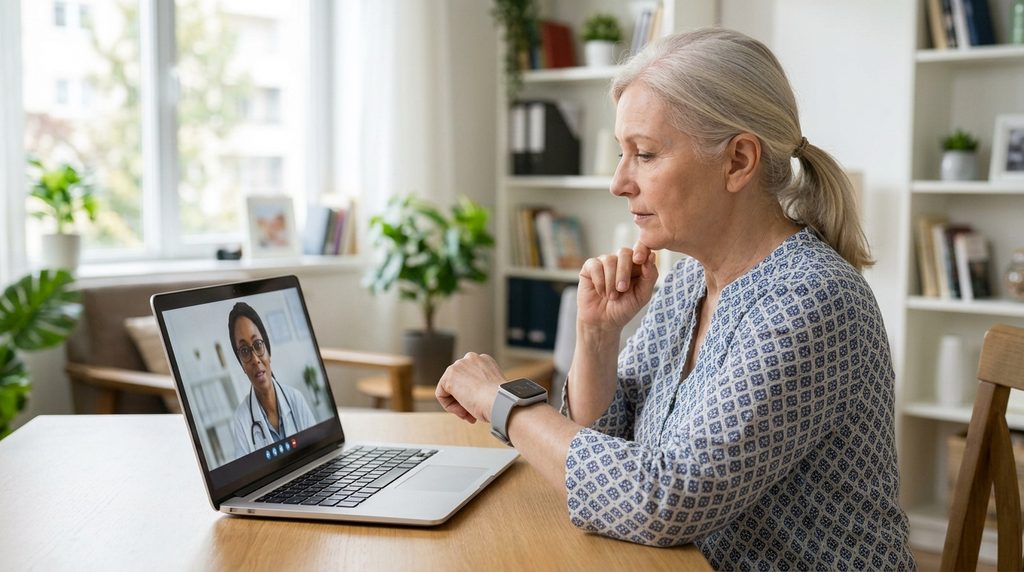
Wearables raise questions about who benefits. Devices and subscriptions cost money, and people with limited access to care may be least able to afford them even though they could gain the most from earlier detection. Over-the-counter clearance lowers one barrier, but it does not remove the need for a clinician to interpret results, as the FDA’s own advice for the Stelo shows. Access is also uneven geographically, an issue examined in why rural communities need better diagnostic access, where connected devices could extend monitoring if the broadband and follow-up services exist.
Data ownership and privacy deserve the same attention. Continuous streams of health information can be valuable and sensitive, and patients should understand how their data are stored and shared before relying on a device.
Conclusion
Wearable health technology is no longer a novelty. Cleared devices now monitor glucose and heart rhythm continuously, and evidence for some, such as smartwatch ECG for atrial fibrillation, is encouraging. At the same time, clearance does not guarantee accuracy in every setting, wellness products fall outside review, and wearable readings are signals that call for confirmation rather than final answers.
For laboratory medicine, the opportunity is to remain the standard against which new tools are judged and the place where uncertain results are resolved. Laboratory professionals who understand how wearables work, and where they fall short, will be better prepared to guide clinicians and patients through a more connected diagnostic landscape.
Frequently Asked Questions
What is wearable health technology?
Wearable health technology refers to devices worn on or implanted in the body that measure physiological signals such as heart rhythm, pulse, blood oxygen, or glucose. Some are cleared by the FDA as medical devices, while others are sold as general wellness products without that review.
Can wearables replace laboratory tests?
No. Wearables generate continuous signals that can flag a problem or show a trend, but diagnosis usually depends on laboratory testing and clinical evaluation. A wearable alert is best treated as a reason to seek confirmation, and laboratories remain the reference point for many measurements.
How accurate are smartwatch ECG readings?
A meta-analysis of 11 studies with 4,241 participants reported pooled sensitivity of 94.8 percent and specificity of 95 percent for Apple Watch ECG in detecting atrial fibrillation. Cardiology guidelines still caution that validation is limited in people with no prior diagnosis.
Are over-the-counter glucose monitors safe to use?
The FDA cleared the Dexcom Stelo in March 2024 for adults aged 18 and older who do not use insulin, and it is not intended for people with problematic hypoglycemia. The FDA advises against making medical decisions based on its output without consulting a healthcare provider.
What is the difference between a medical wearable and a wellness wearable?
A medical wearable is cleared or authorized by the FDA for a stated clinical purpose after review. Under January 2026 FDA guidance, a product promoted as a general wellness product is not evaluated as a medical device, so its readings may have far less supporting evidence.
Bio-Reach is a non-profit organization dedicated to advancing Laboratory Medicine through advocacy, education, and global collaboration. To learn more or get involved, visit bio-reach.org.