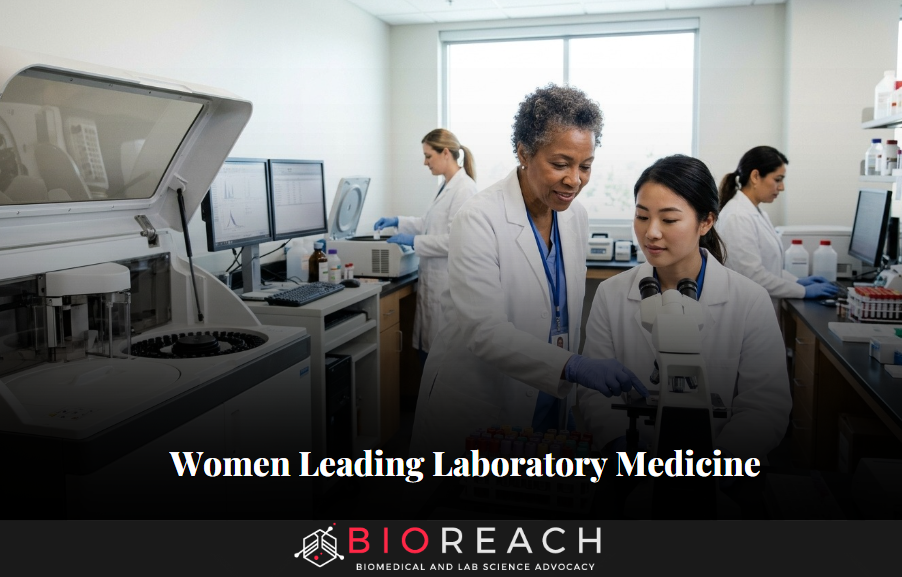
Women in STEM are well represented in the laboratory profession but remain underrepresented in its leadership, a pattern that mirrors the wider health workforce. In the United States, about 71.8 percent of the 332,845 clinical laboratory technologists and technicians employed in 2024 were women, yet the World Health Organization’s analysis of the global health workforce found that women make up 70 percent of health workers but hold only 25 percent of senior roles.
Across all STEM fields, women accounted for 28.2 percent of the global workforce in 2024, according to World Economic Forum data cited by the Society of Women Engineers, so laboratory medicine is an unusual STEM field in which women are the majority at the bench, and the open question is who leads.
The laboratory profession has long depended on women, from the technologists who run the instruments to the scientists, pathologists, and managers who oversee quality, yet the people who set priorities, direct budgets, and speak for the profession are still more often men. That gap matters for patients as well as for fairness, because leadership shapes how laboratories are staffed, funded, and recognized. This article looks at what the data show about women in laboratory medicine, why the gap between workforce and leadership persists, what women leaders contribute, how the picture differs across regions, and what evidence-based steps can help.
A Majority at the Bench, a Minority at the Top
The numbers describe a profession shaped by women. Data USA, drawing on U.S. workforce data for 2024, reports that 71.8 percent of clinical laboratory technologists and technicians are women and 28.2 percent are men. That contrasts sharply with STEM overall: the Society of Women Engineers, citing World Economic Forum figures, reports that women were 28.2 percent of the global STEM workforce in 2024, compared with 47.3 percent in non-STEM fields.
The leadership picture is different. WHO’s 2019 analysis of the global health and social workforce found that women make up about 70 percent of the health workforce and hold about 25 percent of senior roles, that the gender pay gap in the sector is about 25 percent, that 69 percent of global health organizations are headed by men, and that 80 percent of board chairs are men. The American Society for Clinical Pathology reports a similar estimate for healthcare in its women’s leadership series, noting that women make up about 70 percent of the workforce but only about 30 percent of leadership positions. These are health-sector figures rather than laboratory-specific ones, and I did not find a reliable laboratory-only measure of leadership representation, but they describe the structure in which laboratory careers unfold.
The pattern is not uniform around the world. A 2014 World Bank study of laboratory professionals in Africa, based on a literature review and case studies in four countries, described a workforce that was predominantly male with relatively limited female participation, and it flagged possible gender-based barriers to advancement. That finding is more than a decade old and covers a small number of countries, so it should not be read as a current continental estimate, but it is a reminder that the story of women in the laboratory differs by region and deserves its own data. It connects to the broader aim of building a diverse laboratory workforce for the future.
Why the Gap Between Workforce and Leadership Persists

The World Health Organization (WHO) makes clear that progress for Women in STEM will not happen automatically. Its analysis identifies gender norms about which jobs suit men or women, stereotypes that concentrate women in lower-status and lower-paid roles, and bias, discrimination, and sexual harassment that harm careers and morale. Power imbalances also leave women delivering care while men lead organizations. WHO concludes that gender balance requires targeted measures and gender-transformative changes to workplace environments, rather than expecting women to adapt to unequal systems.
Commentary from the Women in Medical Laboratories community adds detail on how these barriers affect women in science. It cites a 2012 Yale study in which scientists rated a young male candidate more favorably than an equally qualified female candidate, suggests that some young women rule out science and medicine as early as high school, and identifies limited access to mentors and role models as another obstacle. Although these perspectives come from an advocacy blog rather than primary research, the cited Yale study is well known, and the emphasis on mentorship aligns with WHO’s call for structural change to advance gender equality in STEM fields.
For laboratory medicine specifically, the profession’s low visibility compounds the problem. When the public does not know what laboratory scientists do, the path from bench to leadership is less visible to the women who might follow it, which is why efforts such as creating awareness for healthcare’s hidden profession matter for equity as well as recruitment.
What Women Leaders Bring and Why Visibility Matters
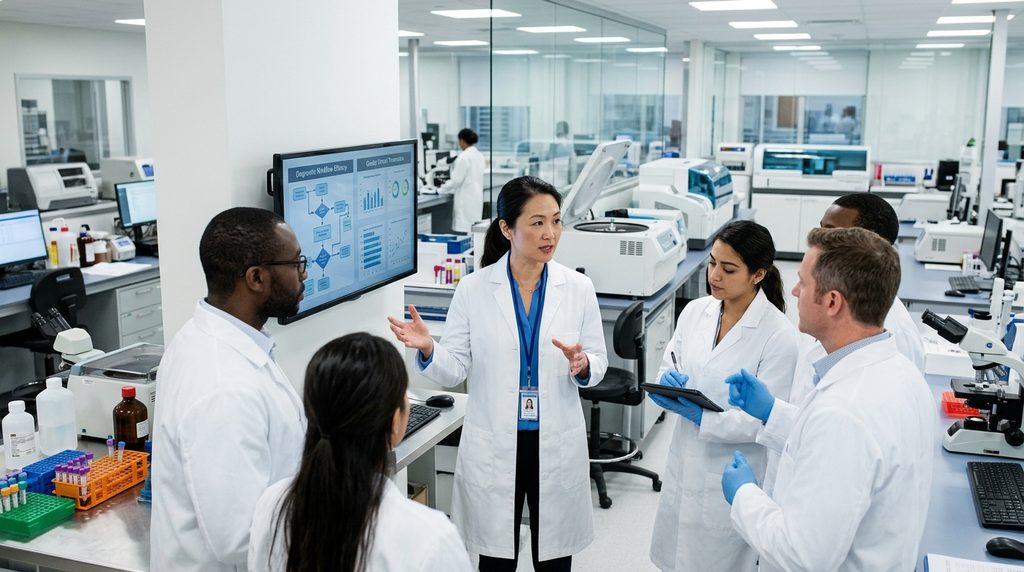
The American Society for Clinical Pathology has run a Women Leaders in Pathology and Laboratory Medicine series since 2021, publishing interviews and profiles of women across the field. The series argues that women in laboratory leadership support quality patient care, reduce gender bias, and promote equity, which is the society’s position rather than a measured finding, but the profiles themselves illustrate the range of roles women hold: pathologists, medical laboratory scientists, histotechnologists, regulators, researchers, and volunteers who shape the profession.
Some of the people profiled have held national roles. The series opened in 2021 with Kimberly W. Sanford, MD, then president of ASCP, who shared lessons from her leadership experience, and later profiles include Susan Harrington, PhD, who chaired the ASCP Workforce Steering Committee in 2023. Others come from different entry points: one profile follows a leader who entered the field through a medical laboratory science program, another a histopathologist who moved from chemistry into histology after a mentor’s guidance, and another a laboratory evaluation specialist at a state regulatory agency. Together they show that leadership in laboratory medicine does not follow a single path.
Visibility has practical value. Role models make careers imaginable, and stories from women who have led laboratories, directed programs, or shaped policy give students and early-career professionals concrete examples. They also matter for the workforce challenge that laboratories already face, since a profession that is perceived as welcoming to leaders of every background is easier to recruit into, a theme also found in the economic impact of laboratory workforce shortages.
Women in STEM Across Regions
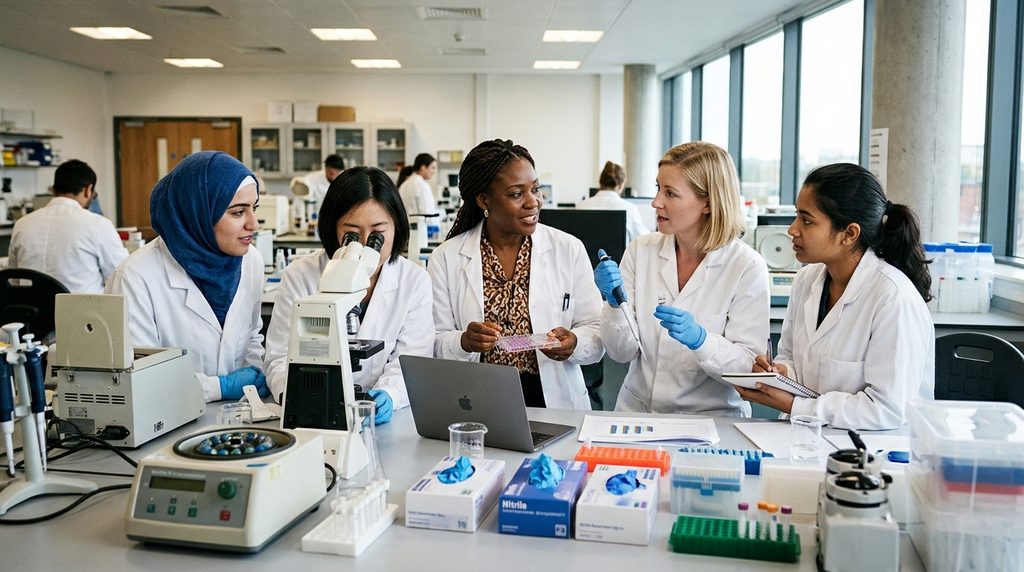
Globally, Women in STEM remain underrepresented in scientific research, despite gradual progress. UNESCO Institute for Statistics data summarized by the Society of Women Engineers show that women accounted for 31.1 percent of science and engineering researchers and R&D personnel worldwide in 2022, up from 29.4 percent in 2012. Regional representation varied widely in 2022, reaching 50.8 percent in Central Asia and 45.3 percent in Latin America and the Caribbean, compared with 26.9 percent in South and West Asia and 26.3 percent in East Asia and the Pacific. Countries such as India and the Congo also reported some of the lowest representation, below 19 percent, highlighting persistent global disparities in gender equality across STEM fields.
The summary I could access does not break out sub-Saharan Africa as a region or give laboratory-specific figures, so these numbers cannot be applied directly to laboratory medicine there. They do show that women’s participation in science varies widely by context and that national and regional data are needed to understand where interventions are most needed. The same point applies to the early pipeline, where exposure to laboratory science in school can change who considers the field, as discussed in introducing laboratory science to middle school students and why every school should teach laboratory medicine.
What Helps: Mentorship, Pathways, and Structural Change

The evidence points to a combination of personal and structural measures. On the personal side, mentorship and visible role models are consistently recommended, and the Women in Medical Laboratories commentary argues that women already in laboratories should mentor young women considering science and medicine. On the structural side, WHO’s recommendations center on targeted measures, protection against harassment and discrimination, attention to pay equity, and gender-disaggregated data so that progress can be measured, with particular attention to low- and middle-income countries where research is thinnest.
Community and institutional partnerships can help turn these principles into practice, as they do for other workforce goals described in how community partnerships strengthen healthcare workforce development. The stakes are not only equity. WHO estimates a health worker shortfall of about 18 million, mainly in low- and middle-income countries, and warns that gender inequity in the workforce threatens health service delivery, which means that wasting talent is a cost the laboratory profession and its patients can ill afford.
Conclusion
Women in STEM are essential to laboratory medicine, yet evidence from the wider health sector suggests they remain underrepresented in leadership. The barriers are structural: gender norms, pay gaps, bias, and a shortage of visible mentors, none of which disappear on their own.
Closing this gap requires deliberate action, including better workforce data, mentorship, early exposure to laboratory science, and workplaces where talent can advance fairly. Showcasing women who already lead, supporting emerging leaders, and measuring progress honestly are practical steps to strengthen women’s representation in STEM, advance the laboratory profession, and improve the care patients receive.
Frequently Asked Questions
What percentage of laboratory professionals are women?
In the United States, Data USA reports that 71.8 percent of the 332,845 clinical laboratory technologists and technicians employed in 2024 were women. Figures vary by country, and a 2014 World Bank study of laboratory professionals in four African countries described a predominantly male workforce, so local data matter.
Why are women underrepresented in laboratory leadership?
WHO’s analysis of the health workforce points to gender norms, stereotyping that concentrates women in lower-paid roles, bias and harassment, and a lack of targeted measures. Commentary from laboratory communities also cites fewer mentors and role models as a barrier.
How many women work in STEM?
Women made up 28.2 percent of the global STEM workforce in 2024, compared with 47.3 percent of the non-STEM workforce, according to World Economic Forum data cited by the Society of Women Engineers. UNESCO Institute for Statistics data show women were 31.1 percent of science and engineering researchers worldwide in 2022.
Why does women’s leadership in laboratory medicine matter?
The American Society for Clinical Pathology argues that women in laboratory leadership support quality patient care, reduce gender bias, and promote equity. WHO also warns that gender inequity threatens health service delivery at a time of a projected 18 million health worker shortfall.
How can laboratories support women leaders?
Evidence-based steps include mentorship and visible role models, targeted measures to address pay gaps and bias, protection against harassment, early exposure to laboratory science in schools, and gender-disaggregated data to track progress. WHO calls for changing work environments rather than expecting women to adapt to unequal systems.
Bio-Reach is a non-profit organization dedicated to advancing Laboratory Medicine through advocacy, education, and global collaboration. To learn more or get involved, visit bio-reach.org.