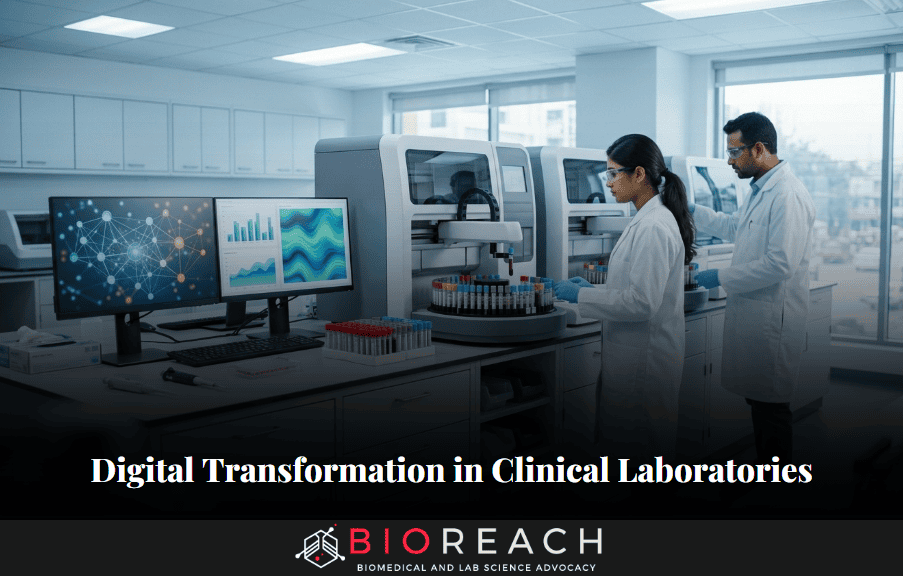
A digital laboratory is a clinical laboratory in which instruments, information systems, images, and data are connected from specimen to report, so that orders, results, and diagnostic decisions move electronically rather than through paper, glass slides, and manual transcription. Adoption is real but uneven: in a 2025 L.E.K. survey of more than 100 hospital and reference laboratory leaders in the United States, about 60 percent of academic medical centers and 50 percent of reference laboratories reported using whole slide imaging for clinical purposes, while the large community hospitals that use it digitize fewer than 30 percent of their cases. Digital transformation is therefore best understood not as a single technology purchase but as a staged change in how laboratories collect, move, interpret, and protect information, one that promises faster and more consistent diagnosis while adding new demands for integration, validation, workforce skills, and cybersecurity.
Clinical laboratories have always been information businesses as much as testing businesses, because every result is only useful once it reaches the right clinician in a form that can be trusted and acted on. What has changed is the number of steps that can now be digitized, from automated specimen handling and instrument middleware to digital slide scanning, standards-based data exchange, and artificial intelligence. This article explains what a digital laboratory includes, where digitization is advancing fastest, how interoperability and AI fit in, why cybersecurity has become a patient-safety issue, and what all of this means for the people who work in the laboratory.
What a Digital Laboratory Actually Includes
A digital laboratory is not a single system but a set of connected layers, and understanding those layers explains why transformation tends to happen in stages rather than all at once. At the foundation are automated analyzers and specimen handling lines that generate results as data. Above them sit the laboratory information system and middleware that manage orders, rules, quality control, and reporting, and beside them, in anatomic pathology, sit slide scanners and image management platforms that turn glass slides into digital images.
Standards and interfaces form the connective layer. Digital pathology, for example, depends on the IHE Digital Pathology Image Acquisition profile, HL7 for metadata exchange, and DICOM for image encoding, all of which allow scanners, viewers, laboratory information systems, and analytics tools to communicate. Analytics and AI sit on top of that layer, and security and downtime planning must wrap around all of it, a point that became unmistakable after the cyberattacks described later in this article.
The reason this matters for laboratory leaders is that each layer has its own cost, validation burden, and vendor ecosystem. A laboratory that has automated its core chemistry line but still relies on manual transcription for send-out results is partly digital, and one that has scanned its slides but cannot connect them to its laboratory information system has digitized an image without digitizing a workflow. This staged reality connects to the wider innovation picture explored in how startups are transforming laboratory medicine.
Where Digitization Is Most Visible: Digital Pathology and Automation
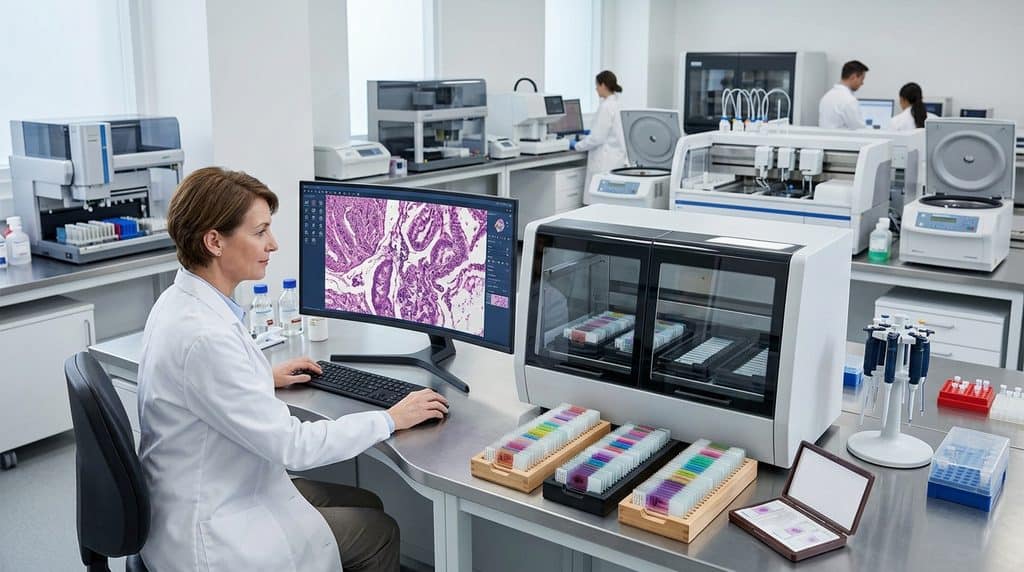
Digital pathology is currently the clearest example of a digital laboratory capability moving from pilot to practice. The L.E.K. 2025 U.S. Diagnostic Lab Survey found that about 60 percent of academic medical centers and 50 percent of surveyed reference laboratories use whole-slide imaging clinically, that users at academic centers and reference laboratories digitize roughly half of their cases on average, and that academic centers expect to reach around 80 percent digitization within three years. The same survey found that large community hospital users digitize less than 30 percent of cases, and that adoption could nearly double in large community hospitals and triple in small and midsize community hospitals over three years if laboratories act on their stated intentions.
Estimates of overall adoption vary widely depending on which laboratories are counted. A 2026 review in the Journal of Pathology and Translational Medicine cites a 2023 international survey of 127 laboratories in which 57 percent had implemented digital pathology for research or clinical use, alongside a College of American Pathologists estimate that U.S. adoption was around 10 percent in 2024. The gap between those figures is a reminder that surveys of large, well-resourced laboratories describe a different picture from the full landscape of smaller practices.
Regulation and professional guidance have matured alongside the technology. CAP recommends validating a digital pathology system with at least 60 cases and a concordance above 95 percent between whole-slide images and glass-slide diagnoses, and it advocated 30 new Category 3 CPT codes in 2024 to support digitization of surgical pathology slides for primary diagnosis. The FDA has cleared platforms for primary diagnosis, including Roche’s Digital Pathology Dx system, the PathPresenter Clinical Viewer, and PathAI’s AISight Dx, according to the same review.
The barriers are practical rather than conceptual. Survey respondents most often cited cost, mainly for hardware, and the burden of integration, with reliability and downtime, personnel availability and training, insufficient volume, and reimbursement also appearing among the concerns. The review adds proprietary file formats, legacy systems, and vendor lock-in to the list, and notes that more than 80 percent of current whole-slide imaging users in the L.E.K. survey expect to buy a new scanner within five years, which keeps interoperability and vendor choice central to long-term planning.
Automation in the core laboratory tells a related story about productivity. A 2022 comparison in the Journal of Healthcare Leadership studied two Saudi military hospital laboratories of similar size over one year, one with total laboratory automation in chemistry, hematology, and serology and one using discrete analysis. Monthly tests per worker were 10,643 versus 7,556 in chemistry and 3,058 versus 857 in serology, while hematology productivity was similar, and the automated laboratory employed 36 workers compared with 64. The study was observational, covered only two sites, and did not report turnaround time or error rates, so it supports the productivity argument for automation without settling quality questions.
Interoperability and AI: Connecting and Interpreting the Data
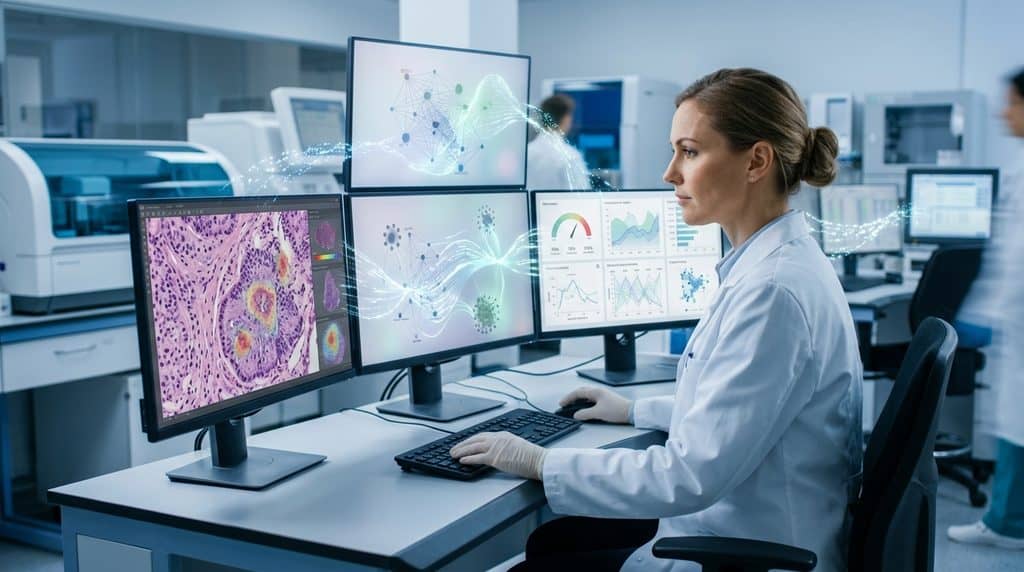
Interoperability is the unglamorous work that determines whether digital investments pay off. A 2024 study in JMIR Medical Informatics illustrates the effort involved: researchers built a tool to convert 20 anonymized complete blood count reports from the LADR laboratory network, which includes 19 laboratories serving more than 400 clinics, into standardized FHIR resources. Each transformed report averaged 62 FHIR resources under the German MIO specification, one report failed validation simply because a patient record lacked a first name, and adapting the mapping to a second European profile took only a few hours once the rules were declared separately from the pipeline. The lesson is that interoperability is both an engineering task and a data-quality task, and that reusable, standards-based mappings can reduce the cost of each new connection.
Artificial intelligence is the layer attracting the most attention, and the evidence base is growing quickly in pathology. Foundation models such as Virchow, trained on nearly 1.5 million H&E slides, have reported an AUC of 0.95 for detecting 16 cancer types, and AI-assisted tools are being developed for tasks ranging from prostate cancer detection to molecular prediction. At the same time, the 2026 review is direct about limits: general-purpose language models are widely used for administrative and educational tasks, but they lack pathology training and clinical validation, so the authors discourage their use for diagnosis.
That balance between promise and caution matches how laboratory professionals describe their own experience. In the American Society for Clinical Pathology’s 2024 vacancy survey, adapting to AI was the most common operational challenge reported by participating departments, even though respondents were optimistic about its potential to change laboratory workflows. These themes are developed further in artificial intelligence and the future of laboratory diagnostics and in the discussion of whether automation will replace laboratory professionals.
Cybersecurity: The Risk That Comes With Connection
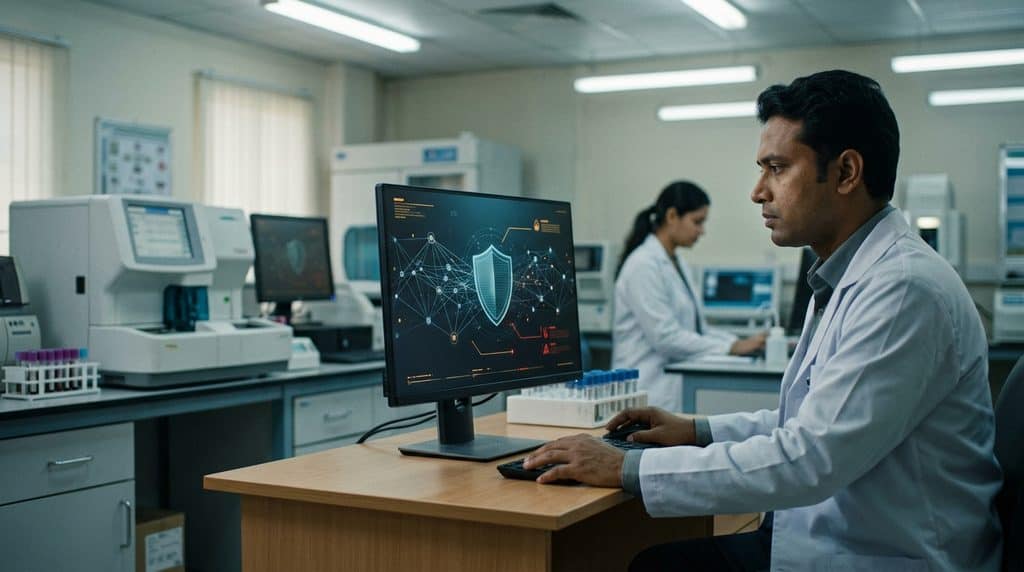
Every connection that makes a digital laboratory efficient also creates an entry point, and recent incidents show that the consequences reach patients directly. In June 2024, the Qilin ransomware group attacked Synnovis, the pathology partnership serving King’s College Hospital and Guy’s and St Thomas’ NHS foundation trusts in London. Trade press reporting linked the severity of the disruption to the trusts’ dependence on Synnovis’s pathology systems, and the chief executive of Guy’s and St Thomas’ said blood transfusions were particularly affected. According to Digital Health, more than 1,134 elective procedures and 2,194 outpatient appointments were postponed at the two trusts in the weeks following the attack.
Data theft is the other face of the risk. Summit Pathology Laboratories, a Colorado pathology laboratory, reported that a Medusa ransomware attack affected more than 1.8 million patients, with the incident beginning in April 2024 when an employee opened a malicious email attachment. The exposed information included names, addresses, billing and insurance details, diagnoses, dates of birth, Social Security numbers, and financial information.
These incidents carry practical implications for any laboratory planning digital investments. Downtime procedures need to be rehearsed rather than merely written, security needs to be evaluated alongside functionality when selecting systems, and staff training has to address the everyday behaviors, such as opening attachments, that attackers exploit. Digital transformation that ignores resilience simply moves risk from the bench to the network.
What Digital Transformation Means for the Laboratory Workforce
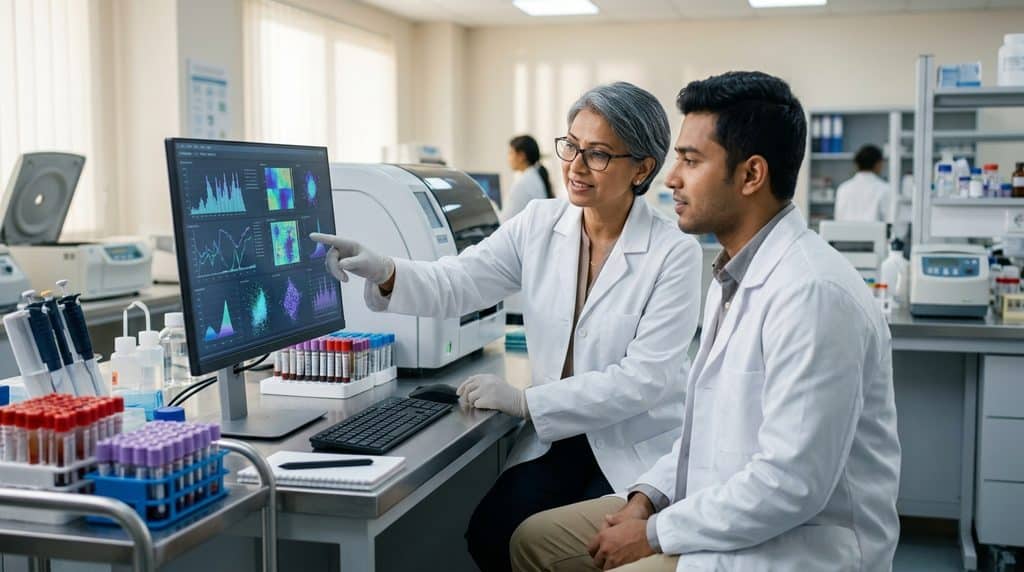
Technology does not remove the need for skilled people; it changes what they spend their time on. Automation can raise the volume a laboratory handles per worker, as the Saudi comparison suggests, but the ASCP 2024 vacancy survey shows that staffing pressure persists regardless. Vacancy rates have declined since 2022 but remain above pre-pandemic levels; 10 of the 17 laboratory departments surveyed reported rising retirements, and recruiting and retaining qualified professionals remains difficult, which is the same pattern examined in the economic impact of laboratory workforce shortages.
The skills laboratories need are shifting toward validation, informatics, quality oversight, and exception handling, which is why training pipelines matter as much as equipment budgets. The 2026 pathology review lists workforce training shortages and laboratory information system integration problems among the persistent challenges of digital adoption, particularly in settings with fewer financial and technical resources. Closing that gap depends on the kind of preparation discussed in bridging the gap between education and employment in laboratory science.
Conclusion
Digital transformation in clinical laboratories is a layered, ongoing process rather than a finish line. Digital pathology, automation, standards-based data exchange, and AI each offer measurable benefits, yet the evidence also shows uneven adoption, real integration costs, validation requirements, and exposure to cyberattacks that can interrupt patient care within hours.
The laboratories that benefit most will be those that treat a digital laboratory as a system of technology, process, security, and people, investing in interoperability and resilience alongside new instruments and software. Because laboratory professionals are the ones who validate, supervise, and take responsibility for results, building their skills and capacity is part of the transformation, not separate from it.
Frequently Asked Questions
What is a digital laboratory?
A digital laboratory is a clinical laboratory in which instruments, information systems, images, and data are connected so that orders, results, and diagnostic decisions move electronically from specimen collection to the final report. It typically combines automation, a laboratory information system, standards-based data exchange, and, increasingly, digital pathology and analytics.
What are the main components of digital transformation in clinical laboratories?
The main components are automated analyzers and specimen-handling systems, laboratory information systems and middleware, digital pathology with whole-slide imaging, interoperability standards such as HL7, DICOM, and FHIR, analytics and AI tools, and the cybersecurity and downtime planning that protect them. Laboratories usually adopt these in stages.
How common is digital pathology in clinical laboratories?
Estimates vary by who is counted. A 2025 L.E.K. survey found about 60 percent of academic medical centers and 50 percent of reference laboratories using whole-slide imaging clinically, while a College of American Pathologists estimate cited in a 2026 review put overall U.S. adoption near 10 percent in 2024.
Will digital transformation replace laboratory professionals?
The evidence does not point that way. Automation can raise tests per worker, but vacancy rates remain above pre-pandemic levels, retirements are rising, and AI tools are being developed to support interpretation that professionals must still validate and take responsibility for. The skills laboratories need are shifting rather than disappearing.
What are the biggest risks of a digital laboratory?
The main risks are cyberattacks, integration problems between systems, insufficient validation of new tools, and the cost of hardware and training. The 2024 Synnovis attack in London disrupted pathology services for two hospital trusts, and a 2024 attack on a Colorado pathology laboratory exposed data for more than 1.8 million patients.
Bio-Reach is a non-profit organization dedicated to advancing Laboratory Medicine through advocacy, education, and global collaboration. To learn more or get involved, visit bio-reach.org.