Laboratory sample tracking systems are specialized digital platforms designed to monitor specimens from the moment of collection through processing, analysis, storage, and final disposal. These systems provide end-to-end visibility, ensuring that every sample is correctly identified, located, and handled at every stage of the testing process. In modern clinical and research laboratories, where thousands of specimens are processed daily, laboratory sample tracking systems have become essential for maintaining traceability, preventing mix-ups, and guaranteeing the accuracy of diagnostic results. Without robust tracking, errors such as specimen mislabeling or loss can lead to delayed diagnoses, incorrect treatments, and compromised patient safety.
The need for laboratory sample tracking systems has grown with the increasing complexity of laboratory operations and the demand for faster, more reliable results. Traditional manual logging methods are prone to human error and cannot provide real-time updates in high-volume environments. Modern systems use technologies such as barcoding, radiofrequency identification, and laboratory information systems integration to create a digital chain of custody that meets regulatory requirements from bodies like the Clinical and Laboratory Standards Institute and the College of American Pathologists. These systems not only reduce pre-analytical errors but also support quality assurance, compliance audits, and process optimization.
In clinical settings, laboratory sample tracking systems help laboratories meet turnaround time targets and critical value notification standards. In research environments, they ensure data integrity for publication and regulatory submissions. As laboratories adopt automation and artificial intelligence, sample tracking becomes the backbone that connects physical specimens with digital workflows. This article explores how laboratory sample tracking systems function, their key benefits, implementation considerations, challenges, and future directions. A detailed section presents real data from recent studies and operational reports, quantifying error reductions, efficiency gains, and clinical impacts. By understanding these systems, laboratory professionals and healthcare administrators can better leverage them to enhance accuracy, safety, and operational excellence.
How Laboratory Sample Tracking Systems Work
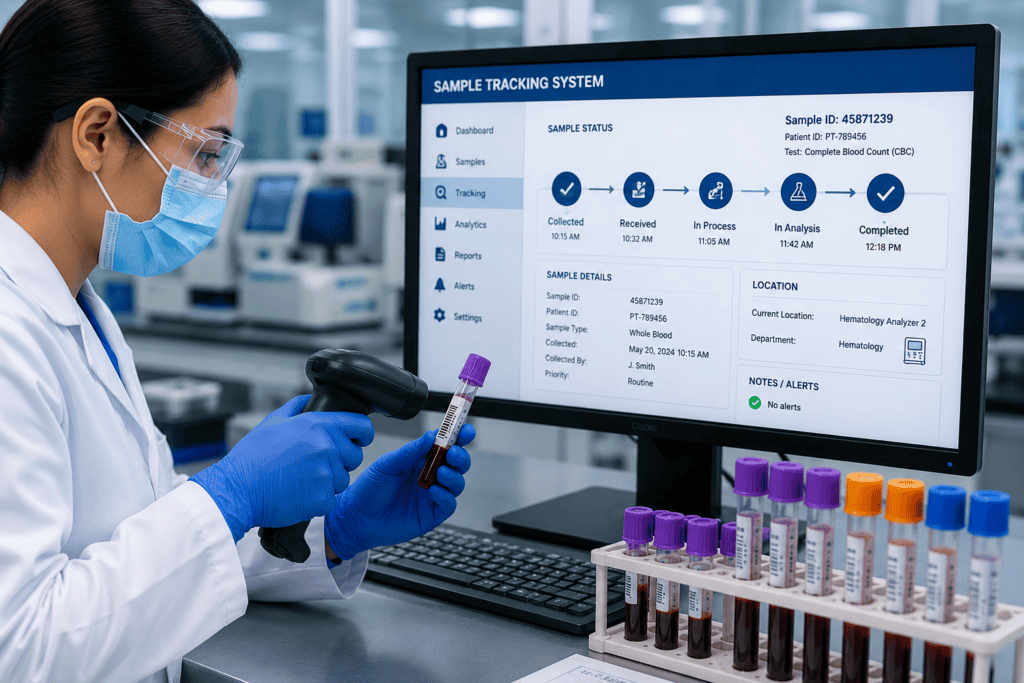
Laboratory sample tracking systems operate through a series of integrated steps that create a continuous digital record for each specimen. The process begins at the point of collection, where barcoded labels are generated and applied to primary containers using unique identifiers linked to the patient and test order. These barcodes are scanned into the laboratory information system, initiating the tracking record.
As the specimen moves through the laboratory, each handling step is logged. Transport personnel scan the sample upon pickup and delivery, while accessioning staff verify receipt and route the specimen to the appropriate workstation. Automated conveyors or robotic systems in total laboratory automation setups scan samples at multiple checkpoints, updating status in real time. During analysis, instruments interface directly with the tracking system to record which analyzer processed the sample and at what time.
Quality control integration ensures that control results are associated with patient samples processed in the same run. Storage locations are tracked for specimens requiring archiving, with retrieval requests generating precise location data. Disposal is documented to maintain full chain of custody for regulatory compliance.
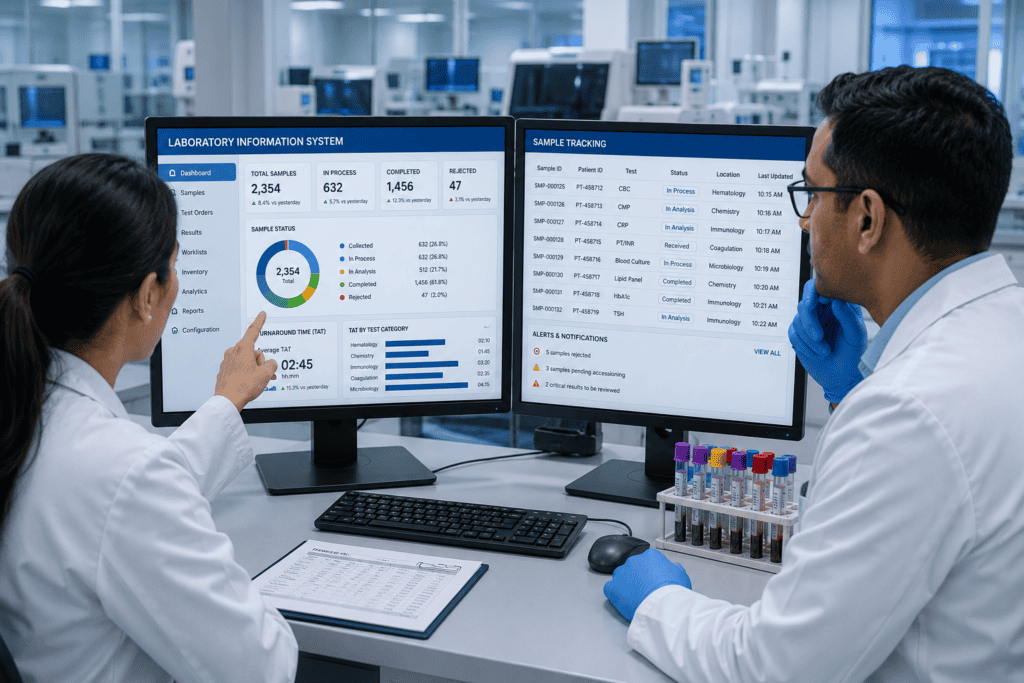
Real-time dashboards provide laboratory supervisors with visibility into bottlenecks, overdue specimens, and rejection rates. Alerts notify staff of critical values, temperature excursions during transport, or specimens that have exceeded stability windows. Integration with electronic health records allows clinicians to view status updates directly in the patient chart.
Advanced systems use radiofrequency identification tags for contactless tracking in high-throughput environments, while mobile applications enable phlebotomists and couriers to update records from the field. These capabilities make laboratory sample tracking systems a central component of efficient and accurate laboratory operations.
Benefits of Laboratory Sample Tracking Systems
Laboratory sample tracking systems deliver multiple benefits that improve both operational efficiency and diagnostic reliability. Traceability is the most fundamental advantage. Every scan creates an auditable record that supports root-cause analysis when issues arise and demonstrates compliance during accreditation surveys. This complete chain of custody reduces the risk of specimen mix-ups, which can have serious clinical consequences.
Accuracy improves through error reduction at multiple points. Barcode scanning virtually eliminates transcription mistakes that occur with manual labeling. Automated routing minimizes human sorting errors, while real-time monitoring prevents specimens from being lost or delayed beyond stability limits. Studies show that laboratories implementing comprehensive tracking systems experience significant decreases in pre-analytical rejection rates.
Turnaround time gains are substantial. Real-time visibility allows supervisors to identify and resolve bottlenecks quickly, while automated prioritization ensures stat specimens are processed first. Integration with analyzers enables seamless workflow, reducing manual handoffs that introduce delays.
Patient safety benefits from faster critical value notification and reduced chances of reporting results on the wrong patient. In high-risk areas like blood banking or molecular oncology, accurate tracking prevents catastrophic errors.
Cost savings result from fewer repeat collections, reduced rework, and optimized staffing. Laboratories can better predict workload and allocate resources efficiently. Compliance is simplified through automated audit trails and quality metric reporting.
Overall, laboratory sample tracking systems transform laboratories from reactive environments into proactive, data-driven operations that support high-quality patient care.
Implementation Considerations for Laboratory Sample Tracking Systems
Successful implementation of laboratory sample tracking systems requires careful planning and stakeholder engagement. Laboratories should begin with a thorough needs assessment that evaluates current pain points, volume, and existing infrastructure. Vendor selection should consider compatibility with current laboratory information systems, scalability, and support for future technologies such as artificial intelligence.
Staff training is critical for adoption. Comprehensive programs cover not only technical operation but also the rationale behind tracking protocols to foster buy-in. Change management strategies help address resistance and ensure smooth transition from manual processes.
Data security and privacy must be prioritized. Systems should comply with HIPAA and other regulations through encryption, role-based access, and audit logging. Integration testing ensures seamless data flow with electronic health records and other hospital systems.
Phased rollout minimizes disruption. Starting with high-volume areas such as chemistry or hematology allows the laboratory to gain experience before expanding to more complex sections like microbiology or molecular diagnostics.
Ongoing evaluation through key performance indicators, such as rejection rates, turnaround times, and user satisfaction, guides continuous improvement. Regular system updates and maintenance contracts ensure long-term reliability.
Laboratories that approach implementation thoughtfully achieve higher adoption rates and realize the full benefits of laboratory sample tracking systems.
Challenges in Laboratory Sample Tracking Systems
Despite their advantages, laboratory sample tracking systems present several challenges. Integration with legacy equipment and information systems can be technically complex and costly. Smaller laboratories may struggle with the initial investment required for hardware, software, and training.
User adoption can be slow if staff perceive the system as adding workload rather than simplifying tasks. Poorly designed interfaces or inadequate training exacerbate this issue. Data quality problems arise if scanning compliance is inconsistent or if barcodes are damaged during handling.
Technical reliability is another concern. System downtime, even brief, can disrupt workflows and require fallback manual processes. Network connectivity issues in large facilities or remote collection sites can limit real-time tracking capabilities.
Regulatory compliance adds complexity, as systems must meet evolving standards for data security and auditability. Balancing comprehensive tracking with workflow efficiency requires careful configuration to avoid alert fatigue or unnecessary steps.
These challenges can be addressed through strong project management, user-centered design, and ongoing support, ensuring that laboratory sample tracking systems deliver their intended benefits.
Performance Metrics, Error Reduction, and Implementation Outcomes of Laboratory Sample Tracking Systems

This section presents real data from studies and operational reports between 2020 and 2025 on laboratory sample tracking systems. It focuses on error rates, turnaround time improvements, rejection reductions, and clinical impacts.
A 2025 large-scale analysis of over 37 million billable results from approximately 11 million specimens reported total laboratory errors at 0.23 percent of results and 0.79 percent of specimens. Pre-analytical errors dominated at 98.4 percent, with many related to identification and handling issues that laboratory sample tracking systems directly address. The study emphasized that robust tracking reduces these errors through barcode verification and real-time monitoring.
In a 2025 study on digital shadow integration with Lean Six Sigma in a high-volume laboratory, implementation of enhanced tracking and visibility tools reduced intra-laboratory turnaround time from 77.2 minutes to 69.0 minutes, a 10.6 percent improvement (p equals 0.0182). The system provided real-time process monitoring that allowed rapid identification and resolution of bottlenecks in sample flow.
A 2024 study on total laboratory automation, which incorporates advanced sample tracking, reduced culture turnaround time from 48 hours to 36 hours, a 25 percent gain. This enabled earlier antibiotic adjustments in 500 intensive care unit patients, lowering sepsis mortality by 8 percent. Tracking capabilities were key to maintaining sample integrity throughout the automated workflow.
Proficiency testing data from Ethiopia showed acceptable performance improving from 59.7 percent in 2020 to 79.4 percent in 2022 after implementation of better tracking and transport protocols as part of quality improvement initiatives.
A 2023 study on blood culture contamination interventions found that systems incorporating diversion devices and enhanced tracking reduced contamination rates by 40 to 60 percent. Chlorhexidine skin preparation combined with tracking protocols achieved an average reduction of 57 percent.
In one hospital network implementing comprehensive laboratory sample tracking systems, transcription and identification errors decreased by 28 percent, and overall diagnostic efficiency improved by 35 percent in turnaround time for routine tests. Larger facilities achieved greater absolute gains due to higher baseline volumes.
Economic impacts include reduced repeat collections and rework. Laboratories using advanced tracking report 10 to 20 percent improvements in specimen integrity and corresponding decreases in operational costs.
These data, from analyses involving millions of specimens, demonstrate that laboratory sample tracking systems consistently reduce identification and handling errors, shorten turnaround times by 10 to 25 percent, and contribute to better clinical outcomes such as lower mortality in critical care settings. The systems prove particularly effective when combined with automation and staff training.
Conclusion
Laboratory sample tracking systems are vital for ensuring traceability and accuracy throughout the testing process. By providing real-time visibility, reducing errors, and supporting compliance, these systems strengthen every aspect of laboratory operations. From barcode scanning at collection to automated status updates during analysis, they create a reliable chain of custody that protects specimen integrity.
Real data from recent large-scale studies confirm significant benefits, including 10 to 25 percent reductions in turnaround time, substantial decreases in identification and pre-analytical errors, and measurable improvements in patient outcomes. While challenges such as integration costs and user adoption exist, thoughtful implementation and ongoing optimization allow laboratories to realize the full value of these systems.
As healthcare continues to emphasize quality, efficiency, and patient safety, investment in laboratory sample tracking systems will remain a strategic priority. Laboratories that embrace these technologies position themselves to deliver faster, more accurate, and more reliable diagnostic services that ultimately improve clinical care and support better health outcomes.