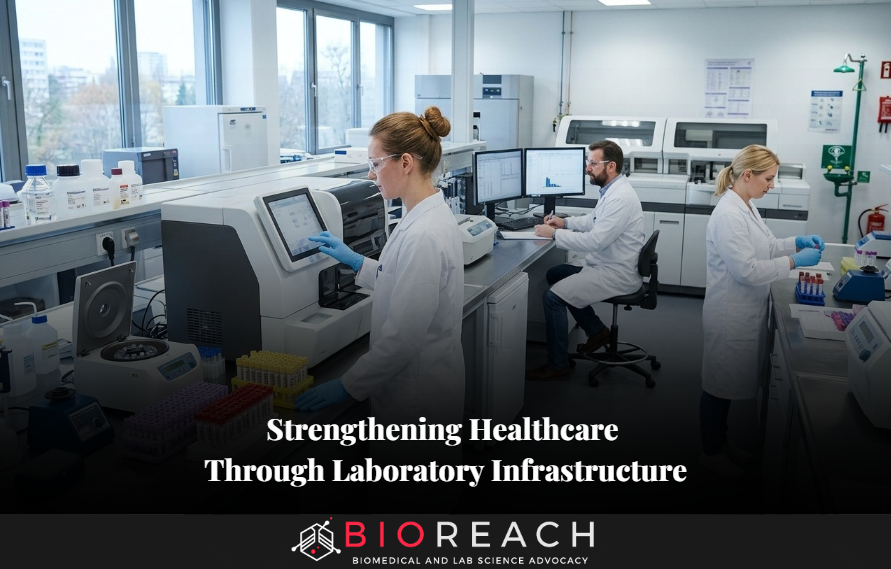
Laboratory infrastructure is the combination of facilities, equipment, supplies, trained people, quality systems, specimen transport, and information systems that lets a health system diagnose disease reliably. The Lancet Commission on diagnostics, reported in 2021, estimated that 47 percent of the world’s population has limited or no access to essential diagnostic tests and services, and that closing the gap for six conditions could prevent roughly 1.1 million premature deaths a year in low- and middle-income countries. Investing in laboratory infrastructure is therefore one of the most direct ways to strengthen healthcare.
Treatment decisions depend on knowing what is wrong, and that knowledge comes from laboratories. When infrastructure is weak, clinicians guess, patients travel long distances for tests, and outbreaks are detected late. This article explains what laboratory infrastructure includes, what the evidence says about gaps in access, what has worked in strengthening national laboratories, what a sustainable approach looks like, and how workforce and community partnerships fit in.
What Laboratory Infrastructure Includes
Laboratory infrastructure is more than buildings and instruments. It covers physical space and reliable utilities, equipment and the supply chain for reagents, trained staff, quality management systems, safe specimen collection and transport, and the information systems that move results to the clinician. A laboratory with a modern analyzer but no dependable power, no reagents, or no one trained to run it does not function as infrastructure.
It also operates as a network. Primary care clinics need simple tests close to patients, district and regional laboratories handle more complex work, and national reference laboratories support quality and surveillance. Referral links between these tiers determine whether a sample collected in a remote clinic produces a result in time to matter.
The Scale of the Gap
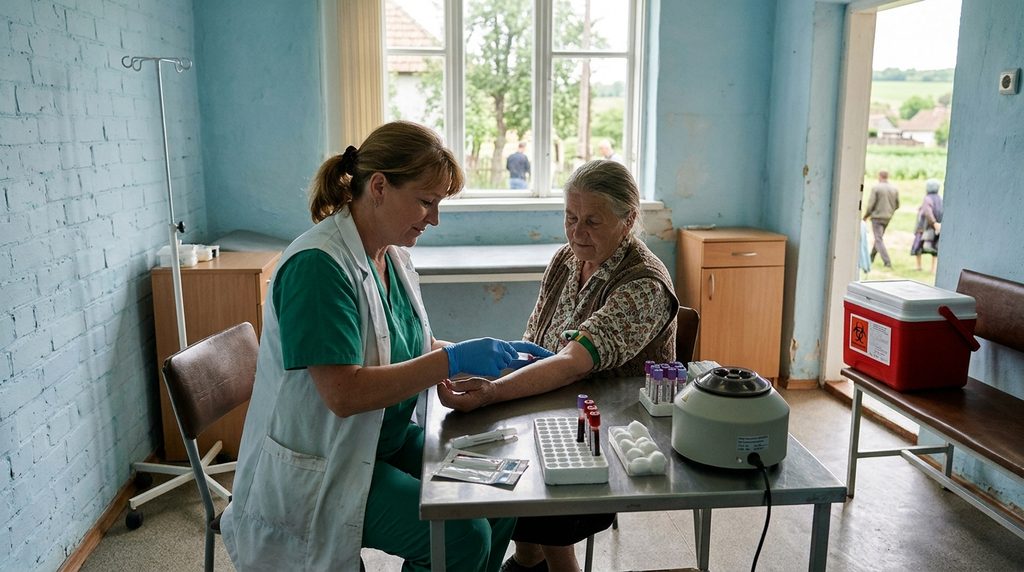
The most widely cited estimate comes from the Lancet Commission on diagnostics in 2021. It reported that 47 percent of the global population has limited or no access to essential diagnostics, and that in low- and lower-middle-income countries only about 19 percent of people can reach the simplest primary-care tests, excluding HIV and malaria. The Commission estimated that narrowing the gap for six conditions, diabetes, hypertension, HIV, tuberculosis, and hepatitis B and syphilis in pregnant women, could prevent about 1.1 million premature deaths a year in low- and middle-income countries. It also estimated a global shortfall of up to 1 million diagnostics staff. Its chair described the situation as the equivalent of practicing medicine blind.
These figures come from a news summary of the Commission’s work, since I could not open the report itself, and they are estimates for 2021. A report on the World Health Assembly’s call for countries to strengthen diagnostics cites estimated underdiagnosis rates of 35 percent for tuberculosis, 46 percent for HIV, 56 percent for diabetes, and 61 percent for hypertension, and said that reducing underdiagnosis in these conditions to 10 percent would prevent about 1.1 million premature deaths. The same coverage notes that the Assembly asked member countries to include diagnostics strategies in their national health plans, with the World Health Organization offering technical guidance, model policies, and procurement and regulatory support.
The Commission also pointed to concentration in the supply chain: it reported that four companies in the United States and Europe supply half of in vitro diagnostics, and its deputy co-chair said the pandemic illustrated the risks of relying on a small number of suppliers. That concern leads to a broader point about local capacity, discussed below.
What Strengthening Laboratories Has Looked Like in Practice
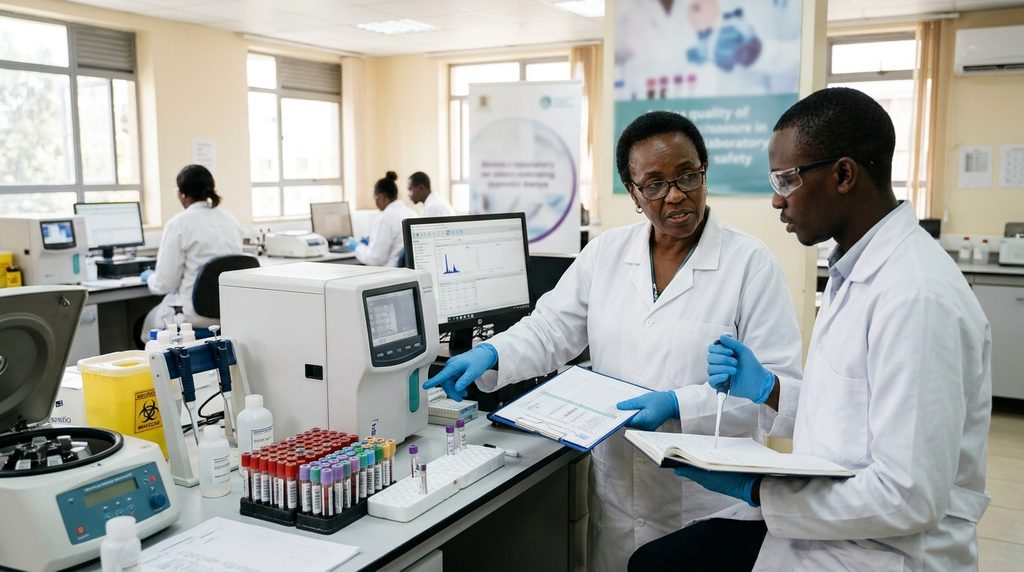
Experience in sub-Saharan Africa offers a case study. A World Health Organization regional summary on strengthening national health laboratories describes how the response to HIV and AIDS exposed the fragile and neglected state of some national laboratories, and how partners and governments then spent years building capacity. Three programs recur: SLIPTA, the stepwise route toward accreditation from the WHO Regional Office for Africa; SLMTA, a laboratory management training program; and the African Society for Laboratory Medicine, a Pan-African institution.
The summary does not report accreditation counts, so I do not quote any, but it lists the elements it recommends for the next phase. They are tiered referral networks, quality improvement and accreditation, national laboratory policies and strategic plans, training and workforce retention, career paths for laboratory professionals, and public-private partnerships. It also stresses that sustaining gains will require strong leadership and funding from African governments and the African Union.
Those recommendations echo the Lancet Commission’s, which call for national diagnostics strategies built on essential tests suited to local needs, investment in training and point-of-care testing in primary care, better affordability and regulatory oversight, and expanded research and production in low- and middle-income countries. They also recommend wider availability of self-sampling and self-testing. The consistent message is that equipment alone is not enough; people, systems, and policy have to develop together.
Building Laboratories That Last

Sustainability is the difference between a laboratory that opens and one that keeps running. Practical questions include how reagents will be financed and delivered, who will service instruments, how staff will be retained, and how power and water will be secured. These are the issues addressed in building sustainable laboratories in developing countries, which explains why planning for the full life of a laboratory, not just its construction, is essential.
Quality is part of sustainability. A laboratory that cannot show its results are reliable loses the trust of clinicians, and unreliable results can cause harm, as described in the hidden cost of diagnostic errors. Quality management, proficiency testing, and clear procedures, covered in diagnostic quality assurance in laboratories, are therefore infrastructure in the same sense as buildings.
Local production and procurement also matter. When supply depends on a small number of distant manufacturers, disruptions reach every clinic that relies on them, which is why the Lancet Commission recommended expanding diagnostics development and manufacturing in lower-income countries.
Reaching People Beyond the Central Laboratory
Not every community can host a full laboratory, so infrastructure must also include ways to reach people where they are. Point-of-care tests in primary care, self-sampling, and sample transport networks extend the system outward. Mobile units can bring testing to places with no fixed facility, an approach described in mobile laboratories and community health outreach. Rural populations are often the least served, a gap examined in why rural communities need better diagnostic access.
Technology can extend the network further. Telehealth has increased demand for laboratory services and for coordinated results, as discussed in how telehealth is increasing demand for laboratory services, and digital systems that connect laboratories to clinicians shorten the path from sample to decision. Technology works only where the underlying laboratory capacity exists, so it should supplement infrastructure rather than substitute for it.
People Are Infrastructure
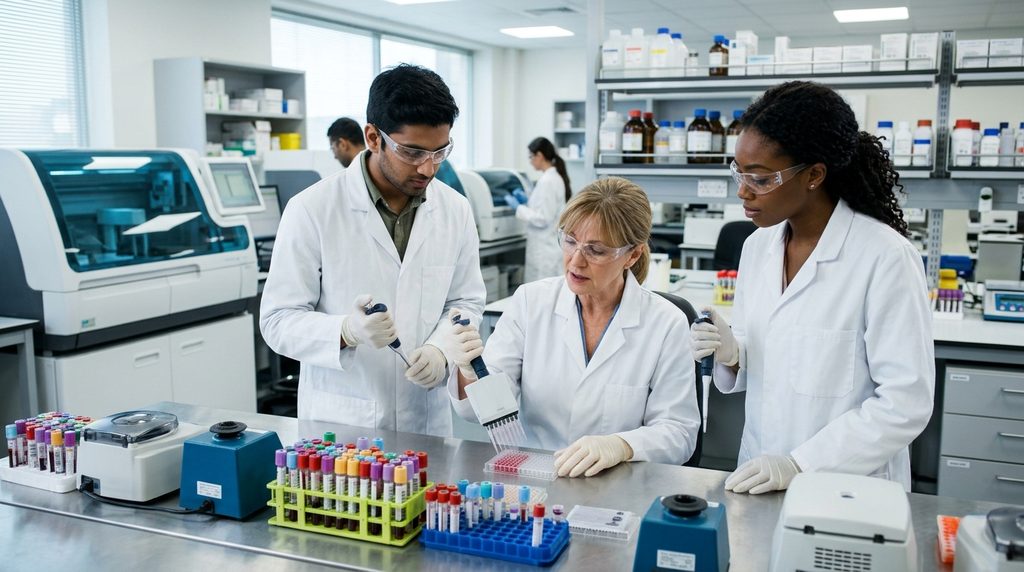
The Commission’s estimate of a shortfall of up to 1 million diagnostics staff shows that workforce is not separate from infrastructure but part of it. Without trained scientists and technologists, equipment sits idle. The costs of shortages reach beyond the laboratory, as described in the economic impact of laboratory workforce shortages, and the WHO regional summary specifically recommends career paths and retention strategies.
Community partnerships can strengthen the pipeline, linking schools, training programs, and health facilities, as in how community partnerships strengthen healthcare workforce development. Education that connects training to employment, covered in bridging the gap between education and employment in laboratory science, helps ensure that new graduates fill the roles laboratories need.
Conclusion
Laboratory infrastructure determines whether a health system can see what it is treating. The evidence summarized here, from the Lancet Commission’s estimate that nearly half the world lacks adequate access to diagnostics to the experience of national laboratory strengthening in Africa, points in one direction: investment in laboratories pays off in earlier diagnosis, better treatment decisions, and stronger outbreak detection.
The practical agenda is consistent across sources. Build tiered networks, invest in quality and accreditation, plan for sustainability and local supply, extend testing to communities, and treat the workforce as part of the infrastructure. Governments, funders, and professional organizations all have roles, and laboratory professionals are well placed to explain why the investment matters.
Frequently Asked Questions
What is laboratory infrastructure?
Laboratory infrastructure is everything a health system needs to produce reliable diagnostic results: facilities and utilities, equipment and supplies, trained staff, quality management, specimen transport, and information systems. It also includes the referral network linking clinics, district laboratories, and national reference laboratories.
How many people lack access to diagnostics?
The Lancet Commission on diagnostics reported in 2021 that 47 percent of the global population has limited or no access to essential diagnostic tests and services, and that in low- and lower-middle-income countries only about 19 percent of people can reach the simplest primary-care tests, excluding HIV and malaria.
Why does strengthening laboratories improve healthcare?
Accurate diagnosis lets clinicians treat the right condition and detect outbreaks sooner. The Commission estimated that closing the diagnostic gap for six conditions could prevent about 1.1 million premature deaths a year in low- and middle-income countries.
What programs help improve laboratory quality in Africa?
Programs described by the World Health Organization include SLIPTA, a stepwise route toward accreditation, SLMTA, a laboratory management training program, and the African Society for Laboratory Medicine, which supports laboratory capacity across the continent.
How can laboratories reach rural or remote communities?
Options include point-of-care testing in primary care, self-sampling and self-testing, sample transport networks, mobile laboratories, and digital links that connect remote clinics to laboratory services. These work best when supported by a strong referral network and trained staff.
Bio-Reach is a non-profit organization dedicated to advancing Laboratory Medicine through advocacy, education, and global collaboration. To learn more or get involved, visit bio-reach.org.