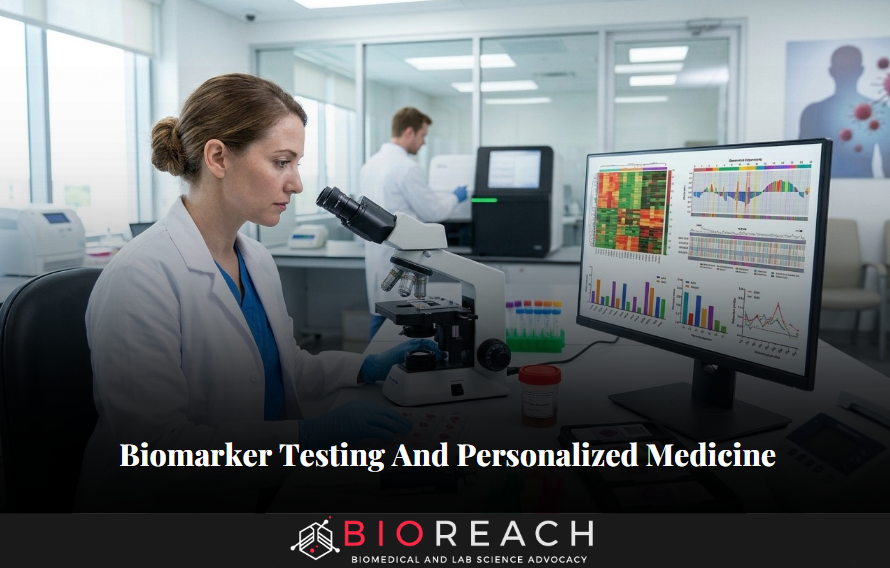
Biomarker testing looks for genes, proteins, and other substances in a patient’s tissue, blood, or other fluids to guide treatment; it is the laboratory foundation of personalized medicine. The National Cancer Institute describes it as a way to find changes in a cancer that can help a doctor choose treatment, and notes it is routinely used for diagnoses such as non-small cell lung, breast, and colorectal cancer. Its promise depends on laboratories delivering adequate samples, fast and reliable results, and patients being able to access and afford the tests.
Personalized medicine is often described in terms of new drugs, but a targeted drug is only useful if someone first identifies the patients who can benefit from it. That identification happens in the laboratory. This article explains what biomarker testing is, how its results guide treatment, what the laboratory contributes at each step, where testing falls short in practice, and what would help more patients benefit.
What Biomarker Testing Is

The National Cancer Institute defines biomarker testing, also called tumor testing, tumor profiling, or tumor genetic testing, as a way of finding changes in a cancer that could help a doctor choose a treatment. Biomarkers can be genes, proteins, or other substances. Examples the institute gives include changes in the EGFR gene, which can be treated with EGFR inhibitors, and tumor mutational burden, which can indicate whether immune checkpoint inhibitors may work. The Oncotype DX test, which examines the activity of 21 genes in breast cancer, is another.
Biomarker testing is different from genetic testing for inherited mutations, although the two can overlap. The institute notes that some tests also compare tumor cells with a sample of healthy cells, such as blood, saliva, or skin, to identify mutations that arose in the tumor.
Samples come in several forms. Tumor tissue is collected during surgery or through a biopsy. A liquid biopsy looks for cancer biomarkers in blood or other fluids and may be used for blood cancers or when a tumor biopsy is not safe. The choice of sample affects what the laboratory can measure and how quickly.
Although cancer is the best-known use, the same logic applies in other areas of medicine where a measurable marker can predict who will respond to a treatment or who is at risk. This article focuses on cancer because the evidence and the public guidance are most developed there.
How Results Guide Treatment
According to the National Cancer Institute, results can be used to identify a targeted therapy, which may be FDA-approved, used off-label, or available through a clinical trial; to identify biomarkers that may prevent a therapy from working; to find clinical trials, including basket trials that enroll patients based on biomarkers; and to reveal inherited mutations that may prompt genetic counseling. Benign changes and variants of unknown significance are not used to guide treatment decisions.
The institute says doctors usually suggest genomic biomarker testing for people with advanced cancer, meaning cancer that has spread or returned after treatment, and that testing applies to both solid tumors and blood cancers. For patients, this means that the same diagnosis can lead to different treatments depending on the result, which is the core idea of personalized medicine.
The link between a test and a drug is also why the two are increasingly developed together, a subject covered in companion diagnostics explained. When a therapy is approved for patients with a particular marker, the test that identifies those patients becomes part of the treatment pathway.
What the Laboratory Contributes

Every stage of biomarker testing runs through the laboratory. Pathologists and histotechnologists handle the tissue, molecular laboratories extract and analyze nucleic acids or proteins, and laboratory scientists interpret the results and report them in a form clinicians can act on. The growth of this work is part of what is driving the growing demand for molecular pathology.
Quality matters at each step. A result that is wrong, late, or based on a poor sample can send a patient down the wrong treatment path, which is why the principles of diagnostic quality assurance in laboratories apply with particular force to biomarker work. Validation of tests, proficiency testing, clear reporting, and communication between the laboratory and the treating team all determine whether a biomarker result is useful.
The laboratory is also where decisions about stewardship are made, such as how to use limited tissue across several tests. That is a practical concern, as the next section shows.
Where Biomarker Testing Falls Short
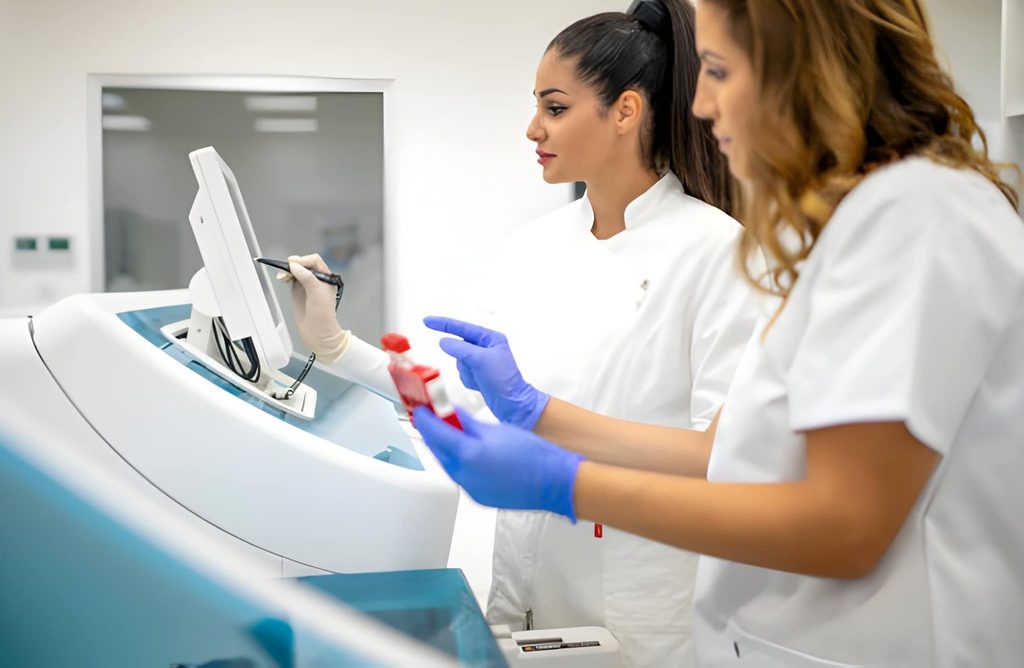
Testing does not always happen as guidelines suggest. A 2026 overview on the clinical gap between guidelines and practice states that testing rates remain inconsistent across settings, payers, and stages of disease, and it does not give a single national rate, so I do not quote one here. It does point to several specific problems, with the caveat that most of the underlying studies are not named in the text.
Timing is one. A 2024 Canadian community hospital study of patients with non-small cell lung cancer found that 79.7 percent still lacked core biomarker results at the medical oncology consultation. The study cited benchmarks of 10 working days after sample receipt from the College of American Pathologists and 14 calendar days from the Ontario Lung Cancer Tissue Pathway, and the overview notes that next-generation sequencing panels often take 10 to 21 days in routine practice. Waiting for results can delay treatment decisions for patients whose cancer is advancing.
Tissue is another. The same overview cites a report finding that up to 43 percent of patients with non-small cell lung cancer had insufficient tissue for genotyping, because of unsafe biopsies, limited sampling, or inadequate yield. When tissue runs out, liquid biopsy can help, but it is not always covered.
Coverage and cost are the third. In an opinion commentary in The ASCO Post in July 2026, oncologist Charu Aggarwal cites a 2020 survey in which 29 percent of patients did not receive biomarker testing because of lack of coverage or out-of-pocket costs, and an analysis finding that 27.4 percent of Medicare claims for next-generation sequencing under the 2018 national coverage determination, amended in 2020, were denied.
She notes that the average age at diagnosis of non-small cell lung cancer is 70, so most patients qualify for Medicare, and that a Medicare rule bars reimbursement for sequencing tests performed in the hospital and for 14 days after inpatient discharge, which can delay treatment. Because that is a commentary, its figures come from sources the author cites rather than from original research.
The commentary also notes that more than 20 states have introduced or enacted biomarker testing coverage legislation, with widely varying scope, and that employer plans governed by the federal ERISA law are not subject to state insurance mandates. The policy picture changes quickly, so readers should check current rules.
Equity and Access
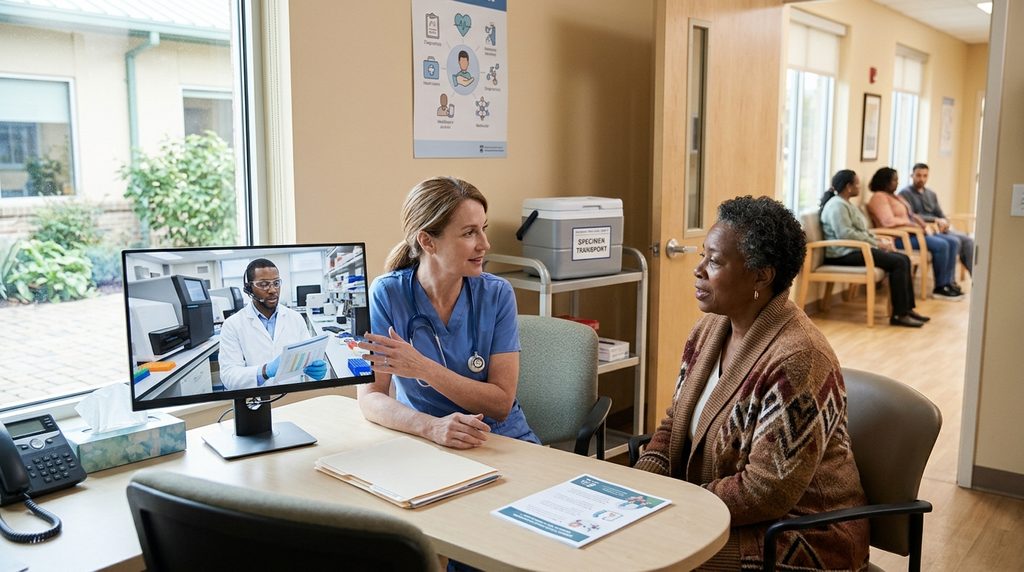
Personalized medicine can widen gaps if only some patients receive it. Testing requires pathology services, molecular laboratory capacity, and reliable specimen transport, all of which are less available in rural and underserved communities, a concern examined in why rural communities need better diagnostic access. Insurance coverage adds a second layer, because state laws that exclude Medicaid or omit funding for implementation leave some patients unprotected.
Representation in the underlying science matters too. Biomarkers and reference data developed mostly in some populations may not perform equally in others, a reason the profession is also working toward a diverse laboratory workforce for the future that reflects the patients it serves.
Looking ahead, biomarker results will increasingly combine with continuous data from other sources, a direction described in the future of personalized health monitoring.
Conclusion
Biomarker testing is what turns the idea of personalized medicine into a decision at the bedside. When a laboratory delivers an adequate, accurate, timely result, a patient can be matched to a therapy, steered away from one that will not work, or offered a clinical trial. When tissue is insufficient, turnaround is slow, or coverage is denied, the promise is lost.
The practical priorities follow from that. Laboratories need the capacity and quality systems to deliver reliable results quickly, clinicians need clear pathways for ordering and acting on them, and policymakers need to remove coverage barriers so access does not depend on where a patient lives or which insurance they hold. Laboratory professionals are at the center of all three.
Frequently Asked Questions
What is biomarker testing?
Biomarker testing is laboratory testing that looks for genes, proteins, or other substances in tissue, blood, or other fluids to help guide care. In cancer, it finds changes in a tumor that can help a doctor choose a treatment, and it is also called tumor testing or tumor profiling.
Who should have biomarker testing?
The National Cancer Institute says doctors usually suggest genomic biomarker testing for people with advanced cancer, and that it is routinely used for certain diagnoses, including non-small cell lung, breast, and colorectal cancer. Patients should discuss testing with their healthcare provider and check coverage and local availability.
What samples are used for biomarker testing?
Tumor tissue collected by biopsy or surgery is the most common sample. A blood-based liquid biopsy may be used for blood cancers or when a tumor biopsy is not safe, and some tests also use blood, saliva, or skin cells to compare with the cancer.
How long do biomarker test results take?
It varies. Benchmarks cited in a 2026 overview include 10 working days after sample receipt from the College of American Pathologists, and next-generation sequencing panels often take 10 to 21 days in routine practice. Delays can mean results are not ready at the first oncology visit.
Does insurance cover biomarker testing?
Coverage is inconsistent. Commentary published in 2026 reports that more than 20 states have introduced or passed coverage laws of varying scope, that employer plans under ERISA are not subject to state mandates, and that a notable share of Medicare sequencing claims were denied in one analysis. Patients should confirm coverage with their insurer before testing.
Bio-Reach is a non-profit organization dedicated to advancing Laboratory Medicine through advocacy, education, and global collaboration. To learn more or get involved, visit bio-reach.org.