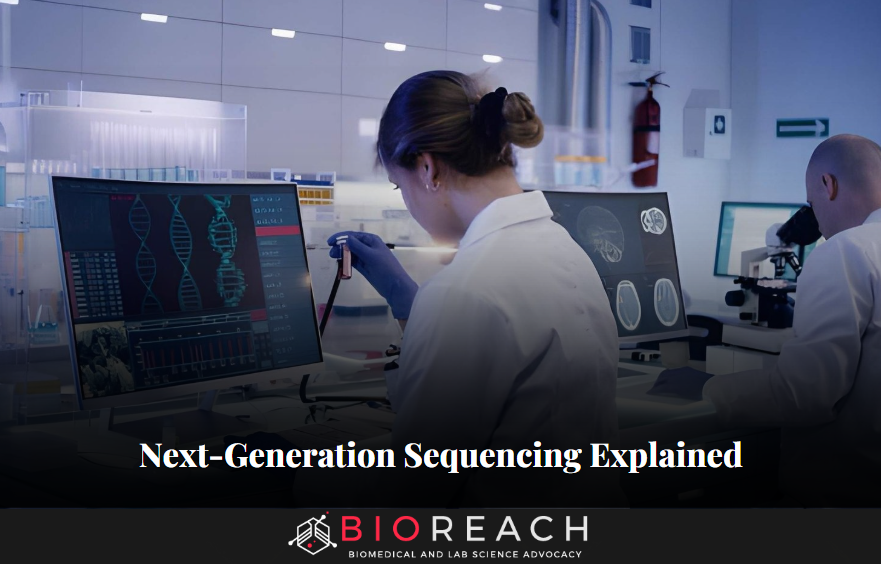
Genomic Testing uses technologies such as next-generation sequencing (NGS) to read millions of DNA or RNA fragments simultaneously, helping clinicians make more informed diagnostic and treatment decisions. In a meta-analysis of 37 studies involving children with suspected genetic diseases, exome sequencing achieved molecular diagnoses in 24% to 68% of cases across studies, compared with 0% to 17% for chromosomal microarray. These results highlight why sequencing has become a first-line tool for rare disease diagnosis. Genomic testing also supports oncology by identifying tumor mutations, copy number changes, and gene fusions, as well as microbiology and pharmacogenomics. Its accuracy and clinical value depend on laboratories that validate tests, maintain strict quality controls, and interpret results carefully.
For decades, reading DNA meant sequencing one fragment at a time, which was too slow and costly for routine clinical use. NGS changed that by sequencing many fragments in parallel, turning small amounts of nucleic acid into very large amounts of data that software can then align, compare, and interpret. This article explains what NGS is and how it works, why it became practical, what genomic testing is used for, what makes NGS results trustworthy, and why who is represented in genomic data matters for patients everywhere.
What Next-Generation Sequencing Is and How It Works

NGS refers to newer DNA and RNA sequencing technologies that sequence many nucleic acid fragments at once, a process also described as high-throughput, massively parallel, or deep sequencing. Compared with Sanger sequencing, the older method that reads one fragment at a time, NGS offers greater speed and throughput because it determines the sequences of millions of fragments simultaneously.
A typical NGS workflow has four main stages. First, nucleic acid is isolated and purified from a sample such as blood, tissue, or a swab, and its concentration and purity are checked. Second, in library preparation, the material is converted into a form that can be sequenced, which may involve fragmenting the DNA, attaching adapters, selecting fragments by size, amplifying with PCR, and pooling samples; RNA sequencing adds a step that converts RNA to complementary DNA.
Third, the prepared library is loaded onto an instrument that reads the sequence, often by sequencing by synthesis using labeled nucleotides, and produces reads with quality scores stored in FASTQ files. One manufacturer describes this as transforming nanograms of DNA or RNA into gigabytes of data. Fourth, bioinformatics software demultiplexes and filters the reads, aligns them to a reference genome, calls variants into VCF files, and prepares them for review and reporting. The last stage is where genomic testing meets the interpretive expertise that laboratories and clinical teams bring.
Why NGS Became Practical
The shift from research curiosity to clinical tool was driven largely by cost. The National Human Genome Research Institute tracks sequencing costs at the centers it funds, and its data show costs falling faster than the pace of improvement in computing power described by Moore’s Law beginning in January 2008, when those centers switched from Sanger-based to second-generation sequencing platforms. Plotted on a logarithmic scale, the decline since 2001 is dramatic, which is why large-scale sequencing moved from a national project to a routine laboratory service.
These figures need careful reading, however. NHGRI’s cost-per-genome estimate assumes particular coverage levels, such as 30-fold coverage for Illumina platforms, and it covers production costs such as labor, reagents, instruments amortized over three years, and directly related informatics. It excludes quality control and downstream analysis such as alignment and variant interpretation. The price of a clinical test therefore reflects much more than the cost of the sequencing run, including validation, bioinformatics, interpretation, and reporting, which is why clinical genomic testing remains a specialized laboratory service.
What Genomic Testing Is Used For

In rare and inherited disease, NGS is used to look for the genetic cause of conditions that conventional tests could not explain. The 2018 meta-analysis by Clark and colleagues in npj Genomic Medicine, pooling 37 studies of children with suspected genetic diseases, found exome sequencing diagnostic rates between 24 and 68 percent depending on the study, versus 0 to 17 percent for chromosomal microarray, and it found genome and exome sequencing roughly equivalent for reaching a molecular diagnosis in the studies from 2013 to 2017. Those are ranges across studies rather than a single pooled yield, and they reflect differences in patient selection, so they illustrate potential rather than a guaranteed result for any individual.
In oncology, NGS identifies mutations, copy number variations, and gene fusions in solid tumors and in liquid biopsies, which supports treatment selection. This is the foundation of the matched testing described in companion diagnostics and part of the rising demand discussed in the growing demand for molecular pathology. In infectious disease, sequencing identifies viruses, bacteria, and fungi and tracks how they evolve, and in pharmacogenomics it examines genetic variation that influences how patients respond to drugs.
These uses connect to the broader movement toward individualized care explored in the future of personalized health monitoring. They also depend on a clear division of roles: the sequencing platform generates data, and the laboratory team decides whether the data are good enough to report and what they mean for the patient.
Making NGS Results Trustworthy

Because NGS tests are complex, professional guidelines focus on validation and ongoing quality monitoring. A joint consensus recommendation from the Association for Molecular Pathology and the College of American Pathologists, published in 2017 by Jennings and colleagues, addresses analytical validation of targeted NGS gene panels for somatic variants in oncology. It covers panel design and an optimization phase before validation, the use of reference cell lines and reference materials, determining positive percentage agreement and positive predictive value for each variant type, and setting minimum depth of coverage and minimum numbers of samples.
The guideline also takes an error-based approach, asking the laboratory director to identify possible sources of error across the entire analytical process and address them through test design, validation, or quality controls. Its outline includes validating the bioinformatics pipeline, qualifying libraries, setting core analytical quality metrics, using controls, confirming results when needed, and participating in proficiency testing. The aim, in the authors’ words, is to assist laboratories with validation and ongoing monitoring of NGS testing. Details such as exact thresholds are in the full guideline, which readers should consult directly.
For laboratory professionals, this means the skills required extend beyond the bench. Bioinformatics literacy, statistical thinking, and careful documentation are now part of genomic testing, and they link back to the same principles of diagnostic quality assurance that apply across laboratory medicine. A sequencing result without validated methods and quality controls is simply a large file; with them, it becomes a result clinicians can act on.
Access and Representation in Genomic Testing

Who is included in genomic research shapes how well genomic testing works for different patients. The American Society of Human Genetics notes that about 16 percent of the global population is of European descent, yet genome-wide association studies have been heavily weighted toward European ancestry, a pattern documented in a 2019 analysis in the journal Cell. The society explains that methods for estimating genetic risk are more accurate for people of European descent, and that therapies based on biased data may work best for people of the same ancestry.
Diversity also benefits everyone. The same fact sheet points to a nonfunctional PCSK9 variant found in some people of African descent that led to a new class of cholesterol-lowering drugs, and it describes efforts to broaden representation, including the H3Africa initiative, which collects samples from participants in 27 African countries. For countries building laboratory capacity, genomic tools raise the same questions of infrastructure, training, and sustainability explored in building sustainable laboratories in developing countries and the access gaps in why rural communities need better diagnostic access.
Conclusion
Next-generation sequencing has made genomic testing a practical part of laboratory medicine by sequencing many fragments in parallel and turning small samples into rich data. Its clinical value is clearest in rare disease and oncology, where it can reach diagnoses and identify treatment targets that older methods could not, and it continues to expand into infectious disease and pharmacogenomics.
That value depends on the work that surrounds the sequencer: validated methods, quality controls, skilled bioinformatics, and careful interpretation, along with research and testing that reflect the diversity of the patients being served. Laboratories and professionals that invest in those foundations will be best prepared to make genomic testing accurate, equitable, and useful.
Frequently Asked Questions
What is next-generation sequencing?
Next-generation sequencing is a set of DNA and RNA sequencing technologies that read millions of fragments simultaneously, also called massively parallel or high-throughput sequencing. It allows laboratories to test many genes, or an entire genome, in one run and is widely used in genomic testing for cancer, inherited disease, and infectious disease.
How is NGS different from Sanger sequencing?
Sanger sequencing reads one DNA fragment at a time, while NGS sequences millions of fragments in parallel. This gives NGS greater speed and throughput, although the large amount of data it produces requires bioinformatics for alignment, variant calling, and interpretation.
What can genomic testing diagnose?
Genomic testing is used to find the genetic causes of rare and inherited conditions, to identify tumor mutations and other changes that guide cancer treatment, to identify and track pathogens, and to study genetic variation that affects drug response. In a meta-analysis of 37 pediatric studies, exome sequencing diagnostic rates ranged from 24 to 68 percent.
How do laboratories make sure NGS results are accurate?
Laboratories validate their tests before use and monitor them continuously. AMP and CAP guidance for oncology gene panels covers reference materials, performance measures such as positive percentage agreement and positive predictive value, minimum coverage and sample numbers, bioinformatics pipeline validation, quality metrics, controls, and proficiency testing.
Why does genetic diversity matter in genomic testing?
Genomic studies have been heavily weighted toward people of European ancestry, which can make genetic risk estimates less accurate for other populations. Efforts such as H3Africa, which collects samples in 27 African countries, aim to broaden representation so that the benefits of genomic testing reach more patients.
Bio-Reach is a non-profit organization dedicated to advancing Laboratory Medicine through advocacy, education, and global collaboration. To learn more or get involved, visit bio-reach.org.