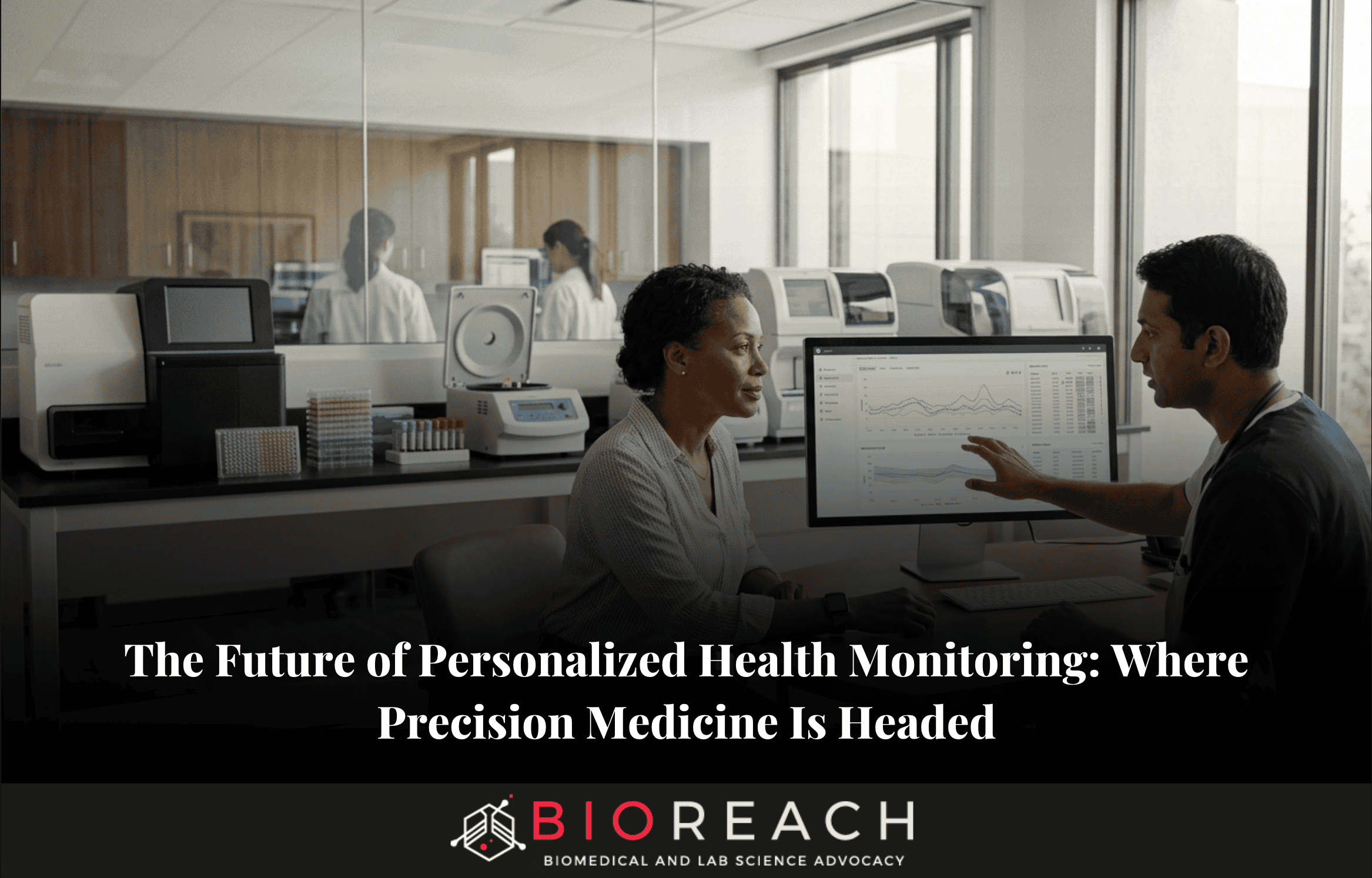
Personalized health monitoring is the practice of tracking an individual’s biomarkers, genetic profile, and physiological data continuously and using that information to tailor prevention, diagnosis, and treatment specifically to that person rather than to a generic population average. The global personalized medicine market was valued at $567.1 billion in 2024 and is projected to reach $1,196.2 billion by 2033, reflecting rapid growth driven by falling genomic sequencing costs, expanding biomarker-based testing, and the rise of wearable and digital health monitoring. The future of the field points toward monitoring that is continuous rather than episodic, genomically informed from the outset, and increasingly interpreted with the help of artificial intelligence, all of it still resting on the accuracy of the laboratory testing and biomarker science that makes personalization possible in the first place.
For most of medicine’s history, diagnosis and treatment have been based on population averages: reference ranges, standard dosing, and treatment protocols designed for the typical patient. Personalized health monitoring inverts this logic, using an individual’s own genetic, biochemical, and physiological data to guide care specifically suited to them. This article examines where personalized health monitoring is headed, the technologies driving that future, and what it means for laboratory medicine, the discipline whose data makes personalization possible.
The Scale and Direction of Growth
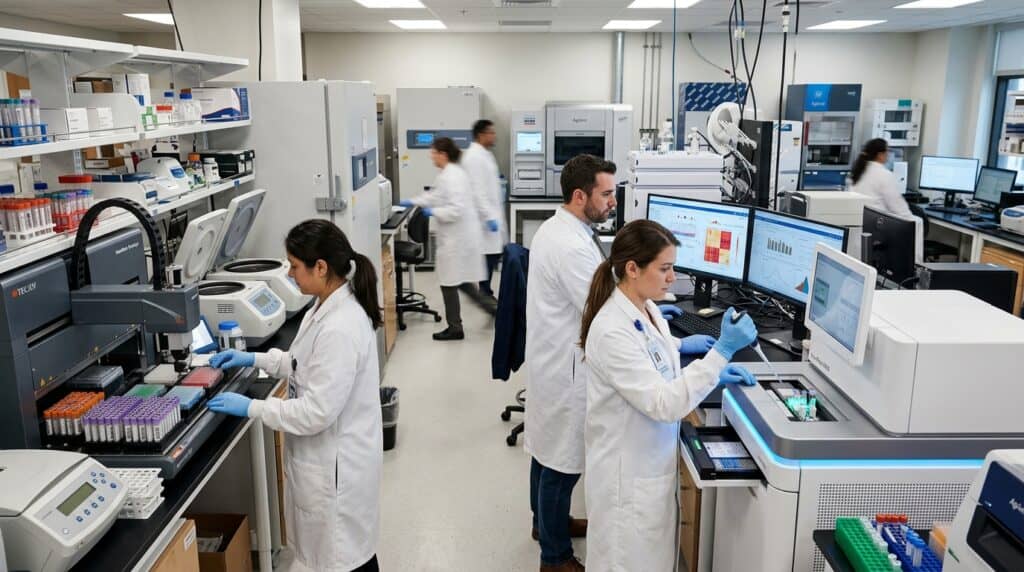
The trajectory of personalized medicine is one of the clearest growth stories in healthcare. The global personalized medicine market is projected to grow from $233.87 billion in 2026 to $587.02 billion by 2034, at a compound annual growth rate of 12.19 percent, with the diagnostics segment anticipated to hold 65.6 percent of the market share in 2026, underscoring that testing and biomarker analysis, not just targeted therapies, sit at the center of the field’s growth. Key trends include the widespread use of next-generation sequencing, AI-powered analytics, digital phenotyping, pharmacogenomics, and companion diagnostics.
Diagnostics dominating the growth reflects a simple truth: personalization is only as good as the data behind it. Before a treatment can be tailored to an individual, that individual’s relevant biology, genetic variants, protein biomarkers, and metabolic patterns must be measured accurately. This is why laboratory medicine sits at the foundation of the personalized medicine movement rather than at its periphery.
Where the Field Is Headed
Several converging trends define the near-term future of personalized health monitoring, each extending the reach and depth of what individualized data can reveal.
Continuous, wearable-based monitoring is replacing the episodic snapshot. Digital health monitoring, the continuous tracking of health metrics through wearables and sensors, is becoming a core part of the personalized medicine spectrum, extending well beyond the fitness-tracking wearables familiar to consumers today. The proven success of continuous glucose monitoring has established that always-on measurement reveals patterns and trends that a single blood draw cannot, and manufacturers are extending similar continuous-sensing approaches to other biomarkers. The future points toward monitoring that observes a person’s physiology in something closer to real time rather than in periodic snapshots.
Genomic and multi-omic profiling is becoming foundational rather than exceptional. Next-generation sequencing remains the gold standard for broad genomic profiling, commanding roughly a third of the precision medicine market share, and its role is expanding from rare disease diagnosis and oncology into broader preventive and primary care use. Advances in targeted therapy development and real-time wellness tracking through wearables are together fostering a hyper-personalized model of medicine, where a person’s genetic profile, established once, informs decisions across their lifetime rather than being consulted only when a specific disease is suspected.
Pharmacogenomics is moving from a specialized tool into more routine use. By analyzing how an individual’s genetic makeup affects their metabolism of specific drugs, pharmacogenomic testing helps clinicians select medications and dosages suited to that person from the start, reducing the trial-and-error prescribing that has long characterized much of medicine, particularly for psychiatric medications, pain management, and cardiovascular drugs.
Liquid biopsy and non-invasive monitoring are extending personalized surveillance beyond the clinic visit. Blood-based tests that detect circulating tumor DNA and other biomarkers allow longitudinal monitoring of cancer treatment response and recurrence risk without repeat invasive procedures, and the liquid biopsy segment is projected to grow at a compound annual growth rate of 13.76 percent, among the fastest-growing segments in the personalized medicine market. This approach is extending logically toward earlier, broader disease surveillance beyond oncology alone.
AI-powered interpretation is becoming essential infrastructure rather than an add-on. As personalized monitoring generates vastly more data per person, genomic variants, continuous biosensor streams, longitudinal biomarker trends, interpreting that volume of information manually becomes impractical. AI-powered analytics and digital phenotyping are increasingly what convert raw personalized data into actionable clinical insight, a role that will only grow as the volume of individual data expands.
The Laboratory’s Central Role in Personalization
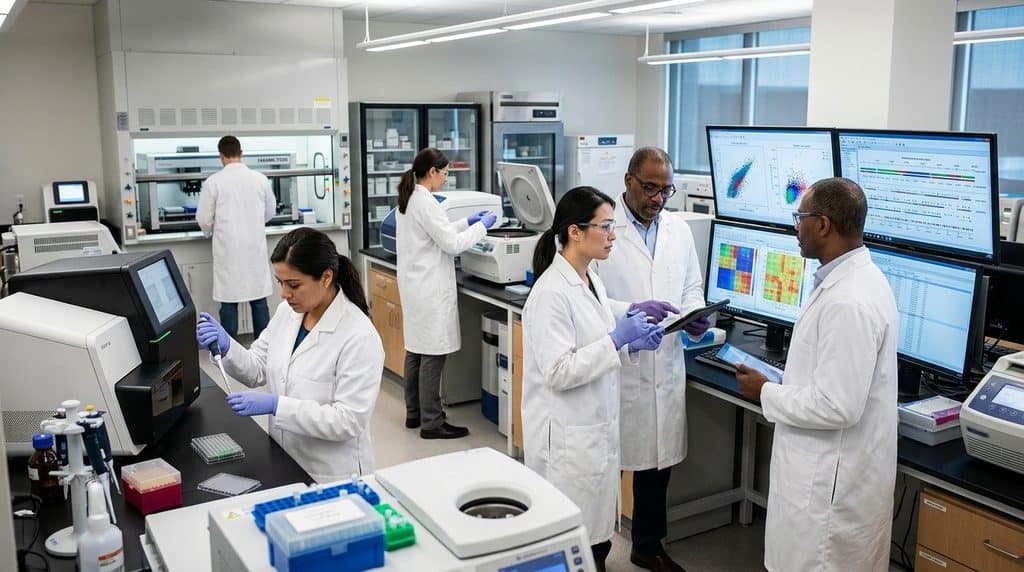
It is tempting to think of personalized medicine primarily in terms of targeted drugs or genetic counseling, but the entire model depends on a layer of work that happens well before any treatment decision: the laboratory testing that generates and validates the underlying data.
Every genomic profile begins with a laboratory-performed sequencing or genotyping test, subject to the same rigorous validation, quality control, and accreditation standards that govern any other clinical laboratory result. Every biomarker used to guide a personalized treatment decision, from a companion diagnostic that determines cancer therapy eligibility to a pharmacogenomic panel that guides medication choice, is a laboratory result whose accuracy depends on the same pre-analytical, analytical, and post-analytical rigor that defines quality laboratory medicine generally. The growth of continuous biosensor monitoring does not remove the laboratory from this picture; it adds a parallel stream of data that must eventually be correlated with and validated against laboratory-grade measurement.
This means the future of personalized health monitoring is inseparable from the future of laboratory medicine specifically. As molecular pathology and genomic testing expand from specialized use into routine care, the volume and complexity of laboratory work required to support personalization grows correspondingly. Laboratory professionals are increasingly responsible for validating next-generation sequencing panels, interpreting complex biomarker patterns, ensuring the quality management systems that keep personalized results trustworthy, and building the informatics infrastructure that connects laboratory data to the AI tools now interpreting it.
The Challenges Ahead
The future of personalized health monitoring is not without obstacles, and honest assessment requires acknowledging them alongside the promise.
Data interoperability remains a persistent barrier. Incompatible systems across hospitals and privacy regulations create barriers to the sharing of data essential for emerging precision solutions, meaning that even as individual laboratories and monitoring devices generate rich personalized data, connecting that data into a coherent picture across a person’s care remains technically and legally difficult.
Equity of access is a genuine concern. Advanced genomic profiling, continuous monitoring devices, and AI-supported interpretation currently concentrate in well-resourced healthcare systems and among consumers who can afford them, raising the risk that personalized medicine’s benefits accrue disproportionately to those already best served by healthcare, unless deliberate effort is made to extend access more broadly.
Validation and regulatory rigor must keep pace with innovation. As new biomarkers, sequencing panels, and AI interpretation tools enter clinical use at a rapid pace, ensuring each is properly validated for the populations and settings where it will be used, rather than assumed reliable based on limited testing, remains an ongoing challenge that depends entirely on rigorous laboratory science.
Conclusion
The future of personalized health monitoring points toward care that is continuous rather than episodic, genomically informed from the start, and increasingly interpreted with the help of artificial intelligence. The market’s rapid growth, projected to more than double within a decade by most estimates, reflects genuine advances in sequencing technology, biomarker science, and wearable monitoring that are making individualized care more achievable than at any point in medical history.
None of this is possible without the laboratory science that generates and validates the data personalization depends on. As monitoring becomes more continuous and genomic profiling becomes more routine, the volume and complexity of laboratory work required to support it will only grow, making the accuracy, quality management, and expertise of laboratory medicine more central to the future of healthcare, not less. Personalized health monitoring’s promise will be realized only as far as the laboratory science underneath it can be trusted, which is why investment in laboratory quality and workforce remains inseparable from the future of precision medicine itself.
Frequently Asked Questions
What is personalized health monitoring?
Personalized health monitoring is the practice of tracking an individual’s own biomarkers, genetic profile, and physiological data, rather than relying only on population-average reference ranges, to guide prevention, diagnosis, and treatment specifically suited to that person. It combines laboratory testing, genomic profiling, and increasingly continuous wearable-device monitoring to build an individualized picture of a person’s health over time.
How big is the personalized medicine market expected to become?
Estimates vary by research firm and methodology, but most project the global personalized medicine market to roughly double or more within the next decade, from several hundred billion dollars today to well over a trillion dollars by the early to mid 2030s. Diagnostics, meaning laboratory testing and biomarker analysis, represents the largest single segment of that market, reflecting how central testing is to enabling personalization.
What role do wearable devices play in personalized medicine?
Wearable devices enable continuous monitoring of health metrics rather than the periodic snapshots that traditional testing provides. Building on the proven success of continuous glucose monitoring, manufacturers are extending similar always-on sensing to other biomarkers, allowing patterns and trends to be observed in something closer to real time, complementing rather than replacing laboratory-grade testing.
Does personalized medicine reduce the need for laboratory testing?
No, it increases it. Personalized medicine depends entirely on accurate laboratory-generated data, genomic sequencing, biomarker panels, and pharmacogenomic testing, to identify the individual characteristics that guide personalized decisions. As personalization expands from cancer care into broader preventive and primary care use, the volume and complexity of laboratory testing required to support it grows correspondingly.
What are the biggest challenges facing personalized health monitoring’s future?
The main challenges are data interoperability, since incompatible systems and privacy regulations make it difficult to unify personalized data across a person’s care; equity of access, since advanced genomic and monitoring technologies currently concentrate among well-resourced patients and systems; and ensuring new tests and AI interpretation tools are properly validated before widespread clinical use.
Bio-Reach is a non-profit organization dedicated to advancing Laboratory Medicine through advocacy, education, and global collaboration. To learn more or get involved, visit bio-reach.org.