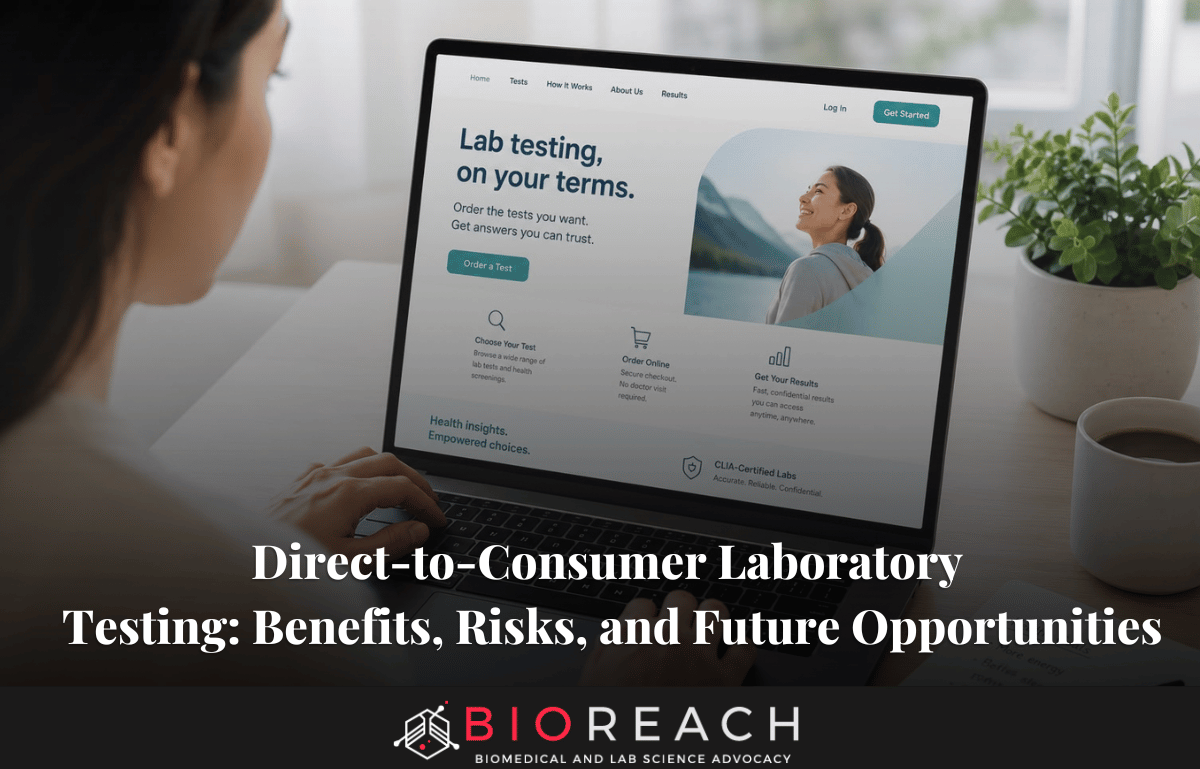
A decade ago, ordering a laboratory test required a physician’s signature, a trip to a collection site, and a wait for results that a clinician would interpret and explain. Today, a consumer can open an app, select from more than a hundred available tests, collect a sample at home or walk into a partner site, and receive results on a phone screen within days, all without a doctor ever entering the process. This shift, known as direct-to-consumer (DTC) laboratory testing, represents one of the most significant changes in how people access diagnostic information in a generation. It is reshaping the relationship between patients, laboratories, and the healthcare system, and it raises questions about quality, interpretation, and equity that the laboratory medicine community is only beginning to answer.
Direct-to-consumer laboratory testing allows individuals to order diagnostic tests without a physician referral, assess their own health and disease risk, and receive results directly rather than through a treating clinician. The category spans a wide range, from wellness panels measuring vitamins and hormones to cholesterol and HbA1c screening, infectious disease and sexually transmitted infection testing, cancer risk assessment, and genetic and pharmacogenomic analysis. What unites them is the removal of the traditional gatekeeper: the consumer, not a provider, initiates the test and receives the result.
This article examines what DTC laboratory testing is, the market forces driving its rapid growth, the genuine benefits it offers, the risks it carries for patients and the healthcare system, and what its expansion means for the future of laboratory medicine and the professionals who make it reliable.
A Market in Rapid Expansion
The growth of direct-to-consumer laboratory testing is not a marginal trend. Market analyses consistently place the global DTC laboratory testing market in the multi-billion-dollar range with sustained double-digit or high-single-digit annual growth. <cite index=”37-1″>The direct-to-consumer laboratory testing market size is projected to expand from USD 4.12 billion in 2026 to USD 8.16 billion by 2034, with a CAGR of 8.94 percent.</cite> Other analyses using broader definitions of consumer-initiated testing project even faster growth, and virtually all forecasts agree on the direction: consistent, substantial expansion through the next decade.
The United States dominates the market. <cite index=”37-1″>North America dominated the direct-to-consumer laboratory testing market with a revenue share of approximately 58 percent in 2024,</cite> reflecting an entrenched culture of proactive health management, high disposable income among target consumers, and early regulatory clarity. Household penetration of at-home testing kits in the United States is estimated in the 25 to 35 percent range by 2026 and accelerating as retail distribution expands, indicating that DTC testing is moving from early-adopter curiosity toward mainstream consumer adoption.
Several forces are driving this expansion. The convenience of at-home sample collection and app-based result dashboards appeals to consumers accustomed to on-demand digital services in every other part of their lives. The declining cost of assays and genetic sequencing has widened the range of tests that can be offered at consumer-accessible prices. The integration of DTC testing with telehealth platforms has created seamless pathways from ordering to results to, where appropriate, physician consultation. And the broader cultural shift toward preventive, personalized healthcare has made proactive self-testing feel less like an anomaly and more like a natural extension of wearable fitness tracking and personal health apps.
Recent industry activity underscores the momentum. In April 2026, major diagnostic providers launched integrated digital platforms offering consumers direct access to laboratory testing, including at-home self-collection options for infectious disease screening supported by asynchronous telehealth review. These launches from established, CLIA-certified laboratories signal that DTC testing is no longer the exclusive domain of startups but is being embraced by the largest players in diagnostics.
The Genuine Benefits of Consumer-Initiated Testing
The appeal of direct-to-consumer testing is not merely convenience for its own sake. Several genuine benefits explain why consumers are adopting these services in growing numbers.
The most immediate benefit is access. For individuals without a regular primary care provider, those facing long waits for appointments, or those in areas with limited healthcare infrastructure, DTC testing offers a route to diagnostic information that would otherwise require navigating a system that can be slow, expensive, or geographically distant. A person who suspects a thyroid problem or wants to monitor their cholesterol can obtain that information without first securing a clinic appointment.
Privacy is a second meaningful benefit, particularly for sensitive testing. Sexually transmitted infection screening, which many people avoid or delay because of the discomfort of an in-person clinical encounter, becomes far more approachable when it can be done discreetly at home with results delivered privately. Increasing the number of people who test for treatable infections has genuine public health value, since undiagnosed infections cannot be treated and continue to spread.
Empowerment and engagement represent a third benefit. When individuals actively participate in monitoring their own health, they often become more engaged in decisions affecting their wellbeing. For patients managing chronic conditions or working to prevent them, the ability to track biomarkers over time, HbA1c for glucose control, lipid panels for cardiovascular risk, can reinforce healthy behaviors and provide a sense of agency. Family health history that suggests predisposition to chronic disease can motivate preventive testing that, combined with appropriate medical guidance, supports earlier intervention.
Speed rounds out the list. DTC platforms typically deliver results faster than the traditional order-collect-interpret-communicate cycle, and the elimination of intermediary steps appeals to consumers who value quick answers. For a healthy population seeking wellness insights, this speed and autonomy are precisely the point.
The Risks That Demand Attention

The same features that make direct-to-consumer testing attractive also create its most serious risks, and the laboratory medicine community has been vocal about them.
The foremost concern is the absence of professional interpretation. A laboratory result is not self-explanatory. Reference intervals vary by age, sex, and population; a value flagged as abnormal may be clinically insignificant, and a value within the reference range may still represent pathology in a specific patient. Without a clinician to place the number in context, consumers may misinterpret results, experiencing unnecessary alarm over a benign finding or false reassurance from a result that warrants follow-up. The professional consensus in laboratory medicine is clear that consumers should always consult qualified healthcare providers when making decisions that could affect their health, and that reputable DTC services should provide sufficient information or expert help to assist in interpreting results.
A related risk is variable test quality. The quality of DTC tests can vary considerably between different tests and the laboratories offering them. While all clinical laboratories performing testing on human specimens in the United States are bound by CLIA standards, the marketing claims and consumer-facing framing of DTC tests are subject to less stringent oversight than the tests themselves. Wellness tests marketed without specific diagnostic claims are often treated as general wellness products not subject to premarket review, creating a landscape where the rigor behind a given test is not always transparent to the consumer choosing it.
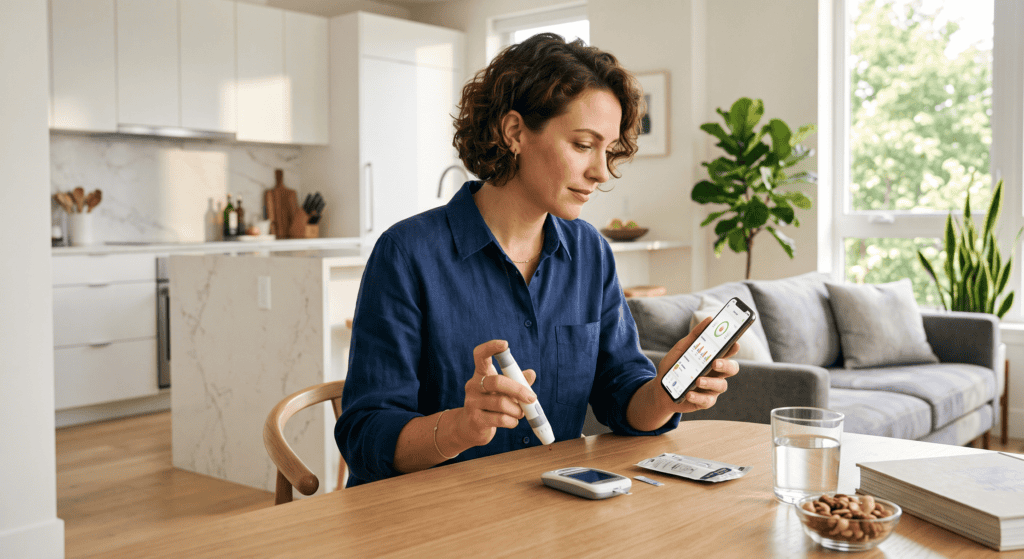
Pre-analytical error is a particular concern with home self-collection. Much of the reliability of a laboratory result depends on how the sample was collected, handled, and transported, the pre-analytical phase where a large share of all laboratory errors originate. A consumer collecting a fingerstick sample at home, without training, in an uncontrolled environment, introduces variables that a trained phlebotomist in a clinical setting would minimize. Hemolysis, insufficient volume, contamination, and transport delays can all compromise a home-collected specimen in ways that affect result accuracy, and the consumer has no way to recognize when this has happened. This is one reason specimen collection quality is such a consequential determinant of whether a test result can be trusted.
Data privacy has emerged as a significant risk as the volume of consumer health and genetic data held by DTC companies has grown. High-profile breaches exposing the data of millions of users, along with regulatory penalties for lax security and deceptive marketing, have demonstrated that the sensitive information generated by DTC testing, particularly genetic data, carries real exposure. When financially distressed companies change ownership, questions about who controls that data and how it may be used become pressing.
Finally, there is the risk of downstream cost and anxiety. A DTC result that appears abnormal frequently prompts follow-up investigations, physician visits, and additional testing to confirm or rule out a finding that may have been a false positive or a clinically insignificant variation. This adds cost to the healthcare system and stress to the individual, sometimes for a result that never required action.
The Regulatory Landscape
The regulation of direct-to-consumer laboratory testing in the United States is a layered and evolving system. Clinical laboratories performing the testing are overseen by the Centers for Medicare and Medicaid Services under CLIA, which establishes national quality standards. The FDA reviews commercially available test kits and their associated medical claims to ensure safety and efficacy before clearance, the CDC assists in the process, and the Federal Trade Commission monitors for deceptive marketing and unsubstantiated claims.
A critical gap in this framework is that the decision as to whether consumers can directly order a laboratory test, bypassing a healthcare provider, currently rests at the state level, and the patchwork of state rules means access varies considerably by geography. Furthermore, while CLIA binds all laboratories, there is not yet a dedicated federal framework specifically regulating the collection and testing of home-collected samples, leaving the pre-analytical phase of DTC testing less governed than the analytical phase that follows it.
Regulatory change is underway. Proposed FDA action on laboratory-developed tests and the emergence of state-level health data privacy laws are expected to bring more consumer-directed tests under fuller oversight in the coming years. This recalibration creates short-term compliance cost and uncertainty for providers. Still, clearer guidance is expected to open a wider, more trustworthy market for CLIA-certified platforms that meet the standard.
What DTC Testing Means for Laboratory Professionals

It would be easy to read the rise of direct-to-consumer testing as a diminishment of the laboratory professional’s role, since the model explicitly removes intermediaries. The reality is the opposite. The accuracy and trustworthiness of every DTC result still depend entirely on the quality management systems, validated methods, and skilled personnel of the laboratory that performs the analysis. The consumer sees an app and a result; behind that result is the same rigorous laboratory science that underpins physician-ordered testing.
If anything, the DTC model raises the stakes for laboratory quality, because the safeguard of clinician interpretation has been removed. When a physician orders a test, an experienced clinician reviews the result before it shapes a decision. In the DTC model, the laboratory’s result reaches the consumer directly, which places even greater weight on the laboratory getting it right and on the interpretive support the laboratory provides. Laboratory professionals have a growing role in designing consumer-facing reports that are clear and honest about limitations, in building the reflex pathways that flag results genuinely requiring medical attention, and in advocating for the professional guidance that separates responsible DTC testing from the marketing-driven variety.
There is also a workforce and access dimension that aligns with the mission of organizations like Bio-Reach. DTC testing, done responsibly and paired with appropriate guidance, has the potential to extend diagnostic access to underserved populations who lack convenient access to traditional care. Realizing that potential rather than its opposite, a two-tier system where the affluent get convenience and the underserved get unguided results they cannot interpret, depends on keeping laboratory professionals and sound laboratory science at the center of the model.
Conclusion
Direct-to-consumer laboratory testing is a durable and rapidly growing feature of the healthcare landscape, not a passing trend. It offers real benefits in access, privacy, engagement, and speed, and its multi-billion-dollar market trajectory reflects genuine consumer demand for a more participatory relationship with their own health data. But those benefits come paired with serious risks: the absence of professional interpretation, variable test quality, the pre-analytical vulnerabilities of home collection, data privacy exposure, and the potential for unnecessary anxiety and downstream cost.
The path forward is not to resist the model but to shape it responsibly. That means CLIA-certified laboratories maintaining uncompromising quality, thoughtful regulation that closes the gaps around home collection and data protection, transparent consumer education about what a test can and cannot tell them, and the continued centrality of laboratory professionals whose expertise makes any result, physician-ordered or consumer-initiated, worth trusting. Handled well, direct-to-consumer testing can expand access to diagnostic information. Handled poorly, it can erode the very trust that makes laboratory medicine valuable. The difference lies in the quality and integrity of the laboratory science behind it.
Bio-Reach is a non-profit organization dedicated to advancing Laboratory Medicine through advocacy, education, and global collaboration. To learn more or get involved, visit bio-reach.org.