Laboratory leadership is the work of turning a group of skilled individuals into a team that produces accurate, timely results under pressure, and keeps its people. High-performing laboratory teams share a few traits: clear roles and standard work, a culture where people can raise concerns without fear, workloads that match staffing, real opportunities to grow, and leaders who communicate openly. These traits matter more than ever because the workforce is stretched. The American Society for Clinical Pathology’s 2024 Vacancy Survey found that vacancy rates, although lower than in 2022, remain above pre-pandemic levels, and that retirement rates rose in 10 of the 17 laboratory departments surveyed.
Every test result is the product of a team. A specimen may pass through accessioning, processing, analysis, review, and reporting, often across shifts, before a clinician sees a number. When the team works well, that chain is invisible. When it does not, errors, delays, and resignations follow. This article explains why teamwork is now a strategic priority, what high-performing laboratory teams have in common, and what leaders at every level can do to build them.
Why Team Performance Matters in the Laboratory
Laboratories are often judged on turnaround time, accuracy, and cost, but each of those measures depends on how people work together. A missed handoff between shifts can delay a critical result. A technologist who does not feel able to question an unusual value may let an error through. A bench that is chronically short-staffed will eventually trade quality for speed.
Staffing pressure makes these risks sharper. The ASCP 2024 Vacancy Survey, published in the American Journal of Clinical Pathology in 2025, concluded that laboratories continue to face challenges in recruiting qualified professionals, and its qualitative findings pointed to an urgent need for advocacy, credentialing, and more education and training programs. As the economic impact of laboratory workforce shortages shows, those gaps carry costs well beyond the laboratory itself.
When hiring is difficult, keeping and developing the people already on the team becomes one of the most effective ways to protect quality. That is a leadership task as much as a human resources one.
What High-Performing Laboratory Teams Have in Common
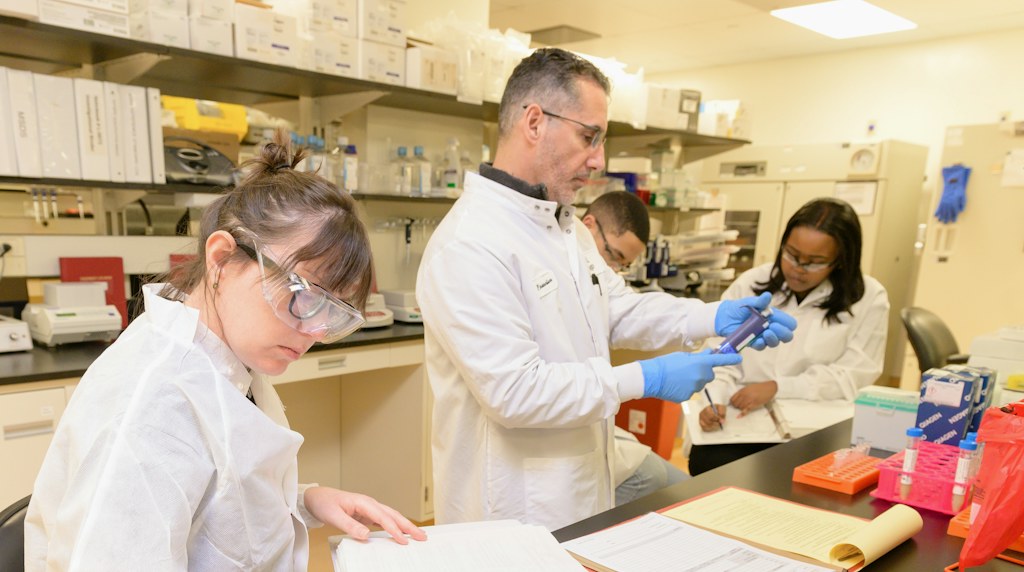
Strong teams are rarely the result of luck. They tend to share several practical characteristics.
Clear roles and standard work. Everyone knows who is responsible for each step, what “done” looks like, and how work is handed off. Written procedures, competency assessments, and consistent workflows reduce variation, which is the foundation of the quality management system in clinical laboratories.
Shared goals that people can see. Teams perform better when they understand the measures that matter, such as turnaround time for urgent tests or specimen rejection rates, and can see how they are doing. Goals should connect daily work to patient care rather than feel like numbers handed down from above.
Psychological safety. Team members feel able to report a near miss, ask for help, or question a result without being blamed. The concept, described by Harvard researcher Amy Edmondson, is especially important in a setting where small errors can have large consequences.
Cross-training and flexibility. Teams with people trained across benches can absorb absences and volume spikes without overloading a few individuals.
Trust in leadership. People are more likely to stay, and to speak up, when they believe their supervisors listen, explain decisions, and treat them fairly.
Building Psychological Safety at the Bench

Psychological safety is the shared belief that a team is safe for interpersonal risk-taking. In a laboratory, that risk-taking looks ordinary: a new technologist asking how to handle an instrument flag, a phlebotomist reporting a labeling mistake, or a scientist challenging a result that does not fit the clinical picture.
Leaders build this kind of environment through consistent behavior rather than slogans. They respond to reported errors by fixing processes instead of blaming individuals. They ask questions in huddles and genuinely want the answers. They admit their own mistakes. Over time, these signals tell staff that raising a concern is part of the job, not a risk to their reputation.
Psychological safety also strengthens laboratory risk management in healthcare. Errors that are reported can be analyzed and prevented. Errors that are hidden tend to repeat.
Managing Workload and Preventing Burnout

No amount of team spirit can compensate for a workload that is simply too large. The American Society for Clinical Pathology’s survey of job satisfaction, well-being, and burnout among laboratory professionals, published in the American Journal of Clinical Pathology in 2020, found high job satisfaction among respondents but also high job-related stress and widespread burnout. Most respondents rated their work-life balance as only “fair,” and the main contributing factors were the quantity of workload and understaffing.
The authors suggested that comprehensive wellness programs at institutional, local, and national levels may improve morale and help with recruitment and retention. In practice, leaders can act on several fronts:
- Track workload against staffing and use that data when requesting positions.
- Protect breaks and limit routine overtime, particularly on understaffed shifts.
- Review whether tasks can be redistributed, automated, or eliminated.
- Ask staff directly which parts of the job create the most stress, and act on what they say.
Technology can help, but only when it is introduced with the team rather than to it. As will automation replace laboratory professionals explains, automation tends to change roles rather than remove the need for skilled people.
Developing People and Careers
High-performing teams invest in growth. Staff who see a future in their laboratory are more likely to stay, and they bring new skills back to the bench.
Development does not have to be expensive. It can include rotating staff through specialties, supporting certification and clinical laboratory continuing education, giving experienced technologists the chance to lead projects, and preparing future supervisors before a vacancy forces the issue. Structured mentoring is particularly valuable. Mentorship strategies for future laboratory professionals describes how pairing new staff with experienced colleagues can shorten the learning curve and build confidence.
Diversity also strengthens teams. People with different backgrounds bring different perspectives to problem-solving, and a workforce that reflects the community is better able to serve it. Building a diverse laboratory workforce for the future explores how laboratories can widen their recruitment pipelines.
Communication, Recognition, and Leadership Habits

Many of the most effective leadership practices are simple habits repeated consistently.
Daily huddles. A short meeting at the start of each shift to review staffing, instrument status, pending issues, and priorities keeps everyone aligned and gives people a regular chance to raise concerns.
Transparent decisions. When schedules, policies, or equipment change, explaining the reason reduces rumor and resistance.
Timely feedback. Specific, regular feedback, both positive and corrective, is more useful than an annual review.
Visible recognition. Laboratory professionals often describe their work as invisible to the rest of the hospital. Leaders can counter this by recognizing good work publicly, sharing positive feedback from clinicians, and taking part in events such as Medical Laboratory Professionals Week.
Leading by example. Supervisors who follow the same procedures they expect of others, show up on difficult shifts, and stay calm during instrument failures set the tone for the whole team.
Measuring Team Health
What gets measured tends to improve. Alongside quality and turnaround metrics, laboratories can track indicators of team health, such as staff turnover, vacancy duration, overtime hours, sick leave, and the results of regular engagement or well-being surveys. Exit interviews can reveal problems that current staff hesitate to mention.
These measures are most useful when they are reviewed together. A rise in overtime followed by a rise in resignations, for example, is a clear signal that workload needs attention before more people leave. Sharing the results with staff, and explaining what will be done about them, builds trust that the surveys are worth completing.
Conclusion
Building high-performing laboratory teams is one of the most practical ways to protect patient care at a time when qualified professionals are hard to find. The evidence from ASCP’s surveys points in a consistent direction: workload and understaffing drive stress and burnout, while recruitment and retention remain ongoing challenges.
Laboratory leadership can respond with clear roles and standard work, psychological safety, realistic workloads, genuine development opportunities, and open, respectful communication. None of these require a large budget. They require attention and consistency, and they pay off in better results, fewer errors, and teams that people want to join and stay with.
Frequently Asked Questions
What is laboratory leadership?
Laboratory leadership is the set of skills and practices used to guide laboratory teams toward accurate, timely, and safe testing. It includes managing people and workload, setting goals, maintaining quality systems, communicating decisions, and developing staff, and it applies to supervisors, managers, and senior technologists alike.
What makes a laboratory team high-performing?
High-performing laboratory teams typically have clear roles and standard work, shared goals they can measure, psychological safety to report errors and concerns, cross-training that allows flexibility, and trust in their leaders. These traits support consistent quality and help retain staff.
Why is burnout common among laboratory professionals?
A 2020 American Society for Clinical Pathology survey found that job-related stress was high and burnout was prevalent among laboratory professionals, with the quantity of workload and understaffing identified as the main contributing factors.
How can laboratory managers improve staff retention?
Managers can match workload to staffing, protect breaks, offer career development and mentoring, recognize good work, explain decisions openly, and act on feedback from staff surveys and exit interviews. Retention matters because vacancy rates remain above pre-pandemic levels.
What is psychological safety in a laboratory?
Psychological safety is a shared belief that team members can ask questions, admit mistakes, and raise concerns without being punished or embarrassed. In a laboratory, it encourages people to report near misses and question unusual results, which helps prevent errors from reaching patients.
Bio-Reach is a non-profit organization dedicated to advancing Laboratory Medicine through advocacy, education, and global collaboration. To learn more or get involved, visit bio-reach.org.