
Walk into a modern high-volume clinical laboratory and the first thing you notice is motion without many people: robotic arms sorting tubes, conveyor tracks carrying specimens between analyzers, automated systems that receive, centrifuge, aliquot, analyze, and store thousands of samples per hour with minimal human touch. It is a scene that naturally prompts a question, one asked by anxious students considering the field, by professionals worried about their futures, and by administrators weighing investments: will automation replace laboratory professionals?
The short answer is no, but the honest answer is more interesting and more important than a simple reassurance. Automation is transforming laboratory work profoundly, changing what professionals do, which skills matter, and how laboratories are staffed. Understanding that transformation, separating the genuine changes from the overblown fears, matters for anyone whose career or institution depends on the laboratory. The question is not whether automation will eliminate the profession, but how the profession is evolving alongside it.
This article examines what laboratory automation actually does, why it has not and will not replace laboratory professionals, how the role is changing, and what the future of laboratory work looks like in an automated, increasingly intelligent environment.
What Automation Actually Does
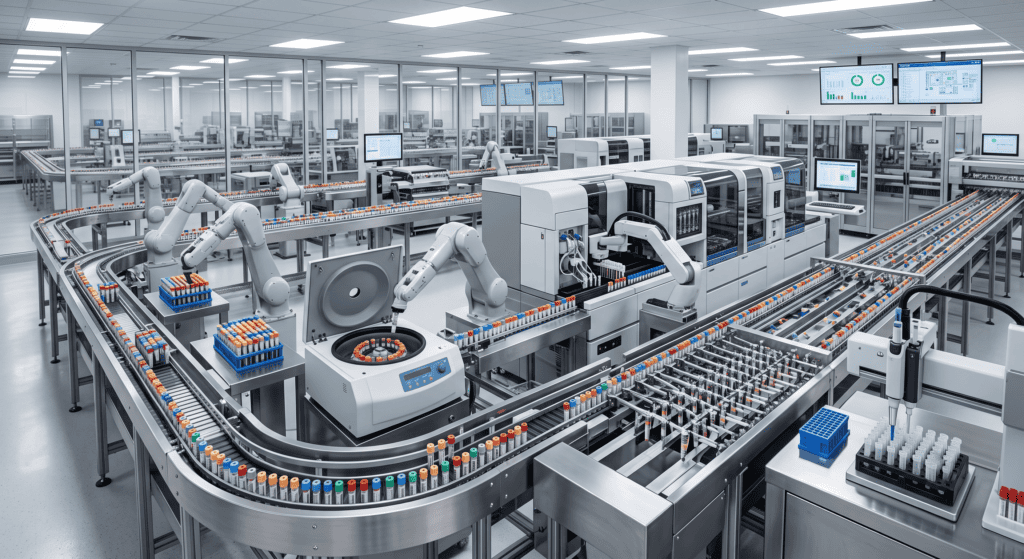
To understand automation’s effect on the workforce, it helps to be precise about what it does. Laboratory automation uses machines, robotics, computers, and increasingly artificial intelligence to perform repetitive or complex laboratory tasks with reduced human intervention. It spans a spectrum: task-targeted automation like auto-analyzers for chemistry tests, process automation in the form of conveyor-based total lab automation systems that link sorting, analyzing, and storing on a single track, and cognitive automation that applies AI to analysis and reflex testing.
The scale is substantial. Modern total lab automation systems can handle enormous specimen volumes, and adoption among large laboratories has become the norm rather than the exception. Automation now underpins the majority of the billions of tests conducted annually, and the results are real: dramatically fewer manual-handling errors, faster turnaround, and vastly increased testing capacity. Tasks that once took days now take hours.
Crucially, what automation excels at is the repetitive, high-volume, standardizable work: moving tubes, pipetting, running established assays, sorting specimens, and applying consistent rules to routine results. These are exactly the tasks where machines outperform humans on speed, consistency, and tirelessness. Automating them is unambiguously good, both for laboratory efficiency and for the professionals freed from work that is physically repetitive and cognitively underwhelming.
Why Automation Has Not Replaced Laboratory Professionals
Despite decades of increasing automation, the laboratory workforce is not shrinking from obsolescence. On the contrary, the field faces a severe shortage, with far more open positions than qualified professionals to fill them. This apparent paradox, more automation alongside more demand for professionals, reveals why the replacement narrative misunderstands the nature of laboratory work.
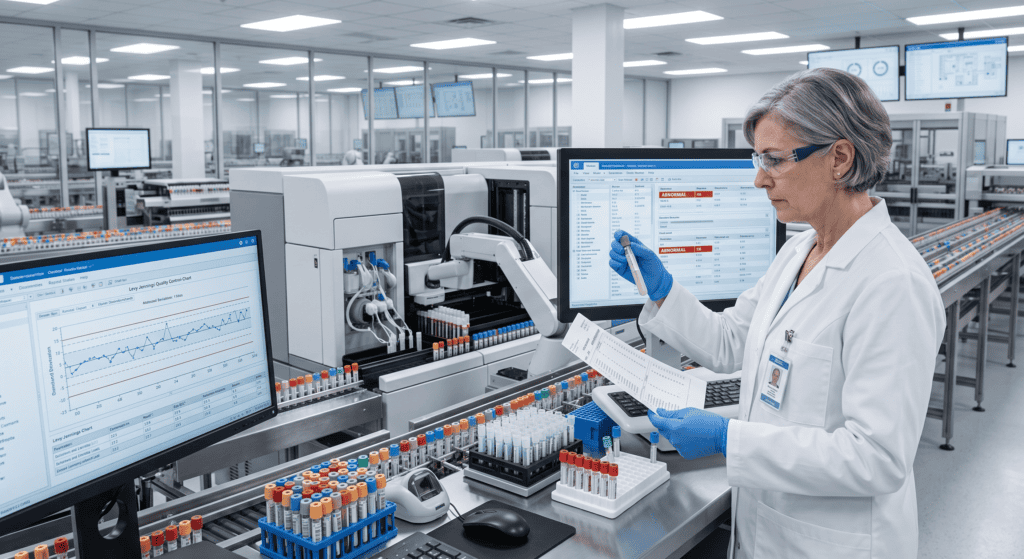
The core reason is that automation handles tasks, not judgment. An automated analyzer can measure a potassium level with speed and precision, but it cannot decide whether a strangely elevated result reflects genuine hyperkalemia or a hemolyzed specimen that should be rejected. It cannot recognize when an instrument is drifting out of calibration in a way that passes automated checks but signals a developing problem. It cannot correlate an unexpected result with a patient’s clinical picture, consult with a puzzled physician, or troubleshoot why an assay is suddenly producing implausible values. These tasks require the trained judgment, contextual understanding, and accountability that define the laboratory professional.
The post-analytical phase illustrates the point. Even with sophisticated autoverification releasing the large majority of routine results automatically, professionals must design the rules that govern that release, review the exceptions the system flags, and take responsibility for the results that reach clinicians. Automation approves the routine; humans handle the complex, the ambiguous, and the consequential, which is precisely where the risk to patients concentrates.
Quality oversight is another domain automation cannot own. Someone must validate new methods, monitor quality control and quality assurance, investigate nonconformities, ensure regulatory compliance, and maintain the accreditation standards that make results trustworthy. Automation is a tool operated within a quality framework that professionals build and sustain; it is not a replacement for that framework.
And the pre-analytical phase remains stubbornly human. The largest share of laboratory errors originates before the specimen reaches the analyzer, in collection, labeling, and handling. Automation within the laboratory cannot fix a mislabeled tube or a specimen drawn incorrectly at the bedside. The judgment required to catch and prevent these errors, and to manage the human systems that produce them, is not something a conveyor track provides.
How the Role Is Changing
Saying automation will not replace professionals is not the same as saying nothing changes. The role is evolving significantly, and pretending otherwise would be as misleading as the replacement myth.
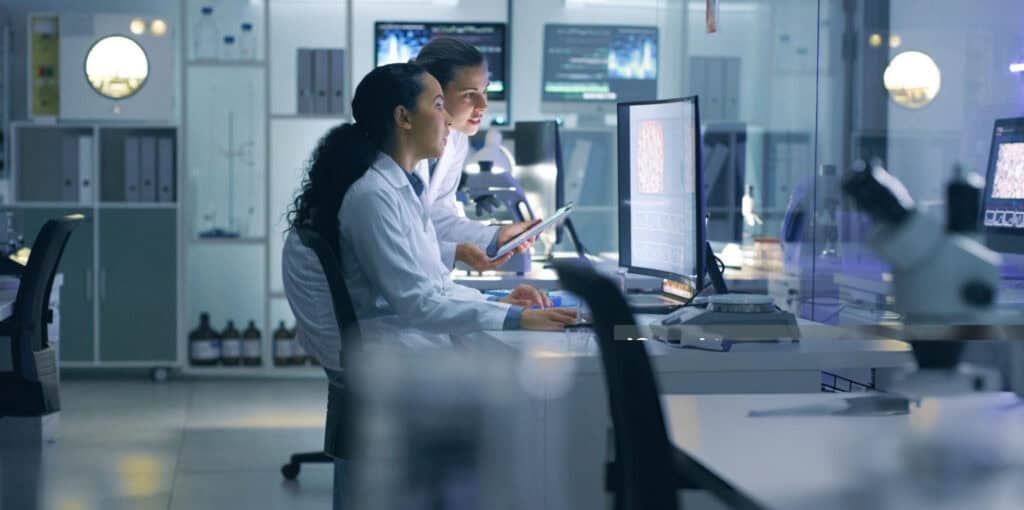
The clearest shift is from manual task execution toward oversight, interpretation, and problem-solving. As automation absorbs the repetitive work, professionals spend proportionally more time on complex analysis, quality management, method validation, troubleshooting, and the interpretation of difficult results. The bench scientist of the past who spent hours pipetting is increasingly a scientist who manages automated systems, interprets what they produce, and intervenes when they fail. This is a shift toward higher-skill, higher-judgment work, not toward obsolescence.
The skill set is changing accordingly. Modern laboratory professionals increasingly need competencies in informatics, instrument and systems management, data interpretation, and, increasingly, the oversight of AI-assisted tools. Understanding how automated and intelligent systems work, where they fail, and how to validate and monitor them is becoming as important as traditional bench skills. This raises rather than lowers the intellectual demands of the profession.
Automation is also, importantly, a partial answer to the workforce shortage rather than a cause of it. Because the field cannot recruit and train enough professionals to meet rising demand, automation acts as a force multiplier, allowing the existing workforce to handle far more volume than would otherwise be possible. Thoughtfully deployed, it reduces the repetitive burden and burnout that drive professionals out of the field, helping with retention. In this framing, automation and the workforce are allies, not adversaries: automation helps a shorthanded profession keep up, while professionals provide the judgment automation lacks.
What the Future Looks Like

The trajectory is toward laboratories that are more automated and more intelligent, with AI increasingly layered onto physical automation. This future is not one of empty laboratories run by machines. It is one where professionals work alongside sophisticated systems, each doing what it does best.
In that future, routine work is largely automated, freeing professionals to concentrate on the complex, the ambiguous, and the clinically consequential. AI assists with pattern recognition, anomaly detection, and predictive analytics, but professionals validate these tools, monitor their performance, catch their failures, and retain accountability for results. The laboratory becomes a place where human expertise is applied more selectively and more powerfully, directed by technology toward the cases and decisions that most need it.
This future also raises the importance of getting the human side right. As the role shifts toward higher-skill oversight, the education and training of laboratory professionals must evolve to emphasize informatics, systems thinking, and the critical evaluation of automated and AI-driven tools. The pipeline that brings people into the field must be strengthened, because a more automated laboratory still needs skilled professionals, arguably more skilled than ever, to run it safely. Far from making the workforce crisis irrelevant, automation makes solving it in the right way, by developing professionals who can manage these systems, more important.
Conclusion
Will automation replace laboratory professionals? No. Automation is replacing repetitive tasks, not the judgment, oversight, interpretation, and accountability that constitute the core of laboratory work. Decades of increasing automation have coincided not with a shrinking workforce but with a growing shortage of professionals, because the value of laboratory work lies precisely in the human capabilities that automation cannot provide.
What automation is doing is transforming the role, shifting it toward higher-skill oversight, elevating the importance of informatics and systems competencies, and acting as a much-needed force multiplier for an understaffed profession. The laboratory professional of the future will work with more powerful tools than ever before, but the need for their expertise, judgment, and accountability will be greater, not smaller. The realistic picture is not one of humans replaced by machines, but of humans and machines working together, with the professional firmly in the role that matters most: ensuring that the results driving patient care can be trusted. That is a role no automation is poised to fill.
Bio-Reach is a non-profit organization dedicated to advancing Laboratory Medicine through advocacy, education, and global collaboration. To learn more or get involved, visit bio-reach.org.