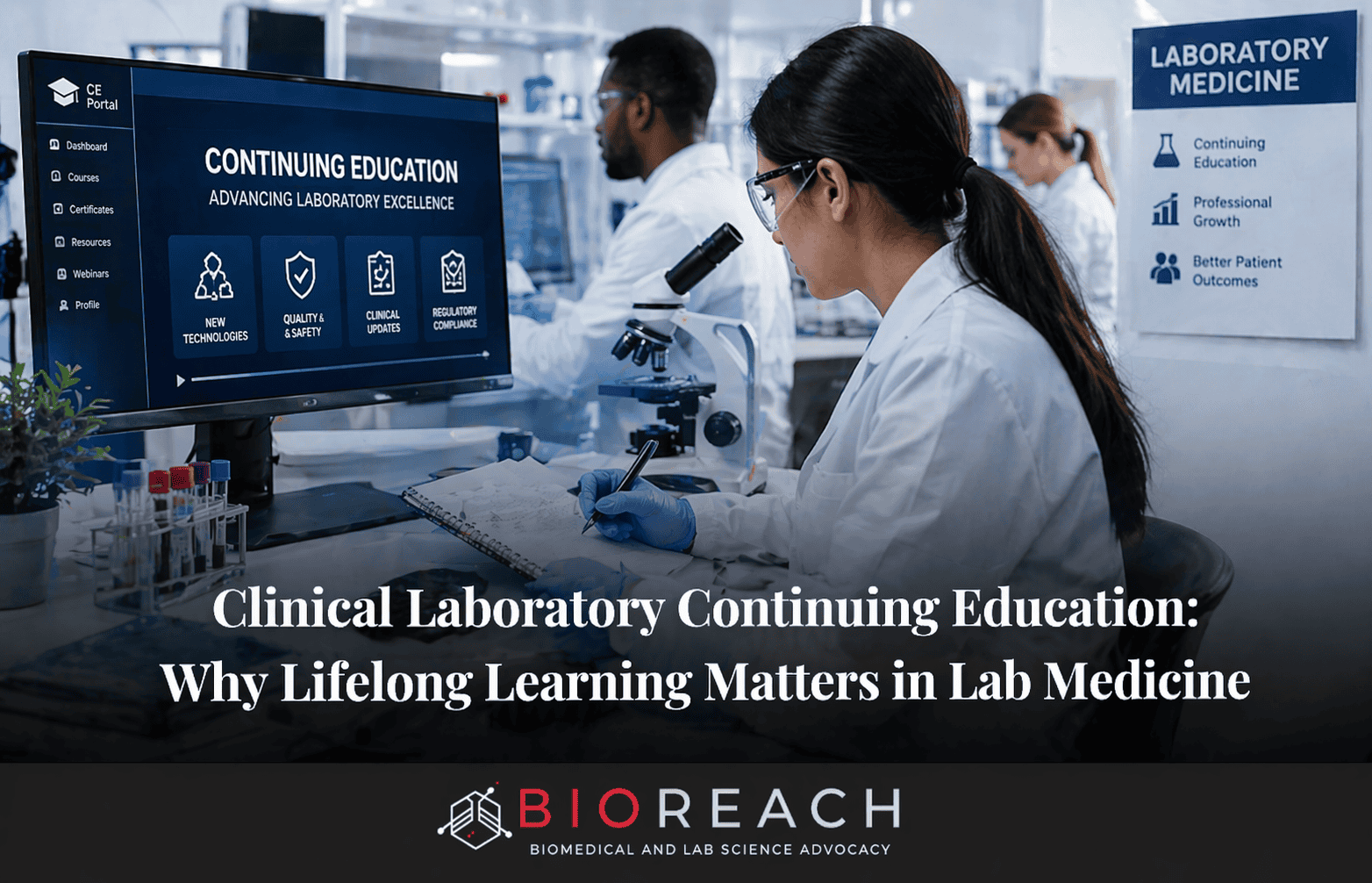
Clinical laboratory continuing education forms the foundation for maintaining competence, ensuring patient safety, and advancing diagnostic excellence in lab medicine. Medical laboratory scientists, technicians, and pathologists operate in a field where rapid technological advancements, evolving pathogens, and shifting regulatory requirements demand constant updating of knowledge and skills. Lifelong learning through structured continuing education programs equips professionals to handle complex testing, interpret emerging biomarkers, and implement quality assurance measures that directly impact patient outcomes. In an environment where laboratory results influence up to 70 percent of clinical decisions, the absence of ongoing education can lead to outdated practices, increased error rates, and compromised care.
The necessity of clinical laboratory continuing education stems from the dynamic nature of the profession. New diagnostic platforms, such as next-generation sequencing for molecular testing or automated systems for high-throughput chemistry, require specialized training to achieve optimal performance. Regulatory bodies mandate participation to maintain certification and licensure, reflecting the recognition that initial education alone is insufficient for long-term proficiency. For instance, the American Society for Clinical Pathology Board of Certification requires credentialed professionals to participate in the Credential Maintenance Program, accumulating points through continuing education activities every three years. Similar requirements exist in many states and through providers like the ASCLS P.A.C.E. program, which ensures quality assurance for continuing education offerings.
Beyond compliance, clinical laboratory continuing education fosters a culture of excellence. It addresses gaps in areas like biosafety, data interpretation, and emerging infectious diseases, where knowledge gaps can have serious consequences. During the COVID-19 pandemic, professionals who engaged in targeted continuing education adapted more quickly to new testing protocols, reducing diagnostic delays. In routine practice, ongoing learning helps mitigate pre-analytical errors, which constitute the majority of laboratory mistakes, and supports the integration of artificial intelligence tools for result validation.
This article explores why lifelong learning matters in lab medicine, detailing the benefits for accuracy, safety, and professional development. It examines key continuing education formats, regulatory frameworks, and practical strategies for implementation. A detailed section presents real data from studies and reports between 2020 and 2025, quantifying the impact of continuing education on error reduction, diagnostic performance, and patient outcomes. These insights demonstrate that clinical laboratory continuing education is not an optional activity but an essential investment in reliable laboratory medicine.
The Role of Clinical Laboratory Continuing Education in Maintaining Competence

Clinical laboratory continuing education ensures that professionals remain current with scientific advancements and best practices. The field evolves rapidly, with new assays for biomarkers, automated workflows, and molecular techniques emerging regularly. Without ongoing education, practitioners risk relying on outdated methods that can compromise the accuracy. For example, updates in antimicrobial susceptibility testing guidelines require re-training to interpret minimum inhibitory concentrations correctly and guide appropriate therapy.
Lifelong learning also addresses skill gaps that arise over time. Entry-level training provides foundational knowledge, but real-world application reveals nuances in troubleshooting instruments, managing quality control outliers, or interpreting complex molecular results. Continuing education programs, such as workshops on flow cytometry or webinars on next-generation sequencing data analysis, bridge these gaps through hands-on or interactive formats. This is particularly important for maintaining certification, as bodies like the ASCP Board of Certification require documented participation to renew credentials.
Moreover, clinical laboratory continuing education promotes interdisciplinary collaboration. Laboratory professionals interact with clinicians, pharmacists, and infection control teams, and education programs often include case-based discussions that enhance communication and shared decision-making. In infection control, for instance, continuing education on emerging resistance patterns helps labs provide timely antibiograms that inform hospital stewardship efforts.
The broader impact extends to patient safety and healthcare quality. Studies consistently show that professionals who engage in regular continuing education demonstrate higher competency in critical areas like biosafety and error prevention. This translates to fewer laboratory-acquired infections and more reliable results that support evidence-based care. In an era of precision medicine, where biomarkers guide targeted therapies, staying updated through clinical laboratory continuing education ensures laboratories contribute meaningfully to personalized treatment plans.
Benefits of Clinical Laboratory Continuing Education for Diagnostic Accuracy and Patient Safety

Clinical laboratory continuing education directly enhances diagnostic accuracy by equipping professionals with the latest techniques and quality control methods. Pre-analytical errors, which dominate laboratory issues, decrease when staff receive training on proper specimen collection and handling. Analytical accuracy improves through education on instrument calibration, method validation, and interference troubleshooting. Post-analytical benefits include better result interpretation and timely reporting of critical values.
Patient safety gains are equally significant. Continuing education emphasizes biosafety protocols, reducing the risk of laboratory-acquired infections. It also covers error recognition and root-cause analysis, fostering a non-punitive culture where near-misses are reported and addressed. In high-stakes areas like transfusion medicine or molecular diagnostics, updated knowledge prevents mismatches or false positives that could harm patients.
Professional development through clinical laboratory continuing education boosts confidence and job satisfaction, leading to lower turnover and more engaged staff. This stability supports consistent laboratory performance and knowledge transfer within teams. Institutions that invest in continuing education often see improved accreditation outcomes and higher participation in proficiency testing programs.
On a systemic level, clinical laboratory continuing education contributes to antimicrobial stewardship by training staff on appropriate test utilization and result interpretation, reducing unnecessary antibiotic prescriptions. In public health surveillance, educated professionals provide more reliable data for outbreak detection and response.
These benefits highlight that clinical laboratory continuing education is a strategic tool for elevating laboratory medicine from a support service to a driver of high-quality, safe patient care.
Formats and Delivery Methods for Clinical Laboratory Continuing Education
Clinical laboratory continuing education is delivered through diverse formats to accommodate different learning styles and schedules. Traditional in-person workshops and conferences offer hands-on training, networking, and immediate feedback from experts. These events cover topics like new regulatory updates or advanced instrumentation troubleshooting and often provide P.A.C.E.-approved credits recognized by certification bodies.
Online courses and webinars provide flexibility, allowing professionals to learn at their own pace. Platforms offer modules on molecular diagnostics, quality management, or biosafety, with interactive elements like quizzes and case studies. Self-study options, including journal articles and recorded sessions, suit busy schedules and enable focused learning on specific competencies.
Hybrid models combine virtual and in-person elements, maximizing reach while retaining interactive benefits. Simulation-based training using virtual reality or mannequins is increasingly popular for practicing high-risk procedures without real-world consequences.
Professional organizations like the American Society for Clinical Laboratory Science and the American Society for Clinical Pathology play key roles by offering accredited programs through P.A.C.E. and other mechanisms. Employer-sponsored education, such as in-house seminars or tuition reimbursement, further supports participation.
Effective programs incorporate adult learning principles, emphasizing practical application and problem-solving. Assessment through post-activity evaluations ensures knowledge retention and identifies areas for improvement.
Regulatory and Certification Requirements for Clinical Laboratory Continuing Education

Regulatory and certification bodies mandate clinical laboratory continuing education to maintain professional standards. The ASCP Board of Certification requires participants in the Credential Maintenance Program to earn points every three years through continuing education activities. For MLS certification, this includes a minimum distribution across laboratory safety, specialty areas, and other categories to ensure well-rounded competence.
State licensure boards often impose similar requirements. In California, clinical laboratory scientists must complete 12 contact hours annually, while other states align with national certification standards. The ASCLS P.A.C.E. program serves as a quality assurance mechanism, approving providers and tracking credits for compliance.
Accreditation standards like ISO 15189 emphasize staff competence through documented continuing education. Laboratories must demonstrate ongoing professional development as part of quality management systems during audits.
These requirements ensure that clinical laboratory continuing education remains a priority, aligning individual growth with institutional and regulatory expectations for safe, high-quality laboratory practice.
Impact of Clinical Laboratory Continuing Education on Performance and Outcomes
This section presents real data from studies and reports between 2020 and 2025 on the impact of clinical laboratory continuing education. It focuses on participation rates, effects on error reduction, diagnostic accuracy, and patient outcomes.
Participation in continuing education is substantial but varies by region and setting. The ASCP Board of Certification Credential Maintenance Program requires ongoing points accumulation, with professionals earning credits through P.A.C.E.-approved activities. In a 2025 analysis of laboratory workforce trends, continuing education participation correlated with lower vacancy rates and higher retention in certified staff.
A scoping review published in 2025 examined the impact of continuing professional development on patient outcomes across healthcare professions. Of 17 included studies, 14 reported positive patient outcomes, including reduced hypoglycemic events and shorter ICU stays. Multi-component interventions with sustained support and practical skills development showed greater effectiveness than standalone activities. Positive effects were noted in diagnostic accuracy, intervention quality, and confidence levels, with 89 percent of participants reporting improved diagnostic accuracy and 87 percent reporting better interventions.
In laboratory-specific contexts, a 2023 study on continuing education as a management tool emphasized its role in reducing pre-analytical errors, which constitute the majority of laboratory mistakes. Training programs focusing on specimen collection and handling led to measurable decreases in hemolysis and labeling errors.
A 2025 study in a clinical chemistry laboratory over two years found pre-analytical error rates of 12.1 percent overall, with higher rates in emergency departments. Interventions including targeted continuing education, reduced certain error categories through improved protocols.
In biosafety training, a program at the African Center for Integrated Laboratory Training (2008-2015) across 22 countries resulted in new safety practice implementation rising from 50 percent to 84 percent post-training. In Ethiopia, proficiency testing acceptable performance improved from 59.7 percent in 2020 to 79.4 percent in 2022 following corrective actions that included enhanced continuing education.
A 2024 study on automation and training in microbiology laboratories showed that combined interventions reduced culture turnaround time by 25 percent and improved antibiotic adjustment timing, lowering sepsis mortality by 8 percent in intensive care unit cohorts.
Error reduction data from broader laboratory analyses indicate that continuing education contributes to overall quality gains. Pre-analytical errors affected 0.79 percent of specimens in large datasets, with hemolysis as the dominant issue. Targeted training programs have demonstrated 40 to 60 percent reductions in contamination-related errors through better collection and handling techniques.
Clinical outcomes linked to continuing education include improved diagnostic stewardship. In one emergency department study, better-trained staff on urinalysis interpretation reduced unnecessary cultures by 50 percent while maintaining high negative predictive values.
These findings, drawn from cohorts ranging from hundreds to millions of samples or participants, show that clinical laboratory continuing education leads to error reductions of 20 to 60 percent in key areas, improved diagnostic accuracy, and positive patient outcomes such as shorter stays and lower mortality in critical care. Participation in structured programs consistently correlates with higher competency and compliance rates.
Implementation Strategies for Effective Clinical Laboratory Continuing Education

Successful implementation of clinical laboratory continuing education requires institutional support, accessible resources, and measurable outcomes. Laboratories should develop individualized plans based on staff roles, identifying gaps through competency assessments and performance reviews. Budget allocation for registration fees, travel, and online subscriptions ensures broad participation.
Leverage accredited providers like ASCLS P.A.C.E. or ASCP for quality-assured content. Blend formats to suit learning preferences: online modules for flexibility and in-person workshops for hands-on skills. Incorporate mentorship programs where experienced staff guide newer employees through continuing education activities.
Track participation and impact using learning management systems that log credits and link education to performance metrics. Regular feedback surveys help refine offerings, ensuring relevance to current challenges like emerging pathogens or new instrumentation.
Foster a supportive culture by recognizing achievements, such as certification maintenance or conference presentations, and integrating education into performance evaluations. Collaboration with professional organizations provides access to webinars, journals, and networking opportunities that enrich learning.
These strategies ensure clinical laboratory continuing education is effective, sustainable, and aligned with the evolving needs of lab medicine.
Conclusion
Clinical laboratory continuing education is essential for sustaining competence, reducing errors, and improving patient outcomes in lab medicine. Lifelong learning equips professionals to navigate technological advancements, regulatory changes, and complex diagnostic challenges. Through diverse formats and mandated participation, it fosters a culture of excellence and continuous improvement.
Real data from 2020 to 2025 confirm its value, showing error reductions of 20 to 60 percent, enhanced diagnostic accuracy, and positive impacts on patient care such as shorter ICU stays and better stewardship. Laboratories that prioritize clinical laboratory continuing education invest in reliable diagnostics and safer practices.
As the field advances, commitment to lifelong learning will remain key to delivering high-quality laboratory medicine that supports optimal healthcare delivery.